


The Maharashtra Real Estate Appellate Tribunal’s ruling in the RA Residences dispute places sharper limits on how Mumbai developers can alter sanctioned plans, use additional FSI or TDR, retain commercial sale proceeds and postpone conveyance to a housing society. The decision is significant because it treats the plan shown to homebuyers—not merely the final built form—as a central reference point in determining what promoters may subsequently construct and sell.
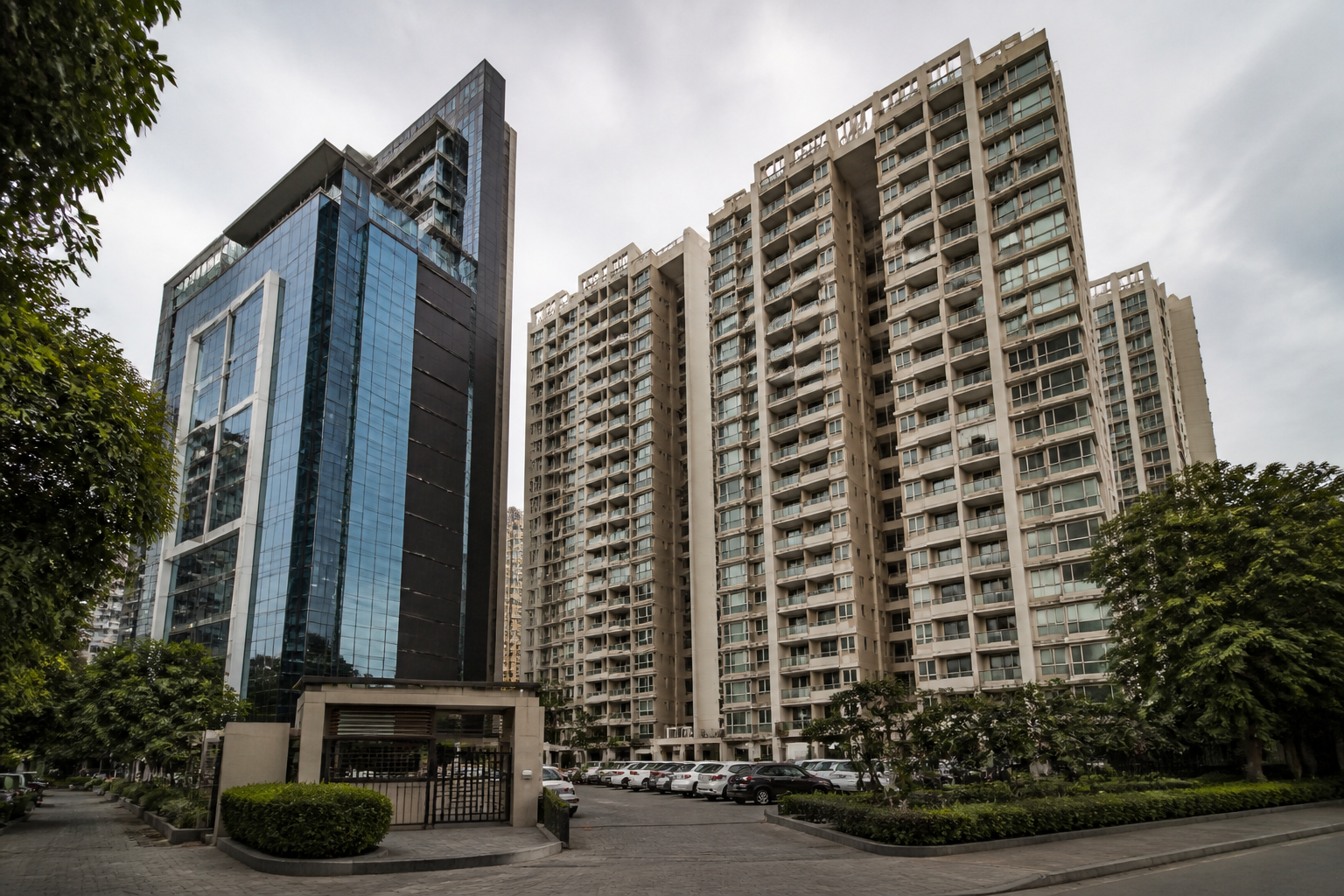
The dispute concerns RA Residences in Dadar East, a project comprising two residential buildings and an IT commercial building. The society alleged that the promoters changed the project substantially after the 2017 plan that formed the basis of the agreements for sale. The revised plan was approved in January 2021. According to the tribunal’s findings reported by the Times of India, the change included a major expansion of the commercial building through additional premium FSI.
MREAT directed the promoters to deposit a penalty equivalent to 2% of the project cost, execute a conveyance deed in favour of the society for the residential building and its common areas and amenities, apportion among the allottees the sale proceeds from commercial units created using additional FSI or TDR beyond the 2017 plan, and demarcate and hand over 64 remaining guest-parking spaces.
The order therefore operates on several connected levels. It addresses the physical use of land and common areas, the financial value created through additional development potential, the rights of allottees to participate in material project changes and the point at which a society can demand legal control over its building and shared spaces.
## The plan shown to buyers became the central reference point
The tribunal observed that the residential building’s built-up area or FSI increased from 30,540.77 square metres under the 2017 plan to 31,769.76 square metres under the revised plan. That increase was described as marginal compared with the change in the commercial component. The commercial building’s area rose from 3,231.63 square metres to 7,473.74 square metres through the use of additional premium FSI.
That contrast shaped the ruling. The issue was not simply whether the final project remained within permissible planning rules. The tribunal considered whether the promoters could make a substantial change to the development presented to purchasers without obtaining their prior informed consent. It held that consent had to be specific and based on full disclosure.
The agreements for sale, according to the report, did not provide sufficient details about the proposed use of TDR or FSI from other land. This distinction matters in projects where additional development potential can change the size, value and commercial character of a property. A broad contractual reference to future development was not treated as an adequate substitute for informing allottees about a material alteration.
The order consequently links planning potential with consumer disclosure. FSI and TDR are not only technical permissions used by architects and planning authorities. They can determine how much construction is added, which portions are residential or commercial, how common areas are affected and who receives the financial benefit from the additional built-up area.
## Additional development potential is not automatically free for the promoter
The society had alleged unauthorised consumption of FSI attributable to its share, encroachment on mandatory guest-parking and recreational-ground areas, and construction and sale of ground-floor offices through the use of common areas. MREAT’s directions require the promoters to account for the proceeds from commercial units built using additional FSI or TDR beyond the development shown in 2017.
The reported order does not treat the extra commercial area as an independent opportunity available solely to the promoter. Instead, it directs that the sale proceeds be apportioned among the allottees. The financial direction is important because it recognises that additional development potential can have a direct economic relationship with the existing purchasers and the society.
In practical terms, a project’s later expansion may create value from land, permissions or development rights that were already connected to the original project. If that expansion is not clearly disclosed at the time of sale, disputes can arise over whether the promoter alone should control the resulting revenue. The RA Residences ruling places that question within the tribunal’s assessment of informed consent, project obligations and the society’s share.
The order also requires 64 remaining guest-parking spaces to be demarcated and handed over. Parking disputes are often treated as a narrow amenity issue, but they can reveal a wider conflict over the boundary between private saleable areas and common facilities. In this case, the society’s allegations connected parking and recreational-ground areas with the broader claim that common property had been used for additional construction.
## Conveyance cannot be postponed indefinitely
The second major strand of the ruling concerns conveyance. The society argued that the promoters had not executed conveyance or handed over building and common-area documents. MREAT held that conveyance cannot be deferred indefinitely by linking it to completion of the entire project.
As reported, the tribunal held that once a building is complete, an occupation certificate is obtained, possession is handed over and the society is registered, the obligation under Section 11 to execute conveyance arises. A contractual clause tying conveyance to the completion of the whole project cannot override that obligation, according to the ruling.
This addresses a recurring institutional problem in multi-building developments. A completed residential building may remain without formal control over its land, common areas and records because another component of the larger project is still under construction or has been delayed. The result can leave a functioning society dependent on the promoter for decisions involving property management, documents, future construction and shared facilities.
The project was originally scheduled for completion in June 2018. Its deadline was later extended to 2019 and then to March 2025. Against that timeline, the tribunal’s position makes conveyance a milestone linked to the completed building and the conditions identified in the ruling, rather than an open-ended promise attached to the entire development.
## Why the 2017 and 2021 plans matter
The dispute shows how a project can change materially even when the original and revised plans remain part of the same development approval process. The plan shown to allottees in July 2017 was revised and approved in January 2021. The most consequential alteration was the expansion of the commercial building, whose area more than doubled from 3,231.63 square metres to 7,473.74 square metres.
The tribunal’s reasoning, as reported, places the burden on promoters to explain such changes clearly and obtain consent where the alteration is substantial. This is different from treating every later modification as automatically invalid. The key questions are whether the change is material, whether it was disclosed fully and whether the allottees gave specific and informed consent.
That approach also limits the usefulness of vague provisions in agreements for sale. If an agreement does not explain the proposed use of TDR or FSI from other land, purchasers may not have understood that the development could acquire a significantly larger commercial component. The case therefore highlights the importance of the information available when buyers commit to a project, not only the permissions obtained later.
## The institutional question behind FSI and TDR
The ruling brings together three institutions that often operate separately in urban development: the planning authority that approves construction, the promoter who controls implementation and the society that ultimately manages the completed property. Planning approval alone does not resolve the question of who benefits from additional construction or whether purchasers agreed to a material change.
Similarly, a promoter’s contractual control over a project does not necessarily continue indefinitely after a building is complete and occupied. MREAT’s conveyance finding establishes, on the facts reported, that the society’s legal control cannot be postponed simply because another building or project component remains incomplete.
The financial direction concerning commercial sale proceeds adds another layer. It indicates that the tribunal considered the economic consequences of additional FSI or TDR use, rather than limiting the dispute to whether the revised construction received approval. For housing societies, this makes project records, sanctioned plans, area statements, parking layouts and disclosures central to any assessment of what was promised and what was ultimately built.
## What remains to be monitored
The reported order establishes the directions issued in the RA Residences dispute, but the implementation of those directions will determine their practical effect. The promoters must deposit the 2% penalty, execute the residential conveyance, apportion the relevant commercial sale proceeds and hand over the 64 parking spaces. The completion of those steps will show how the tribunal’s findings translate into control over land, common areas and project revenue.
The broader lesson is that additional FSI or TDR is not merely a late-stage construction input. When it changes the scale or character of a project after purchasers have signed agreements, it can raise questions of consent, financial entitlement and common-property control. MREAT’s ruling places those questions at the centre of the promoter-society relationship while reinforcing that conveyance for a completed building cannot be left unresolved indefinitely.
