


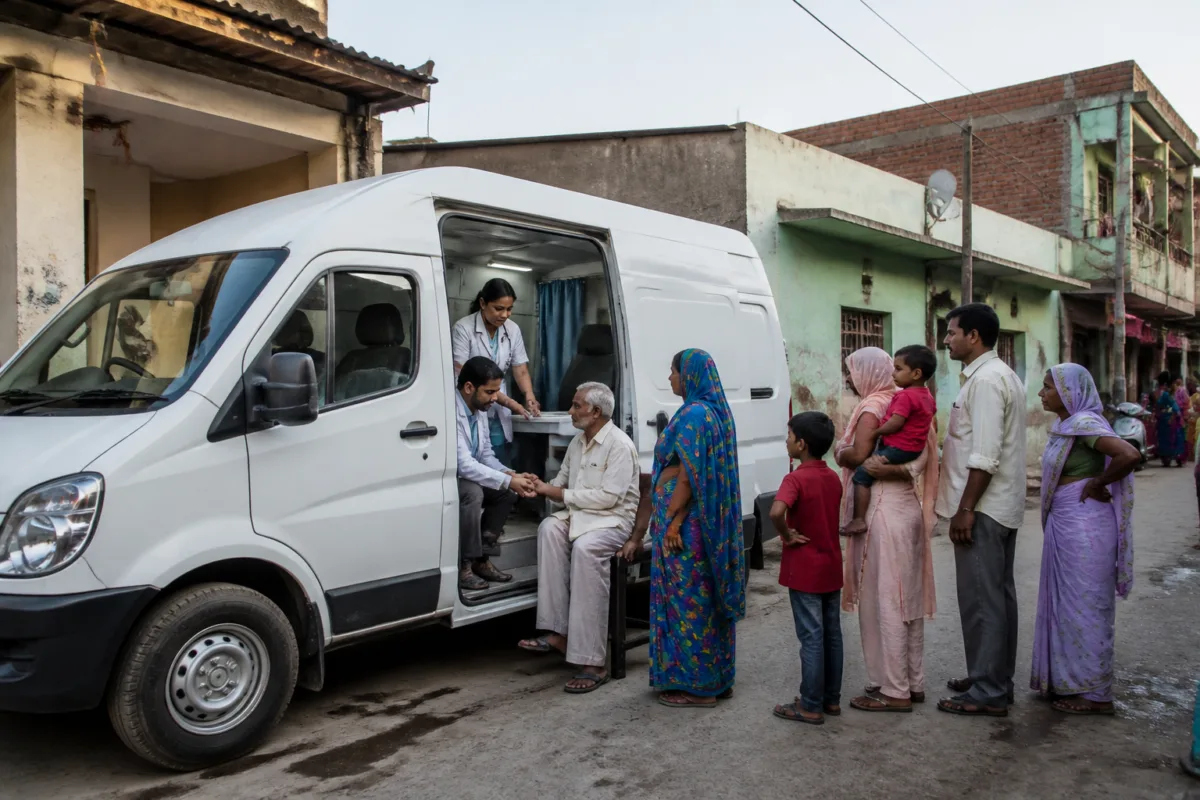
Mobile OPD vans operated by NGOs are bringing free consultations, basic tests, medicines and hospital referrals directly to underserved neighbourhoods in Pune, helping slum residents avoid long journeys, wage losses and crowded public hospitals.
In Laxminagar in Yerawada, a mobile dispensary operated by the Smile Foundation visits a location near the Pune Municipal Corporation community hall. The van is equipped to provide doctor consultations, basic diagnostic services and medicines without charge. It returns to the same location twice a month, allowing residents to access continuing care close to home.
For residents of the area, the service addresses practical barriers that often delay treatment. The nearest public facility for Laxminagar residents is the PMC-run Rajiv Gandhi Maternity Hospital, which can take about 30 minutes to reach and operates outpatient services during fixed hours. Daily-wage workers and others with inflexible shifts may lose income if they travel to a hospital during those hours.
Asma Shaikh first visited the mobile clinic during her pregnancy in 2024. She said the doctor provided a check-up and supplements, while a nurse counselled her on maternal and infant vaccinations. She has continued to use the van for health complaints.
Kausar Dalmia Shaikh, who works as a watchman, visits the clinic to manage diabetes and hypertension. He said the van’s all-day presence allows him to see the doctor after his shift, while the 15-day supply of medicines helps him continue treatment without making a separate hospital visit.
The mobile OPDs provide consultations, basic blood tests, eye screenings, antenatal care and referrals to government or charitable hospitals when specialised treatment is required. They also screen for vector-borne and water-borne infections. The service does not conduct specialised testing, according to Satnam Singh, general manager of programmes for health initiatives and disaster response at the foundation.
Singh said the foundation operates three vans in Pune every day and screens an average of 90 patients daily. The organisation estimates that its vans screen about 4,500 patients a month in Pune, while its wider network covers most districts across Maharashtra.
The vans also generate community-level health information that can support public-health planning. Singh said the foundation maintains a database and provides real-time inputs to government healthcare authorities. Unlike hospital records, which generally capture people who are able or willing to travel to an institution, community screening can identify health conditions among residents who may otherwise remain outside formal healthcare systems.
The foundation said the immediate benefits include reduced out-of-pocket spending, support for chronic-disease management and lower pressure on public hospitals. Patients needing specialised care are referred to nearby government or charitable hospitals, leaving those facilities to provide the next level of treatment after the initial screening and consultation.

