


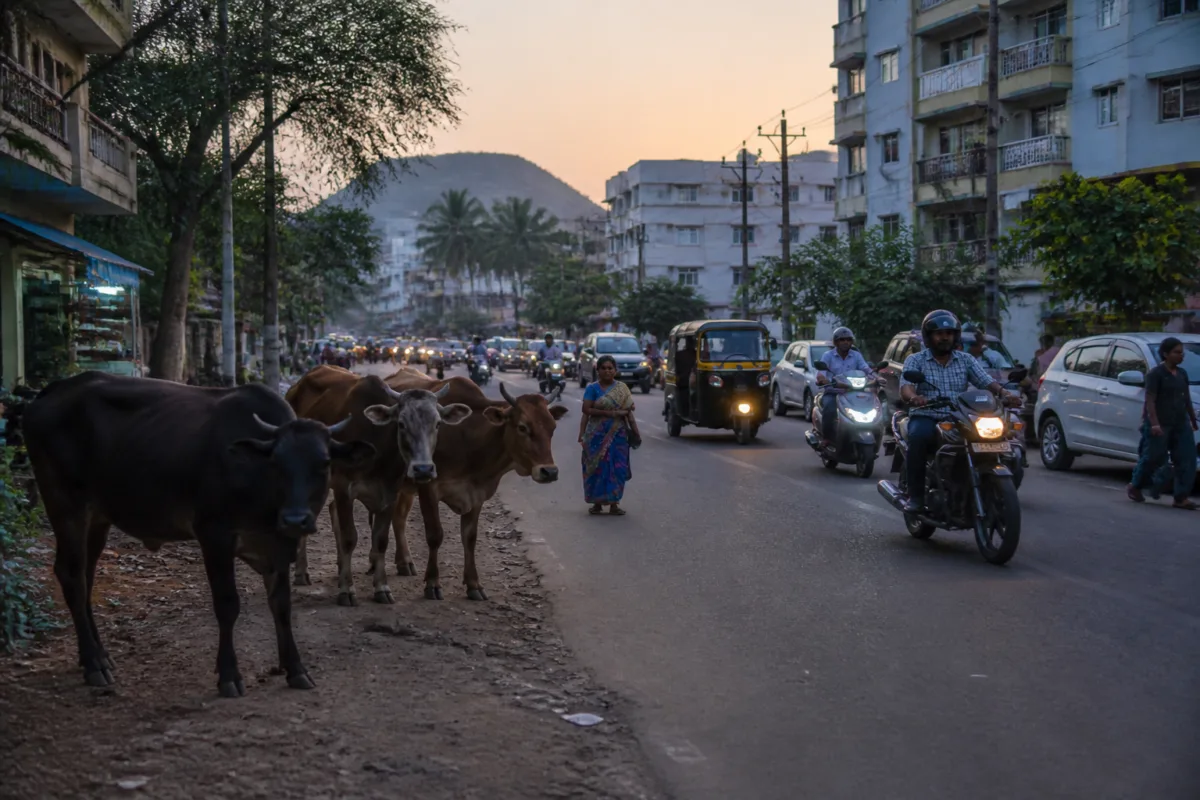
Stray cattle on busy roads in several parts of Visakhapatnam are creating hazards for motorists and pedestrians, with residents calling on the Greater Visakhapatnam Municipal Corporation (GVMC) to begin targeted action against the problem.
The issue has been reported in Seethammadhara, HB Colony, Chinna Waltair, MVP Colony, Madhurawada, Dhobi Colony, Tailors Colony and near Kommadi Junction. Residents told Deccan Chronicle that herds of cows and buffaloes frequently stand in the middle of roads, forcing vehicles to manoeuvre around them and increasing the risk of collisions.
Locals also said cattle are commonly seen near residential colonies, hospitals, markets and Rythu Bazars. The risk is higher after dark on poorly lit roads, where two-wheeler riders may not see animals in time. Senior citizens and children are among the pedestrians facing difficulties, according to residents.
People living near Kommadi Junction and HB Colony in Seethammadhara said cattle regularly wander onto busy roads and disrupt traffic. They questioned why road users should bear the consequences of owners failing to control their animals, while also calling for measures that protect both public safety and animal welfare.
Civic activists cited Section 293 of the Bharatiya Nyaya Sanhita, which provides for punishment when a person fails to take reasonable precautions to prevent an animal under their control from endangering human life or causing injury. The provision carries a penalty of up to six months in prison, a fine of up to Rs. 5,000, or both, according to the report.
Residents have sought special drives in affected localities to identify stray cattle, relocate them safely and act against negligent owners. They have also proposed ward-level monitoring and coordination between the GVMC, traffic police and the Animal Husbandry Department.
The demands point to a management challenge extending beyond the removal of animals from roads. Effective enforcement would require identifying ownership where possible, ensuring safe holding or relocation arrangements and maintaining regular monitoring around traffic corridors, markets, hospitals and residential areas. The residents’ concerns also underline the need for preventive action rather than intervention only after a road incident.

