


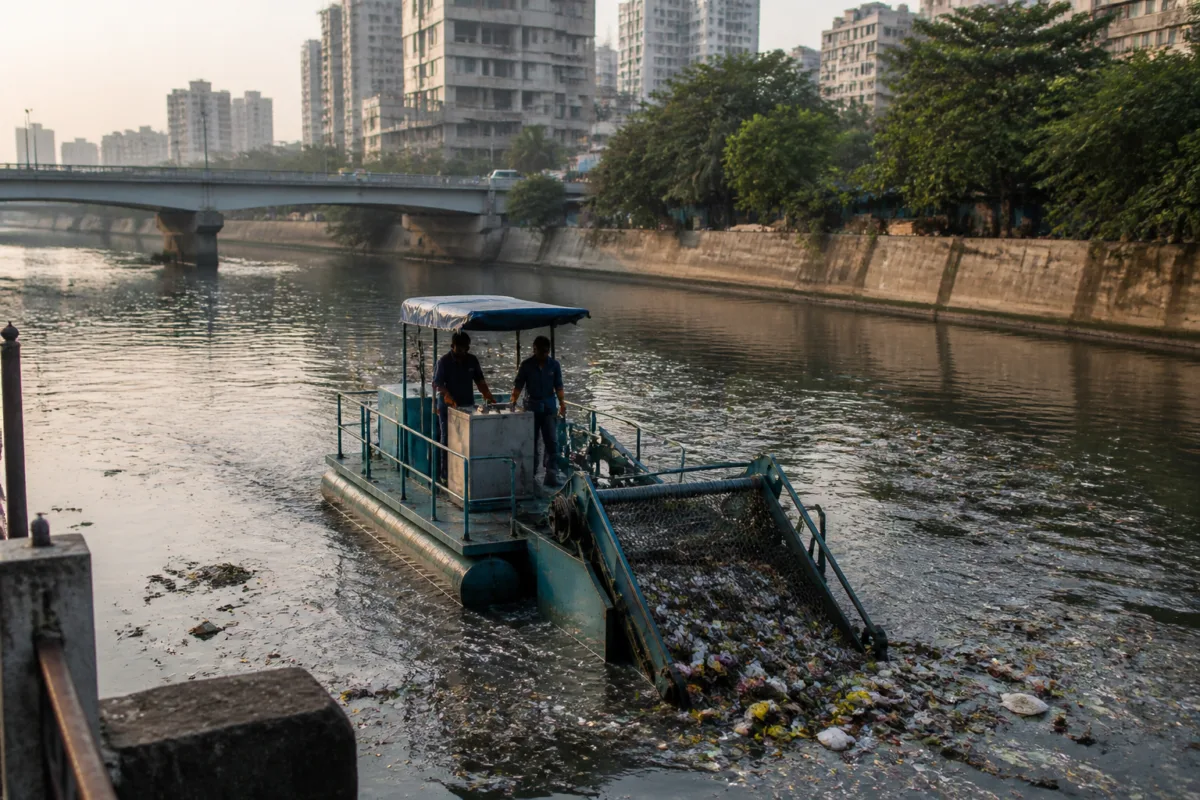
Mumbai’s Mithi River is set to receive three trash interceptors under a new agreement between the Brihanmumbai Municipal Corporation (BMC) and The Ocean Cleanup, with the installations intended to stop inorganic waste from reaching the Arabian Sea.
The agreement, signed on Wednesday, will enable The Ocean Cleanup to seek permits for interceptor deployments at nine additional locations across Mumbai. Three of the planned units will be placed in the Mithi River, while the remaining units will be deployed at Trombay and other locations, according to the report.
The Ocean Cleanup began operating in Mumbai earlier this year through its 30 Cities Programme. Existing interceptors at Trombay Creek and Malad Creek have removed 102 tonnes and 17.5 tonnes of inorganic waste, respectively, taking the reported total to 119.5 tonnes.
The organisation’s founder and chief executive, Boyan Slat, said the operations demonstrated the potential of river interception and that the agreement with the BMC would support expansion into additional waterways. BMC Commissioner Ashwini Bhide said the initiative would complement the civic body’s efforts on waste management, mangrove conservation and the resilience of Mumbai’s waterways and coastline.
Waste collected by the interceptors is handled by Plastic Fischer, The Ocean Cleanup’s local implementation partner, with material sent to recovery facilities in Malad and Mulund. Plastic Fischer’s field operations and waste collection team said more than 90% of the material collected so far was non-recyclable.
The Ocean Cleanup estimates that Mumbai releases nearly 5 million kg of plastic waste into the Arabian Sea and the wider Indian Ocean each year. It said the programme’s impact zones cover about 180 sq. km of biodiversity systems, including mangroves, coral reefs and seagrass beds, as well as around 4,700 sq. km of coastal waters.
The organisation also said community awareness would remain important, particularly in areas with informal settlements along nullahs. The agreement establishes the planned expansion, while the timing of individual deployments will depend on permits and implementation arrangements.

