


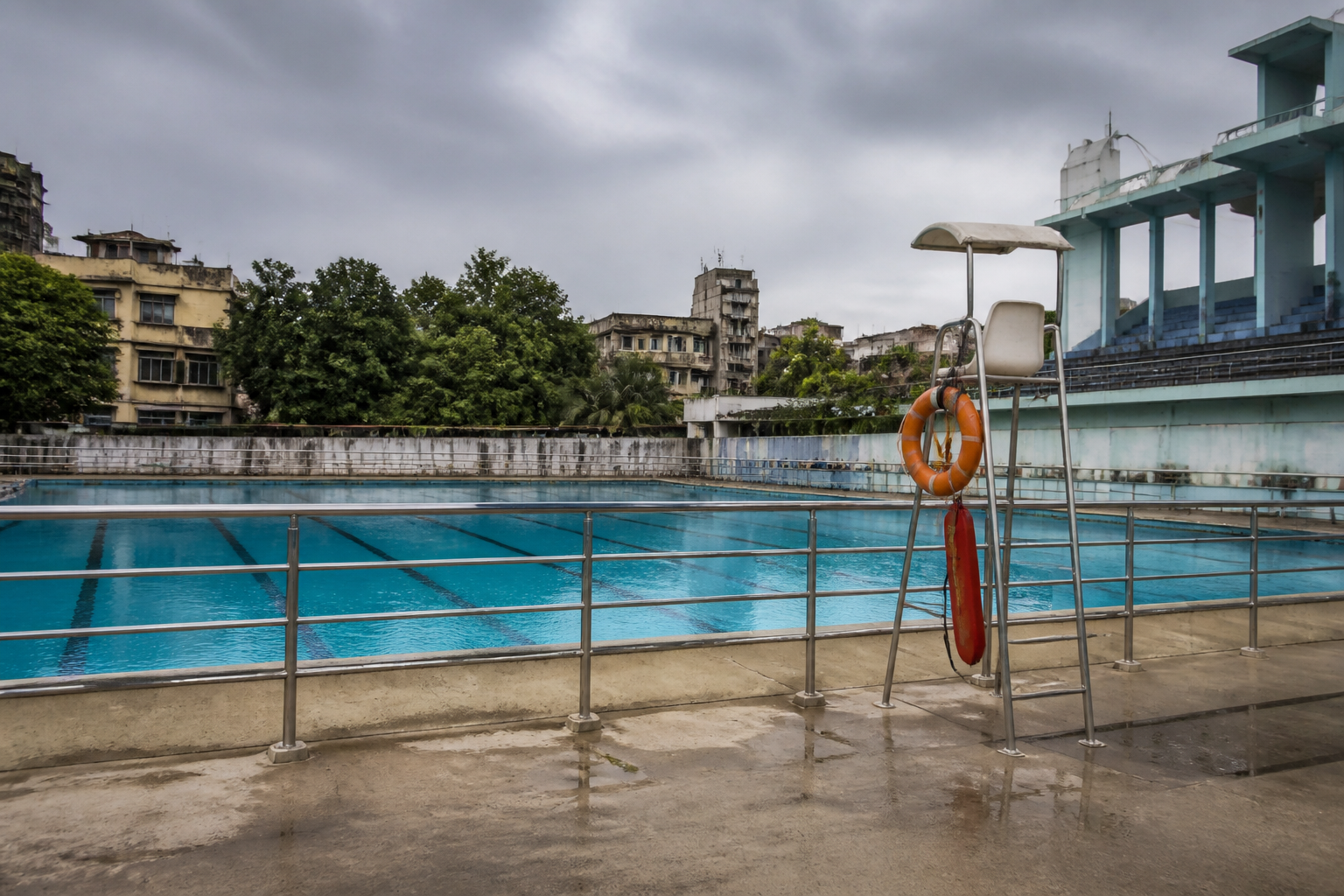
The unresolved recovery of ₹41.13 lakh from a contractor after the death of an 11-year-old boy at a Mira Bhayandar municipal swimming pool has exposed a wider weakness in how public facilities are monitored after a serious safety failure. The Mira Bhayandar Municipal Corporation cancelled the contractor’s agreement, ordered recovery of the outstanding amount and initiated criminal proceedings, but the money had not been deposited even after the deadline and repeated notices, according to a report by Loksatta.
The case centres on the death of Granth Mutha, who drowned at the swimming pool in the Gopinath Munde Sports Complex in Bhayandar East on 20 April 2025. The pool was operated under a municipal contract. An inquiry conducted after the incident reportedly found violations of safety conditions, the operation of an unauthorised summer camp and the collection of additional and unauthorised fees from members.
These findings placed the incident beyond the question of an individual accident. They raised questions about whether the municipal corporation had adequately supervised a facility being used by children and other residents, whether the contractor was complying with the operating conditions, and whether officials had acted when those conditions were breached. The available report does not provide the full inquiry document or identify the specific safety measures that were found to have been violated, but it records the corporation’s subsequent administrative and legal action.
The corporation cancelled the contract and registered a case against contractor representatives Ramzan Hasanani and Neeraj Killa Sharma at Navghar police station. The report also states that a chargesheet was filed in court. That step indicates that the matter moved from an internal municipal inquiry into the criminal justice process, although the supplied account does not establish the present stage of the court proceedings or whether any finding of criminal liability has been made.
The financial recovery order followed the corporation’s assessment of the contractor’s liability. The contractor, M/s Sahas Charitable Trust, had deposited ₹1.09 crore in the municipal fund. Against a total recoverable amount of ₹1.50 crore, the corporation calculated an outstanding balance of ₹41,13,545 after adjusting the amount already deposited.
On 16 May 2026, the municipal commissioner ordered the contractor to deposit the remaining amount within 15 days. That deadline expired without payment. The sports department subsequently issued repeated notices, but the contractor still had not deposited the money when the report was published on 15 September 2026.
The chronology is significant because municipal enforcement typically has two separate tracks: action against the contract and recovery of money. Cancelling an agreement may stop a particular operator from continuing at a facility, but it does not by itself recover public dues or establish whether officials who managed the contract failed in their responsibilities. In this case, the corporation appears to have completed the first administrative step and issued a quantified recovery order, while the second step remained unresolved months later.
That gap also affects the accountability of the public institution. A recovery order is meaningful only if the corporation has a mechanism to enforce it, including the use of legally available measures when a contractor does not comply. The supplied report does not state whether the corporation initiated attachment, litigation for recovery, encashment of any security, or another enforcement process. It also does not state whether the contractor challenged the order. Those unanswered questions are central to understanding why the amount remained outstanding.
The case raises a further issue about the management of municipal sports facilities. Such facilities are public assets, but their daily operations may be assigned to private trusts or contractors. That arrangement can divide responsibility between the owner of the facility and the operator. The corporation remains responsible for contract design, supervision and enforcement, while the operator is responsible for complying with safety and operational conditions. When a serious incident occurs, an inquiry must therefore establish not only what happened inside the facility, but also whether the monitoring system was functioning before the incident.
The report’s reference to an unauthorised summer camp and additional fees adds an operational dimension to the case. These allegations, if established through the inquiry and court process, would indicate that the facility was being used beyond the terms of its approved arrangement. They would also raise questions about whether the corporation maintained an accurate record of activities, users and fee collections at the pool. The source material does not provide the contract’s full conditions, the fee schedule or the identity of the officials responsible for supervision, so the precise administrative failures cannot yet be determined.
The demand for disciplinary action against officials reflects this unresolved institutional question. The report says there have been calls for action against officials who handled such a serious matter irresponsibly, but it does not state that disciplinary proceedings have been initiated or that any officer has been found responsible. That distinction matters. Public criticism and a formal disciplinary process are not the same, and the available evidence does not support assigning individual blame.
What the case does establish is a sequence of institutional actions and omissions: a child died at a municipal swimming facility; an inquiry reportedly recorded safety and operational violations; the contract was cancelled; police action and a chargesheet followed; and the corporation calculated a recoverable amount that remained unpaid after a formal deadline. The unresolved recovery is not a separate accounting issue. It is part of whether the city’s response to a public-facility failure can be completed and enforced.
The next stage should clarify whether the Mira Bhayandar Municipal Corporation has taken further recovery measures, whether the contractor has contested the commissioner’s order, and whether any disciplinary inquiry against responsible officials has begun. The court status of the criminal case and the corporation’s enforcement action on the ₹41.13 lakh balance will determine whether the response moves beyond orders and notices to measurable accountability.
