


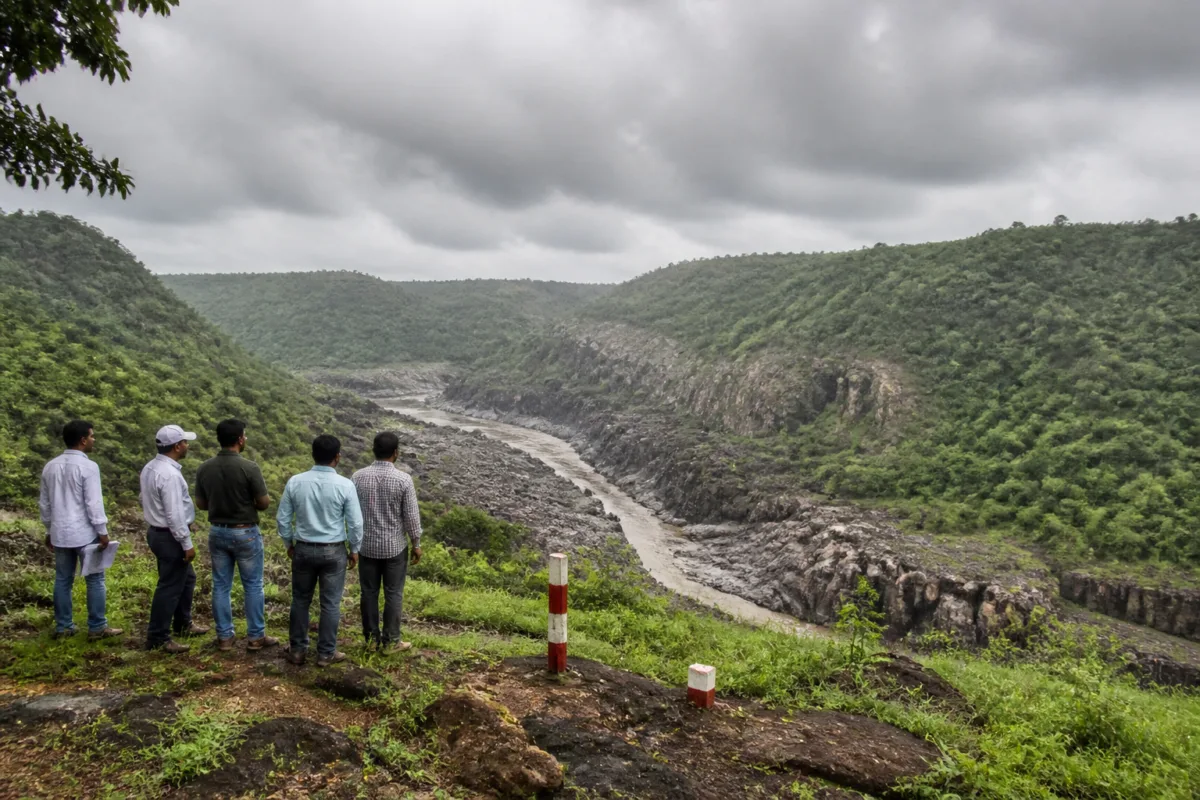
Karnataka Deputy Chief Minister and Water Resources Minister D.K. Shivakumar’s invitation to Tamil Nadu leaders opposing the Mekedatu project to visit the proposed dam site is more than a political exchange. It brings into view the three institutional tests that will determine whether the project can move forward: compliance with the Supreme Court’s allocation of Cauvery water, the Centre’s requirements for forest land, and the environmental clearances that Karnataka says it is seeking.
The immediate dispute is over whether a dam proposed by Karnataka can be treated as a state project while also affecting a river system shared with Tamil Nadu. Shivakumar has said Karnataka will not withdraw the project, which he described as the state’s right. At the same time, he said Karnataka would honour Tamil Nadu’s entitlement to 177 TMC of water under the Supreme Court’s order. That combination of claims—Karnataka’s right to build and Tamil Nadu’s right to receive water—is central to the project’s political and administrative future.
The public argument has so far been framed in competing terms. Karnataka’s position, as stated by Shivakumar, is that building the dam and releasing Tamil Nadu’s legally specified share are not mutually exclusive. Tamil Nadu critics, including Congress state president Manickam Tagore and other leaders referred to in the report, have opposed the project because of concerns over its effect on the neighbouring state’s water share. The supplied report does not provide their detailed technical or legal arguments, but their opposition establishes that the project remains an interstate issue rather than a matter confined to Karnataka’s territory.
Shivakumar’s offer to take a delegation from Tamil Nadu to the proposed site is significant because it shifts part of the debate from political statements to the physical and administrative character of the project. A site visit could allow critics to examine the location and hear Karnataka’s explanation of the proposed benefits. However, the invitation itself does not replace the formal processes required for a dam involving forest land and environmental approvals. Nor does it settle the question of how the project would operate within the water-sharing framework described by the Chief Minister.
The project’s next stage is therefore likely to be shaped less by the rhetoric of state rights and more by the documents Karnataka submits to the Centre. Shivakumar said the state government was preparing the required documents and had urged the Centre to grant forest and environmental clearances. He also said the Centre had asked Karnataka to provide alternative land for the forest area that would be submerged. This makes forest replacement land a concrete administrative condition, rather than a peripheral environmental concern.
That requirement reveals the layered nature of infrastructure approval in India. A state government may identify a project as important to its interests, but construction cannot proceed solely on the basis of political consensus within the state. Where forest land is involved, the project must address the consequences of diversion or submergence. Where environmental approval is required, the proposal must pass through the applicable clearance process. Shivakumar’s remarks indicate that Karnataka has not yet reached the implementation stage: the government is preparing documents and says it is ready to proceed once the required clearances are obtained.
The distinction between political approval and statutory approval is especially important in this case. Shivakumar said all political parties in Karnataka supported the project. That suggests a broad state-level consensus, but it does not establish that the project has received the necessary clearances or that all interstate concerns have been resolved. Political unanimity may help a government maintain its position and assemble documentation, but the formal decision-making chain still involves the Centre and the authorities responsible for forest and environmental permissions.
The water-sharing assurance is the second major institutional issue. Shivakumar repeatedly said Karnataka would provide Tamil Nadu with its due share and specifically referred to the 177 TMC entitlement specified by the Supreme Court. In his formulation, Karnataka would build the dam while ensuring that Tamil Nadu received the water due to it. The report does not provide the project’s proposed storage capacity, operating rules, release schedule, downstream impact assessment or technical calculations. Those details would be necessary to evaluate how the assurance would work in practice.
This gap between a legal assurance and an operating framework matters for public understanding. A statement that Tamil Nadu’s entitlement will be protected establishes Karnataka’s declared position, but it does not by itself explain the mechanism through which releases would be managed. That mechanism would ordinarily need to be reflected in project documents, water-management arrangements and the approvals governing the dam. None of those details is included in the supplied report, so the present evidence supports reporting the assurance but not judging whether the proposed operating model is technically adequate.
The same caution applies to Shivakumar’s description of the project as Karnataka’s right. The statement expresses the state government’s legal and political position. It does not mean that construction can begin without satisfying the procedural requirements identified by the government itself. The Chief Minister’s comments place the project within a sequence: Karnataka asserts its right, prepares documents, provides alternative land as required, obtains forest and environmental clearances, and then takes the project forward.
The sequence also explains why the dispute cannot be reduced to a Karnataka-versus-Tamil Nadu political contest. The Centre has a role because forest land and environmental permissions are involved. The Supreme Court’s order is invoked because the project is being discussed alongside a legally specified water entitlement. Karnataka’s state government has responsibility for advancing the proposal and submitting documents. Tamil Nadu’s government and political leaders remain stakeholders because the project is connected to water that Karnataka says it will continue to release. Each institution operates within a different part of the decision chain.
Shivakumar has rejected the idea that the matter should be treated only as political competition. He said political parties in Tamil Nadu would oppose the project depending on the positions of the Congress, DMK or AIADMK, but argued that the law should be respected. That claim highlights a recurring difficulty in inter-state infrastructure: even when a project is presented as a legal or technical matter, its consequences are experienced through state boundaries and political accountability. Karnataka leaders must demonstrate that the project protects the state’s interests; Tamil Nadu leaders must respond to fears about water availability; and the Centre must process the clearances and land-related requirements.
For residents and water users, however, the key issue is not simply which state’s political argument prevails. It is whether the project’s approvals and operating arrangements make the promised balance verifiable. Karnataka’s stated position contains two commitments: construction of the dam and protection of Tamil Nadu’s 177 TMC entitlement. The supplied material does not yet show the documents, technical conditions or monitoring arrangements that would allow the public to test those commitments.
That is why the clearance process deserves as much attention as the political statements. Forest submergence, alternative land and environmental approval are not separate from the project’s water politics. They determine whether the proposal can legally advance and what conditions may be attached to it. The fact that Karnataka is still submitting documents indicates that the project remains in a preparatory and approval-seeking phase, despite the government’s firm public position.
The immediate development to monitor is therefore the submission and consideration of the required documents, followed by decisions on forest and environmental clearances. A delegation visit, if accepted, may add to the political dialogue, but it will not substitute for the statutory process. The evidence currently confirms Karnataka’s intention to pursue the Mekedatu project, its assurance that Tamil Nadu will receive the court-specified entitlement, and the existence of pending clearance requirements. It does not establish that construction has been authorised, that the clearances have been granted, or that the project’s final operating arrangements have been settled.

