


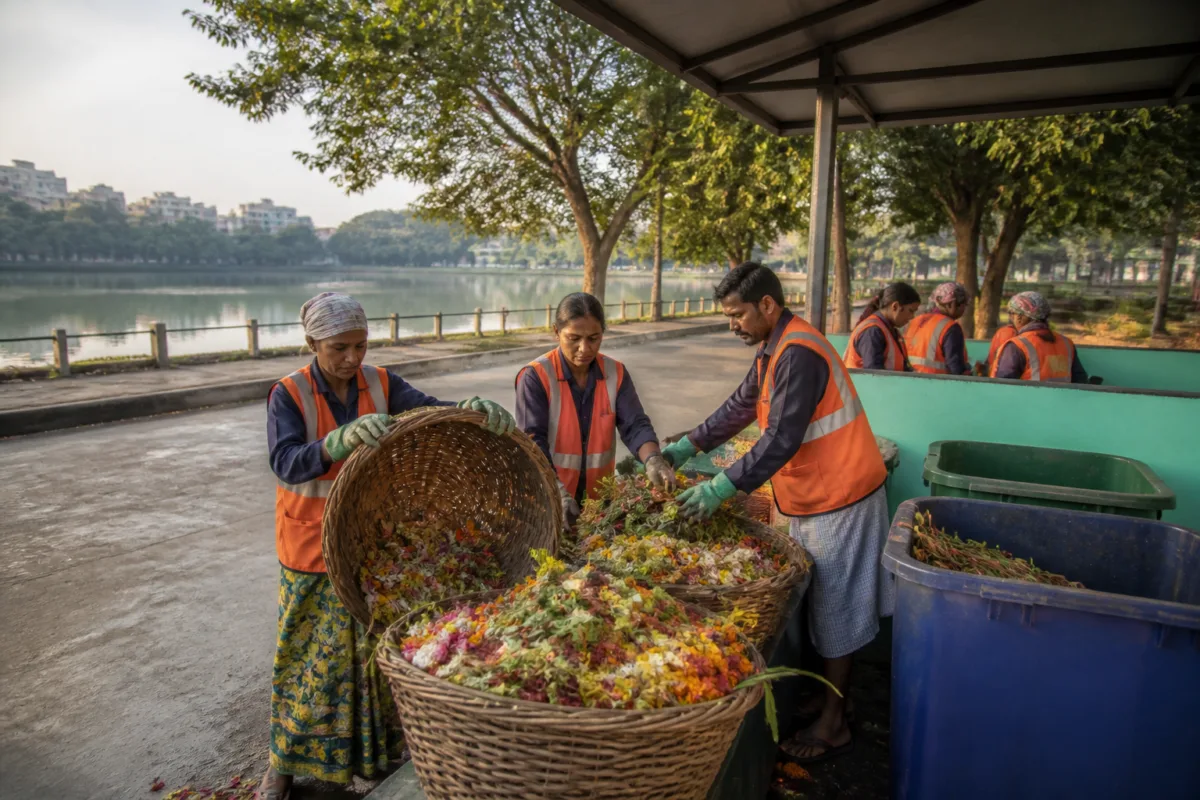
Malkajgiri Municipal Corporation has processed nearly 7,000 metric tonnes of floral waste generated during Ganesh immersion events and Bathukamma celebrations into incense and dhoop sticks, offering a separate collection and recycling route for material that would otherwise enter the regular waste stream.
MMC Additional Commissioner (Sanitation) Raghu Prasad said more than 6,400 metric tonnes of the waste was collected during Ganesh immersion events, while nearly 400 metric tonnes came from Bathukamma celebrations. The figures cover floral offerings and other flower waste generated during the religious events.
The civic body worked with Pakka Organics to establish dedicated collection kiosks at major immersion points, including Safilguda Lake. These kiosks were used to collect flowers offered during religious rituals as well as floral waste brought along with Ganesh idols.
MMC Commissioner Vinay Krishna Reddy said the corporation arranged for the flowers to be collected separately and sent for recycling instead of allowing them to mix with regular municipal garbage. The separation process created a distinct stream for organic material generated at high-volume public events.
According to Reddy, Pakka Organics dried the collected flowers and processed them into powder. The powder was then blended with herbs, natural resins, wood powders and plant-based binders to manufacture incense and dhoop sticks.
The initiative links festival-waste management with the operational challenge of handling large volumes of temporary waste generated at immersion locations. By placing collection points at major sites, the municipal corporation used the event locations themselves to intercept floral waste before it entered the broader garbage-collection system.
The figures also show the different waste loads associated with the two celebrations. Ganesh immersion events accounted for the overwhelming share of the reported material, while Bathukamma celebrations contributed nearly 400 metric tonnes. The municipal corporation did not provide a breakdown of the number of kiosks, the quantity of finished products manufactured or the volume of waste diverted from disposal.
Reddy said the scientific collection and repurposing of floral waste supported environmental protection and reduced pressure on municipal waste-management systems. The arrangement places responsibility across the municipal and private-sector partners: MMC managed collection and segregation, while Pakka Organics handled drying, processing and manufacturing.
The next stage of the initiative will depend on continued collection at festival locations and the processing of the segregated flowers into organic products, according to the details shared by the municipal corporation.

