


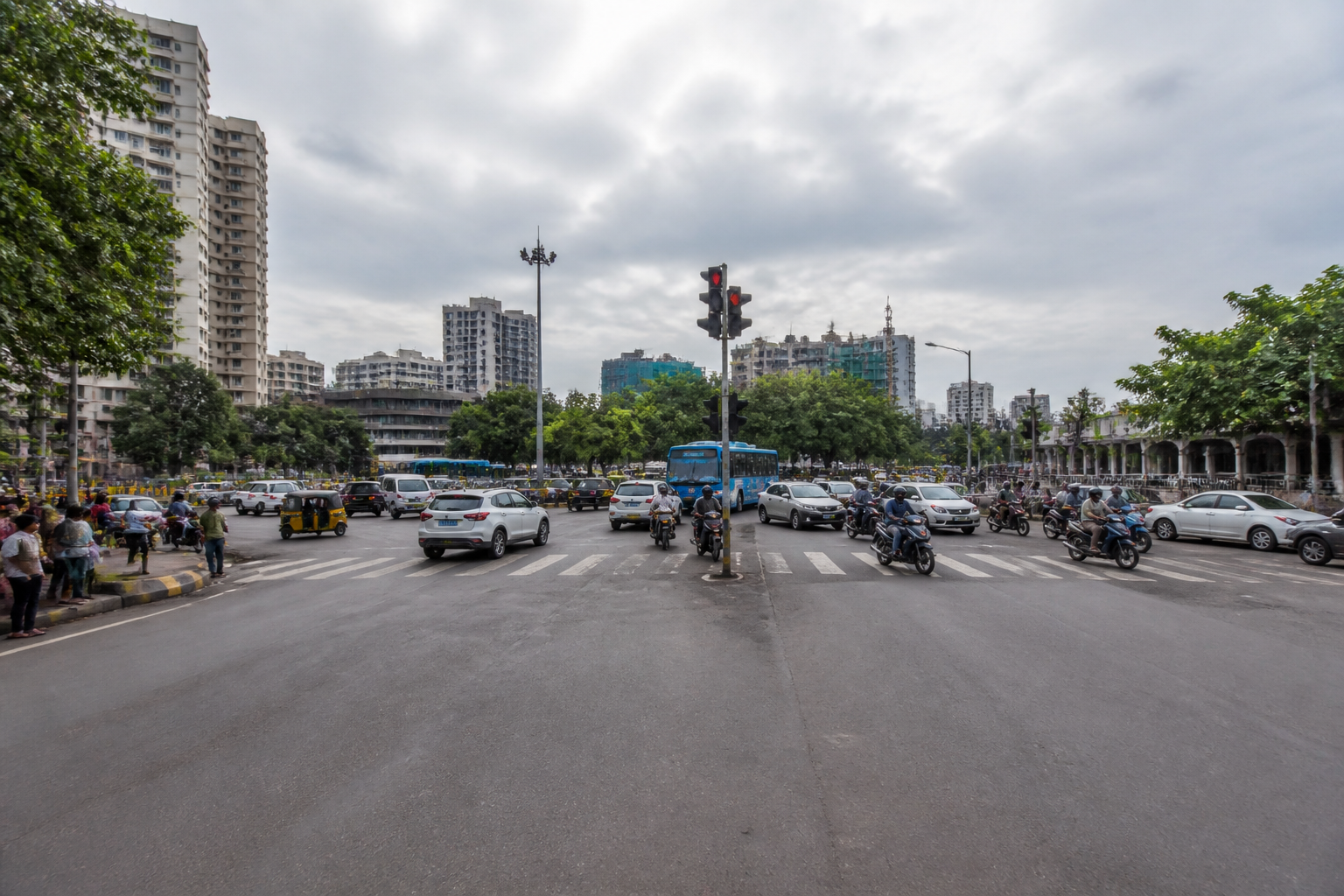
The Majiwada Junction traffic signal has been activated on an experimental basis in Thane, bringing a formal signal system to one of the city’s busiest and most complicated intersections. Traffic police said the signal timings will be adjusted after studying commuter feedback, congestion patterns and other operational factors.
The trial began at Majiwada Junction, where roads from several parts of Thane converge. The junction connects traffic heading towards Ghodbunder, Kolshet, Court Naka and Thane railway station, including vehicles travelling from the station towards Ghodbunder. It also handles traffic moving towards Nashik, Bhiwandi and Kalyan, as well as vehicles entering Thane city and the Ghodbunder area.
Vehicles travelling to and from the Vrindavan and Ritu Park areas also use the junction. With nine roads meeting at the intersection, traffic from multiple directions converges in a limited space. The arrangement has made Majiwada one of the key congestion points in Thane, particularly during peak hours when rising vehicle volumes place additional pressure on the junction.
Before the signal was activated, traffic police personnel regulated movement at the intersection. The absence of a signal system meant that officers had to manage vehicles arriving simultaneously from different directions, especially when queues formed at the junction and on connecting roads.
The complex road layout and the volume of traffic created a continuing operational burden for traffic personnel. When congestion intensified, officers were required to intervene repeatedly to clear vehicle queues and restore movement. The new system is intended to organise the flow through signal phases, although its effectiveness will depend on how well the timings respond to traffic arriving from the nine connecting roads.
Traffic police said the trial will be monitored and that changes will be made to the signal timings if required. Citizen feedback, the extent of congestion and other aspects of traffic movement will be considered during the assessment. The authorities have not indicated a final timeline for completing the trial or provided figures on expected reductions in travel time or queue lengths.
The immediate question for commuters is whether signal-based regulation can improve movement at a junction where traffic patterns vary by direction and time of day. The trial’s results will depend on observations made after activation, including how vehicles approach the junction during busy periods and whether queues shift to the connecting roads. Further changes to the signal timings will follow the traffic police assessment.

