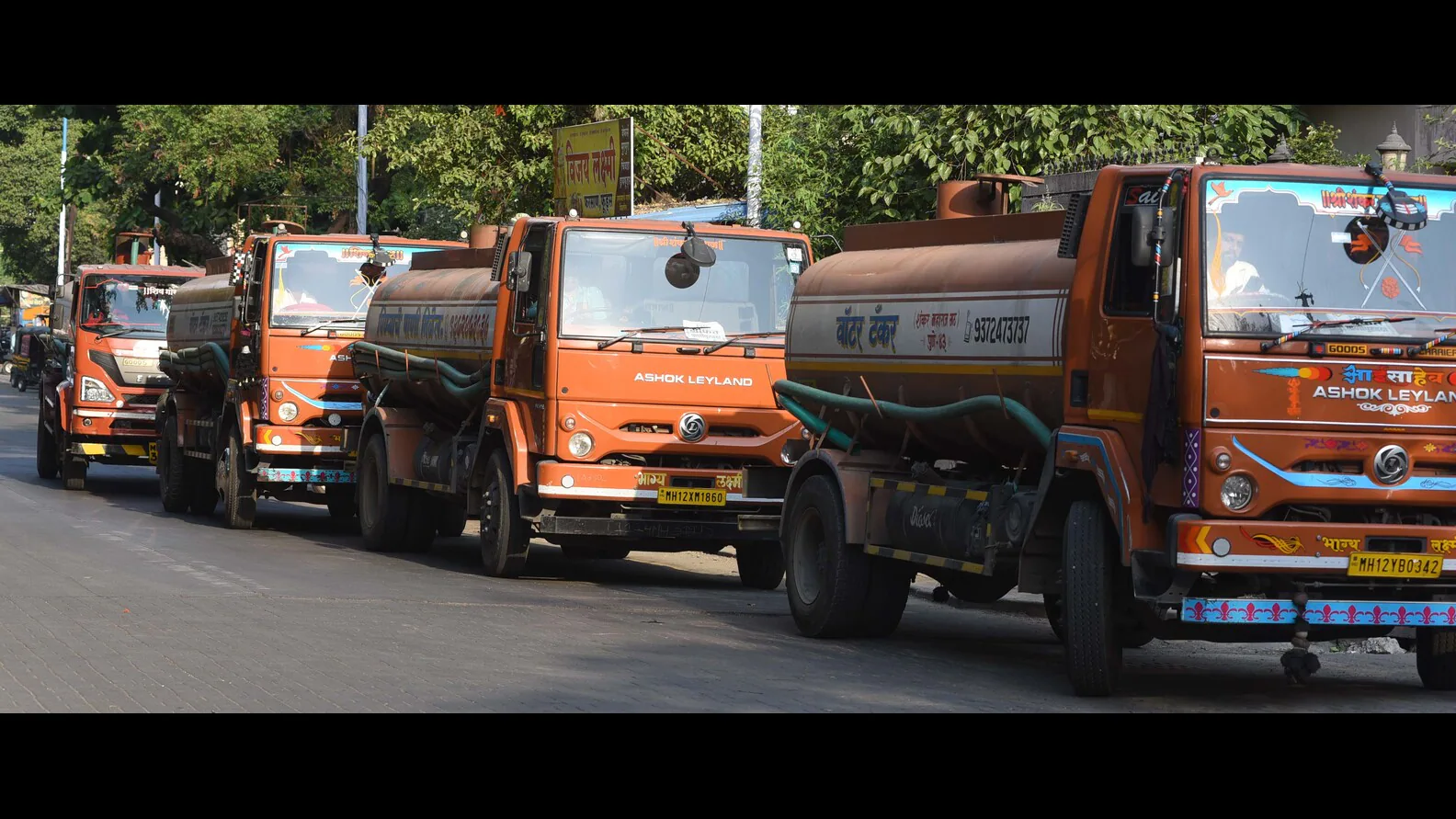
Maharashtra Expands Water Tanker Network Across Districts
Maharashtra has recorded a sharp rise in emergency water tanker deployment over the past month as rural regions confront mounting summer water stress and authorities prepare for the possible impact of El Niño-linked rainfall disruptions later this year. Data reviewed from the state’s water supply administration shows that the number of tankers supplying drinking water to villages and hamlets rose from 86 in early April to 466 by the first week of May. The increase reflects growing pressure on groundwater reserves and local water systems across several drought-prone districts, particularly in Marathwada and parts of western Maharashtra.
Officials monitoring the situation said the current Maharashtra water tanker demand remains significantly lower than the previous year, when over 1,000 tankers were operating during the same period. Experts attribute the comparatively stable situation to strong monsoon rainfall last year, which improved groundwater recharge and reservoir storage across large parts of the state. Even so, climate specialists warn that early summer trends indicate rising vulnerability in regions dependent on rain-fed water systems. The expanding tanker network highlights the continuing fragility of rural water infrastructure in areas already facing recurring heatwaves, erratic rainfall and declining groundwater levels. State officials have identified Chhatrapati Sambhajinagar division as the most water-stressed region currently relying on tanker support. Parts of the Konkan division have also seen increased deployment despite generally higher rainfall patterns, suggesting uneven local water availability and growing demand pressures linked to urbanisation and seasonal consumption. In contrast, districts within Nagpur division have so far avoided tanker dependence this summer, while parts of Vidarbha continue reporting relatively lower stress levels. Water management experts say these regional variations demonstrate the importance of decentralised planning and watershed-based conservation strategies rather than uniform drought responses.
The Maharashtra water tanker demand surge has prompted renewed focus on long-term climate adaptation measures. State authorities have accelerated work under water conservation programmes aimed at restoring local storage systems, improving groundwater recharge and strengthening drought resilience in vulnerable rural belts. Urban planners and environmental economists argue that tanker-based supply systems, although necessary during emergencies, cannot become a permanent substitute for sustainable water management. Heavy dependence on tanker transport increases energy use, operational costs and inequality in water access, particularly for low-income rural communities. Experts also point to the wider economic risks associated with prolonged water stress, including pressure on agriculture, migration patterns and rural employment stability. Climate-linked water scarcity is increasingly emerging as both an environmental and developmental challenge for rapidly urbanising states like Maharashtra. Government agencies are now intensifying monitoring efforts ahead of the monsoon season, particularly in regions with declining groundwater tables. Water conservation works, desilting activities and local recharge projects are being prioritised in anticipation of possible rainfall variability linked to global climate patterns.
With summer temperatures expected to remain elevated over the coming weeks, the effectiveness of local water conservation infrastructure and timely monsoon arrival will play a critical role in determining whether tanker dependence stabilises or expands further across the state.