


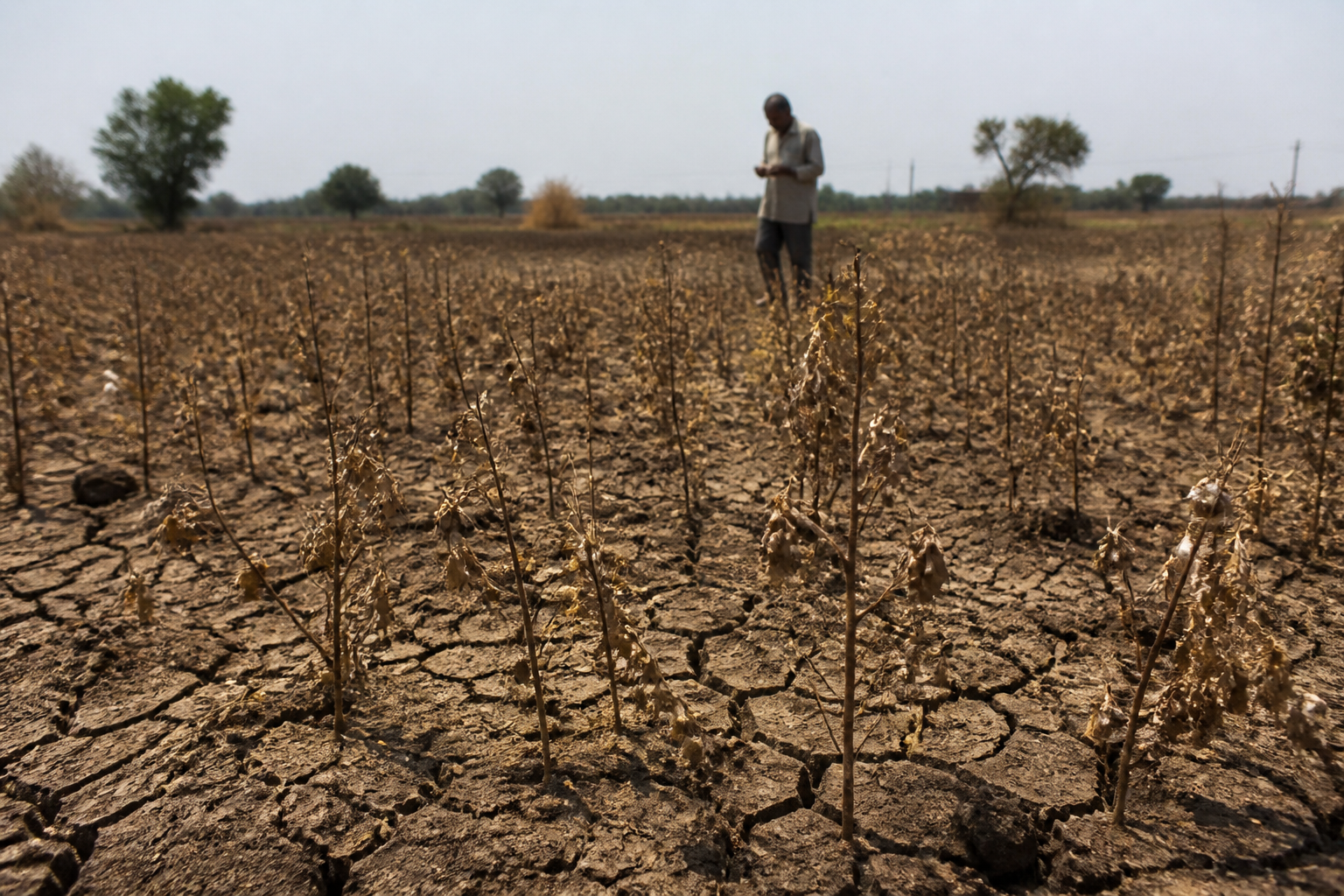
Maharashtra’s drought situation is worsening, with cotton and soybean production contracting sharply and the state beginning an early crop assessment to calculate compensation for affected farmers, according to the Economic Times. The crisis is also raising concerns over food and cash-crop supplies, fodder availability, milk production and poultry prices.
Chief Minister Devendra Fadnavis said after a cabinet meeting on Tuesday that the state would issue a notification identifying drought-affected areas and detailing relief measures. He said large parts of Maharashtra were experiencing drought-like conditions, with soybean, cotton, maize, jowar and paddy wilting across extensive areas.
Agriculture Minister Dattatray Bharane confirmed a significant contraction in cotton and soybean production. The agriculture department has started an early crop assessment as farmers in some areas remove wilted crops from their fields. The assessment is intended to establish the extent of damage and help determine compensation.
The scale of the disruption matters beyond individual farms. Maharashtra is among India’s largest producers of sugarcane, soybean and cotton and is also a major producer of fruits and vegetables. A decline in output could therefore affect agricultural incomes as well as the supply chains that connect farms to markets, processors and consumers.
Some areas have already begun reporting fodder shortages, creating an additional risk for livestock-dependent households. The Economic Times report said the drought could also affect milk and poultry production and prices, although the scale and duration of those effects will depend on how the crop and relief situation develops.
Data compiled by the Soyabean Processors Association of India shows that, of the 11.79 million hectares planted with soybean across the country, crops on 8.84% of the area had suffered 100% damage. Soybean is India’s most important kharif oilseed crop. Industry executives cited in the report said production from other states, including Madhya Pradesh, could help offset some of the impact on supplies.
The drought declaration process has also become a matter of political and administrative pressure. Opposition parties have been demanding that the state formally declare a drought, while farmers’ organisations have threatened agitations seeking relief. The proposed notification will determine which areas are officially recognised as affected and which relief measures can be applied.
For Maharashtra’s rural economy, the immediate issue is not only lost harvests but the administrative speed of damage assessment, area notification and compensation. Farmers are already removing failed crops, while the state is attempting to measure losses before finalising relief. The next formal step is the government notification listing drought-affected areas and the measures available to them.
