


Kerala’s emerging El Nino-linked drought risk is exposing a problem that extends beyond the fields now being prepared for the Mundakan paddy season: farmers, reservoirs and local institutions are not working from the same level of climate information. In Palakkad, farmers are choosing shorter-duration paddy varieties because water availability is uncertain. In Wayanad, three panchayats are compiling their own weather data and seeking formal recognition of drought conditions. Together, these developments show how climate stress is becoming a question of local governance and agricultural planning.
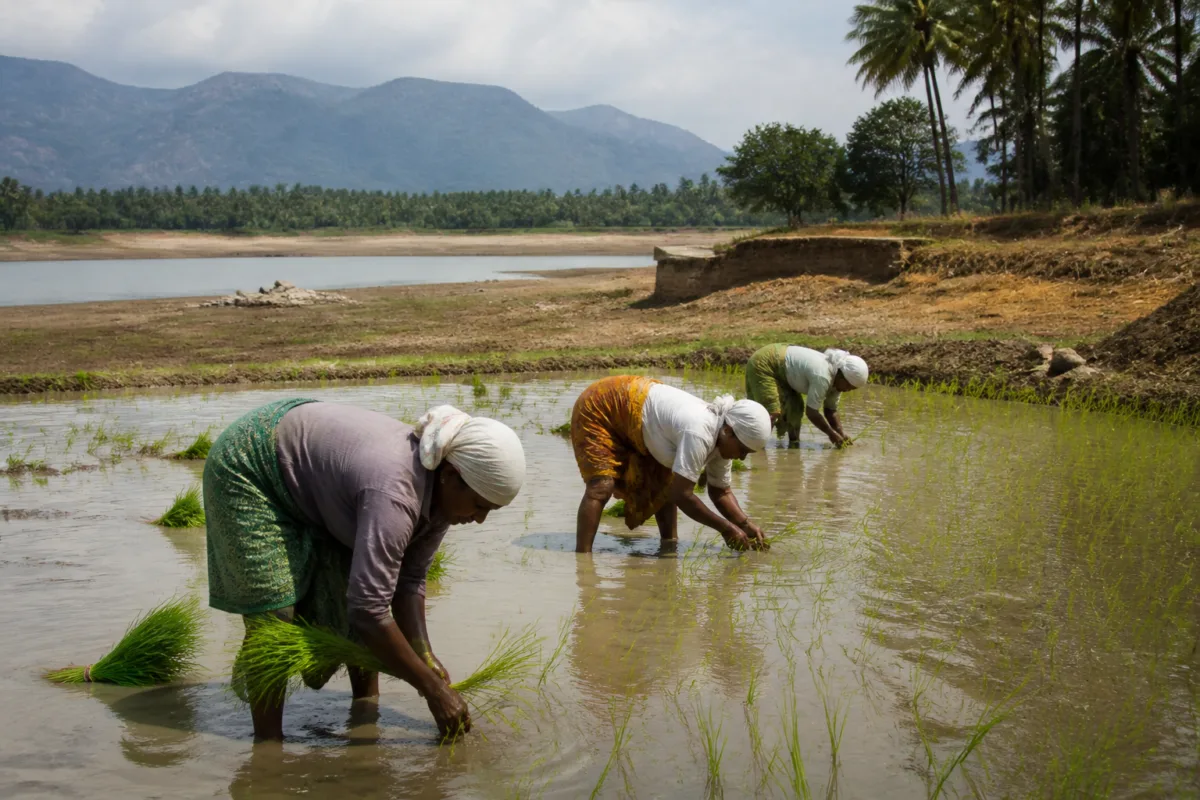
At Mathur in Palakkad, farmers have begun replanting Kanchana paddy seedlings in water-retained fields. The variety can be harvested in about 100 days, compared with around 135 days for long-duration varieties preferred by many older farmers. The decision is being shaped by concern that an intensive summer, potentially aggravated by El Nino, could reduce the water available during the crop cycle.
El Nino refers to unusually warm ocean surface temperatures in the central and eastern Pacific. In India, it has been associated with higher temperatures and an increased likelihood of below-normal Southwest Monsoon rainfall, although conditions vary between states. For Kerala’s cultivators, the significance of the phenomenon is not simply meteorological. It affects when crops are planted, how long they remain in the field and whether irrigation systems can sustain them until harvest.
The immediate concern in Mathur is the level of water in the Malampuzha reservoir. Farmer Unnikrishnan K said the current storage would allow the irrigation department to release water for about 53 days, while the crop requires water for roughly 100 days. Recent short spells of rain enabled farmers to begin replanting, but continued rainfall deficiency could force them to pump water from wells to prevent crop damage.
That gap between available reservoir supply and crop requirements illustrates the limits of treating drought as a seasonal emergency. Water planning for agriculture depends on more than rainfall totals. It also depends on reservoir storage, crop duration, irrigation release schedules, groundwater access and the timing of planting. A farmer who selects a longer-duration variety may gain higher yield potential, but also carries a greater risk if irrigation fails before harvest.
The Kerala agriculture department has identified food crops as the sector likely to face the highest damage from the impending drought risk. Vegetables, coconut, cash crops, rubber and plantation crops have also been identified as vulnerable. The state recorded a 28% rainfall deficit during the Southwest Monsoon, while Wayanad and Idukki recorded the highest shortfalls, according to the report cited by the newspaper.
The effects are already visible in the experience of farmers. Jayaprakash K, a vegetable farmer in Vattavada panchayat in Idukki, said he was not aware of El Nino but had experienced a severe rain deficit during the previous monsoon. Potato and garlic cultivation suffered heavy damage. This gap between scientific terminology and farm-level information is important: a climate warning has limited value if it does not reach cultivators in a form that can change decisions on seed selection, planting area and water use.
Agricultural officials generally recommend short-duration varieties to reduce exposure to unpredictable weather. Yet farmers cannot easily abandon established practices. Agricultural scientists cited in the report said long-duration varieties may have higher yield potential because crops have more time to use sunlight and accumulate biomass. Their success, however, depends heavily on water being available throughout the growing season.
This creates a difficult trade-off. Short-duration varieties can reduce the period during which a crop is exposed to water stress, but they may not offer the same yield characteristics or market familiarity as traditional varieties. Farmers’ choices are therefore shaped by practical and socio-economic considerations, not just by technical recommendations. Climate adaptation cannot be reduced to telling cultivators to change seeds without addressing the risks attached to that change.
B Ajithkumar, head of the department of agricultural meteorology at Kerala Agricultural University, said the Northeast Monsoon could provide some relief if rainfall in catchment areas replenishes irrigation reservoirs. He also said Kerala had earlier experienced significant Southwest Monsoon deficits followed by good Northeast Monsoon rainfall, before El Nino’s effects began influencing the country’s summer season. The observation underlines the importance of tracking rainfall by location and season rather than relying on a single statewide assessment.
The risks also differ by crop. Pepper is particularly susceptible to prolonged dry conditions because of its shallow root system, according to an agriculture department official. Banana and coconut cultivation may suffer from reduced water availability and lower yields. Banana planted for the Onam season must survive the subsequent summer months, making water management particularly important. Coffee and cardamom plantations in the high ranges are also expected to be vulnerable to El Nino-related conditions, according to the agricultural meteorologist cited in the report.
These crop-specific risks place additional demands on local administration. The agriculture department has said local bodies must help raise awareness among farmers and explain the challenges expected during the coming season. It has suggested that panchayats convene exclusive meetings, including grama sabhas with farmers, before damage occurs. This is a significant shift from responding to losses after a drought to communicating risk early enough for farmers to alter their plans.
The responsibility of local bodies is not limited to public messaging. Panchayats are often the most immediate institutional link between farmers and government departments. They can help identify vulnerable cultivation areas, communicate water shortages, coordinate local information and transmit requests for assistance. But the report also shows that this role depends on the quality and recognition of the information available to them.
Wayanad offers a bottom-up example. Pulpally, Mullankolly and Thirunelly panchayats have jointly compiled local weather data from stations installed by the Hume Centre for Ecology and Wildlife Biology. They submitted the data to the chief minister and relevant government authorities, seeking official recognition of their areas as drought-hit regions. Such recognition could help affected farmers access government assistance, compensation and other relief measures. The government had not formally declared the areas drought-affected at the time of the report.
The initiative points to an institutional gap in climate governance. Local weather stations can capture conditions that broader assessments may not fully reflect, particularly across a state with sharply different landscapes and crops. However, locally collected data becomes consequential for farmers only when official systems recognise it and connect it to relief, compensation or planning decisions. Data collection without an administrative pathway risks becoming an archive of distress rather than an instrument of prevention.
The same issue applies to reservoir management. In Palakkad, the reported 53 days of irrigation supply compared with a 100-day crop requirement gives farmers a practical measure of risk. But the ability to respond depends on decisions made across several institutions, including irrigation authorities, agriculture officials, local bodies and individual cultivators. The report does not establish whether a coordinated contingency plan is in place, making the communication of reservoir conditions particularly important.
Kerala’s challenge is therefore not only whether the next monsoon performs as expected. It is whether the state’s agricultural and local governance systems can convert climate information into timely decisions. Farmers need information before planting, irrigation agencies need to align releases with crop calendars, and local bodies need mechanisms to report ground conditions. The need is especially urgent where livelihoods depend on crops with different water requirements and exposure periods.
The emerging response remains uneven. Some farmers in Palakkad are adjusting crop duration, while others continue preparing seedbeds for longer-duration varieties. Some farmers in Idukki remain unaware of the climate phenomenon despite having experienced crop losses. In Wayanad, panchayats are producing local evidence and seeking official recognition, but that recognition had not yet been granted. These examples show that adaptation is already happening, but not through a single integrated system.
What the evidence confirms is a chain linking rainfall deficit, reservoir storage, crop duration, local awareness and administrative recognition. What remains uncertain is the severity and geographical spread of the coming drought conditions, the extent to which Northeast Monsoon rainfall will replenish reservoirs and whether official support will follow locally documented impacts. The next important developments will be the status of irrigation reservoirs, the state’s assessment of drought-affected areas and the ability of local bodies to reach farmers before planting decisions become irreversible.

