


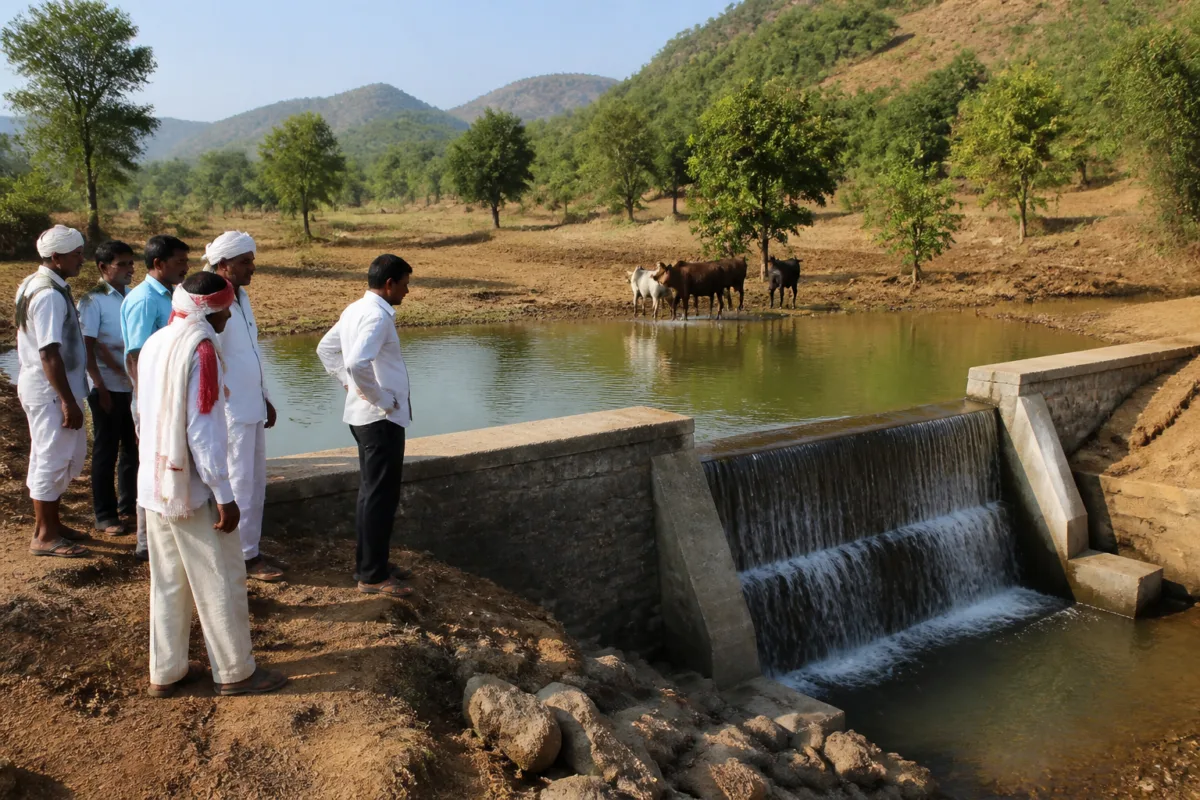
Maharashtra has given in-principle approval to a dedicated tribal water scheme aimed at providing reliable water for farming, drinking and livestock across tribal settlements in the state, according to a report by Pudhari. The proposed initiative will be called the Bhagwan Birsa Munda Jalyukt Shivar Abhiyan.
The proposal was discussed at a special meeting held at the Tribal Development Commissionerate in Nashik under the chairmanship of the commissioner. Officials from the departments concerned examined the proposal before it was sent to the state government, which has now granted in-principle approval.
The campaign is intended to address the dependence of tribal agriculture on seasonal rainfall. The report said Maharashtra has nearly 80 lakh tribal farmers, with Nandurbar and Gadchiroli among the districts having the largest tribal farmer populations. Many tribal settlements are located in hilly and forested areas, where irrigation infrastructure is limited and access to water after the monsoon remains difficult.
Farmers who own land in these areas are often able to cultivate it only during the rainy season. According to the report, the absence of water facilities after the monsoon restricts cultivation to around three to five months a year. The shortage also affects drinking-water access and the availability of water for livestock.
The proposal follows sustained efforts by Ravindra Talpe, president of the Tribal Development and Security Association, who has been pursuing the issue with officials of the tribal development department, including the commissioner and principal secretary. Talpe said the proposed campaign would provide water security to tribal villages, improve access to water for farms and support the economic security of tribal families.
The demands linked to the proposed campaign include a separate initiative for scheduled areas and a time-bound 10-year action plan. A dedicated water-conservation cell has also been sought, along with effective use of available funds under existing rules. The proposal further calls for an integrated water-security plan for every tribal village, prepared with the participation of the gram sabha.
A high-level committee has been proposed to prepare the action plan and submit it to the government. The campaign’s implementation framework, funding allocation, village-level coverage and timelines have not been detailed in the report beyond the in-principle approval.
The decision places water conservation in tribal areas within a broader public infrastructure challenge: settlements spread across hilly and forest regions require local water systems that can serve agriculture, households and livestock together. The next formal step is the preparation and submission of the proposed action plan by the committee and concerned departments.

