


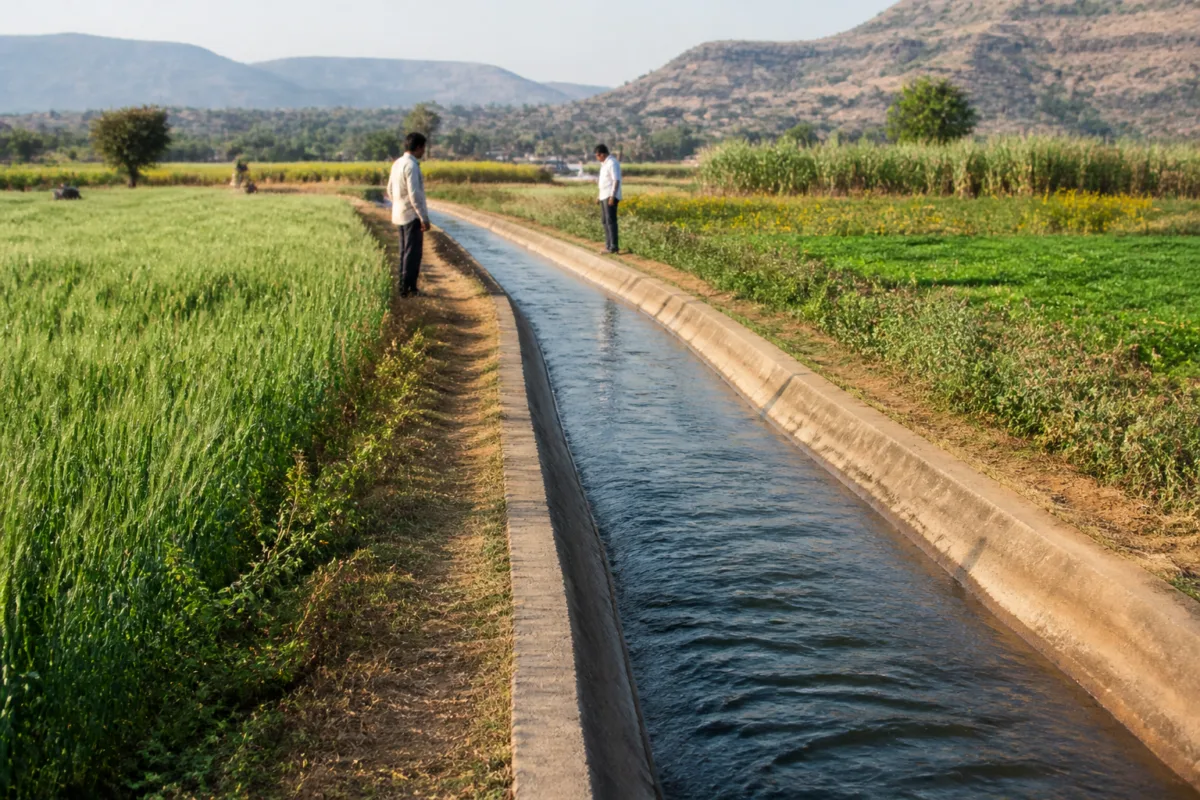
The Pimpalgaon Joga canal’s left-bank water rotation has begun, providing irrigation support to farmers in parts of Junnar and Parner during a rabi season affected by below-normal rainfall. The rotation is scheduled to continue until 1 January, according to the Kukadi Project’s Narayangaon sub-divisional engineering authorities.
The dam currently holds about 80% of its storage capacity, and the available water has been taken into account while starting the canal rotation. The water will support rabi crops including wheat, gram, onion, sugarcane, vegetables and fodder, which are dependent on timely irrigation during the winter growing season.
Ravindra Hande, deputy engineer of the Kukadi Project at Narayangaon, provided the information cited in the report. The rotation will benefit farming areas including Otur, Pimpri Pendhar, Wadgaon Anand, Rajuri, Belhe and Ranmala in Junnar taluka, along with Padali, Alkuti and Devibhoyare in Parner taluka.
The irrigation release comes after reduced rainfall left several areas facing water stress. The fall in rainfall has also lowered groundwater levels in a number of wells, making it more difficult for farmers to irrigate their rabi crops. The canal supply is expected to help farmers provide water at the required stage of crop growth and support the maintenance of yields.
The canal water may also help sustain groundwater levels in nearby wells, although the report does not provide a quantified estimate of the expected recharge. The canal is an important source of irrigation for agricultural areas across Junnar and Parner, where farmers grow onions, sugarcane, vegetables, wheat, gram and other irrigated crops.
This is the first rotation of the rabi season. The duration of the current release means that farmers will need further clarity on water availability after 1 January, particularly for summer crops, livestock fodder and drinking-water requirements. Farmers have expressed the expectation that a second rotation will be provided.
The decision on the next rotation is expected to be taken at a meeting of the canal advisory committee. Until then, water planning for the summer season remains linked to the dam’s available storage and the committee’s allocation decision.

