


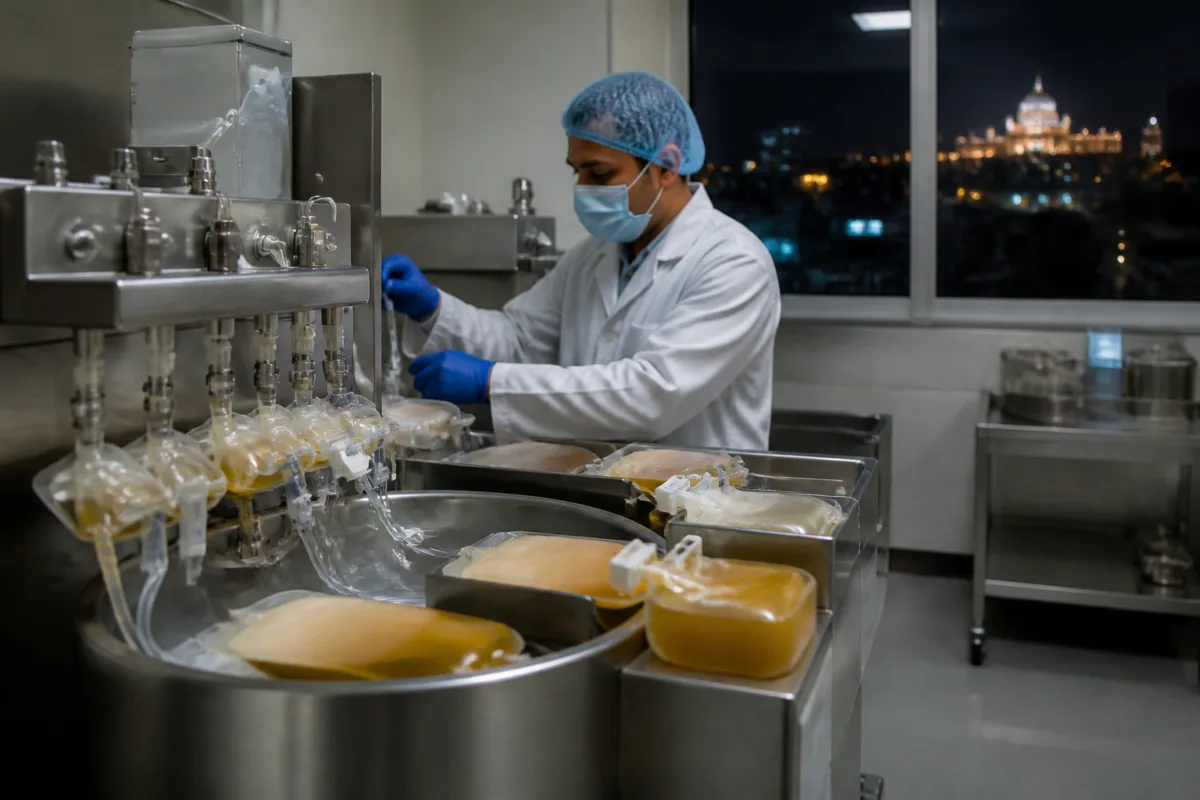
King George’s Medical University has started round-the-clock platelet processing in Lucknow as dengue cases rise, allowing its blood bank to process donations received after 5pm through the night and improve availability for patients outside regular working hours.
The KGMU blood bank supplied 1,260 units of platelets during the past week, according to the report. The extended processing schedule has been introduced to meet rising demand during the dengue season and support patients requiring platelet-related care.
Lucknow recorded 22 new dengue cases on Saturday, taking the city’s total for the year to 622. Nearly 300 cases were recorded in September, indicating a sharp increase in reported infections during the season.
Dr KK Sawlani of KGMU’s medicine department said platelet transfusion is not required for every dengue patient. Doctors determine whether a transfusion is needed based on bleeding and other clinical indicators, rather than platelet counts alone, according to his statement cited in the report.
The distinction is important for patients and families seeking urgent care during a seasonal rise in demand. KGMU’s overnight processing arrangement addresses the timing of blood-bank operations, while the decision to transfuse remains a clinical matter for treating doctors.
Chief medical officer Dr NB Singh advised residents with fever to undergo dengue testing and seek medical care. He said government hospitals are providing dengue testing and treatment free of cost.
Singh also urged residents to prevent water stagnation around their homes to limit mosquito breeding. The advisory places household-level prevention alongside the city’s clinical response as Lucknow manages the continuing rise in cases.
KGMU’s round-the-clock platelet processing is currently aimed at ensuring that donations received after regular evening hours can continue to be processed overnight. The hospital’s medical team will determine transfusion requirements for individual patients, while government health facilities will continue to provide free testing and treatment, according to the statements cited by the report.

