


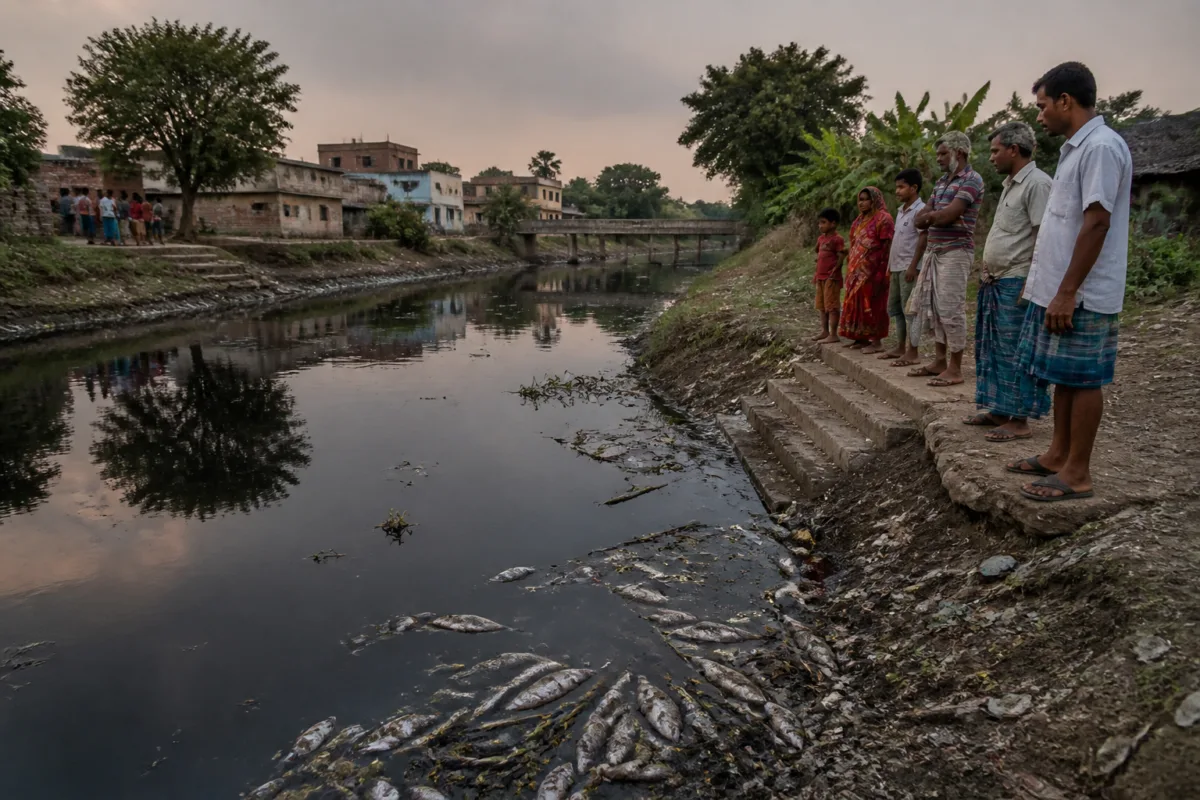
Authorities in Purba Bardhaman have advised residents not to use water from the Kunur River or eat its fish after dead fish were found floating in the river and the water reportedly turned black near Guskara and adjoining areas. Officials collected water and fish samples on Friday to determine the cause of the suspected contamination.
The affected stretch runs for about five kilometres past Guskara in Purba Bardhaman. The incident was reported after fish of different sizes and species began dying over three days in and around Ausgram. Residents also reported a foul smell from the river and said fish were seen struggling in the water before dying.
The administration’s advisory covers everyday uses of the river water as well as fishing and consumption of fish caught from it. The restrictions were issued after a team comprising officials from the district fisheries department, forest department and Ausgram-I block administration inspected the affected areas, including Guskara and nearby rural settlements.
Local residents said the river remains part of their daily water-use system. People in Baburbadh village near Guskara told the Anandabazar report that many households use Kunur water for bathing and washing utensils. Residents also claimed that several people had developed skin problems in recent days and that a number of cattle had fallen ill. These health-related claims have not been independently established in the supplied report.
Residents have alleged that waste from an ethanol factory located near the Ausgram-Kanksa border entered the river before the pollution began. The administration has not confirmed that allegation or identified the source of the contamination. Officials said the exact cause would be known only after the samples are tested.
Shubhabrata Chattopadhyay, assistant director of the Purba Bardhaman district fisheries department, said it was too early to determine what had caused the suspected poisoning of the river. He said water samples would be sent to the department’s laboratory and to the zoology department laboratory at the University of Burdwan. The collected samples include river water and several fish.
The Kunur’s hydrological link with the Ajay River adds to the significance of the incident for nearby settlements. The report said the Ajay is at a higher elevation than the Kunur, and that during the monsoon, Ajay water can enter the Kunur near Bastupur and flow towards Guskara. Local residents said similar seasonal water movement had not previously produced a situation of this kind.
Until the test reports are available, officials have asked residents to avoid using Kunur water for daily activities and to refrain from eating fish from the river. The administration’s next step is to examine the laboratory findings and establish the cause of the contamination.

