


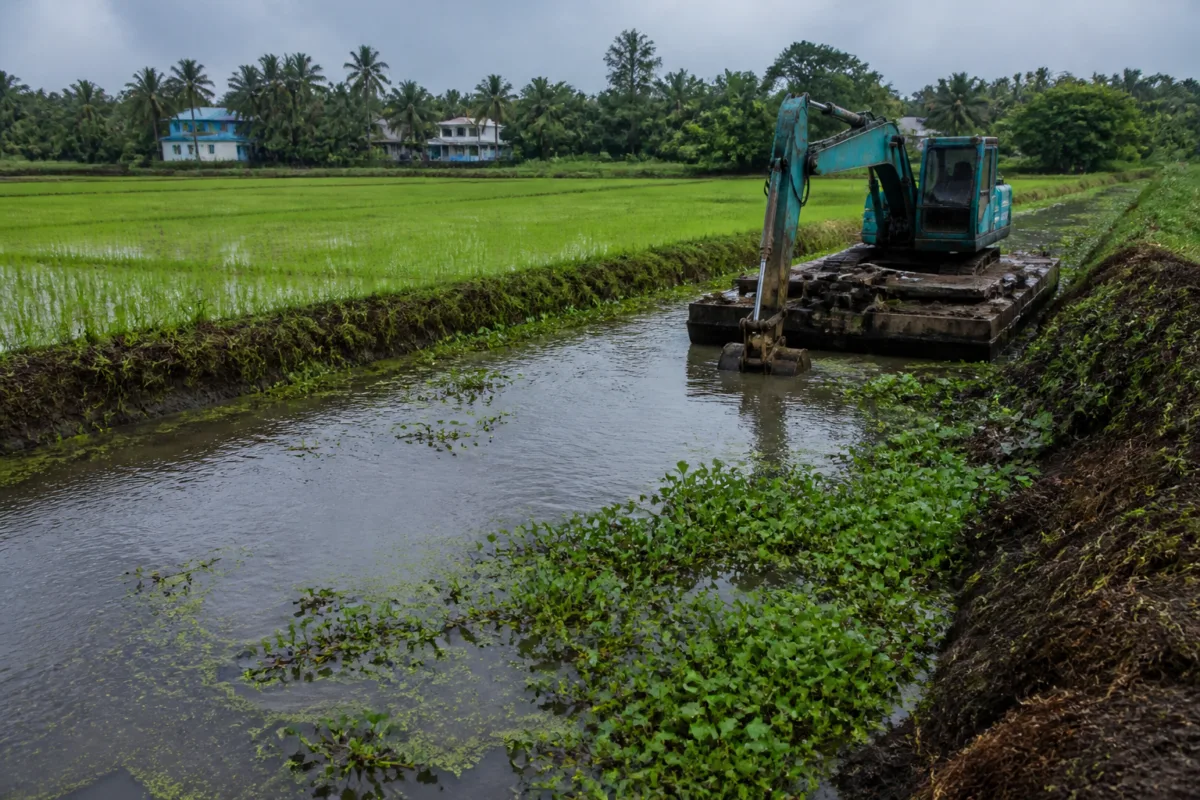
Farmers in Parakkadavu have called for the early completion of renovation work at Valiyakulam and Aluva Thodu, warning that remaining water hyacinth, algae and silt could obstruct drainage during heavy rain and waterlog nearby paddy fields.
The sites are in Ward 15 of Parakkadavu panchayat in Ernakulam district. Valiyakulam covers about 7.5 acres, while Aluva Thodu extends for around two kilometres and is approximately five metres wide.
According to a Mathrubhumi report, the Irrigation Department began removing aquatic growth and silt using a floating excavator more than a month ago. Farmers said the machinery was taken away two days before the report after officials appeared to consider the work complete. However, they claimed that algae and water hyacinth remained near Valiyakulam and at several points along the canal.
The farmers said the project was intended to remove silt from the pond and clear the water hyacinth fully using Irrigation Department funds. They alleged that only a limited quantity of silt had been removed around the pond and that the aquatic growth had been cleared only partially.
They also alleged that there was an attempt to process the bill as if the work had been completed, despite the renovation remaining unfinished. The report does not provide an official response from the Irrigation Department or details of the sanctioned amount, contractor, work order or inspection records.
V.P. Naiju, president of the Poovathussery Padasekhara Samiti, and secretary Saiby Ittup called for strong action by the authorities against the alleged irregularities. The farmers’ concern is that any obstruction in Aluva Thodu could reduce the flow of rainwater from adjoining agricultural areas. With paddy planting already completed, prolonged water stagnation could affect the fields, they said.
The allegations require an official inspection and disclosure of the project’s scope, measurement records and completion status. Until the remaining aquatic growth and silt are assessed and removed where necessary, the condition of the waterway remains a concern for local agricultural drainage.

