


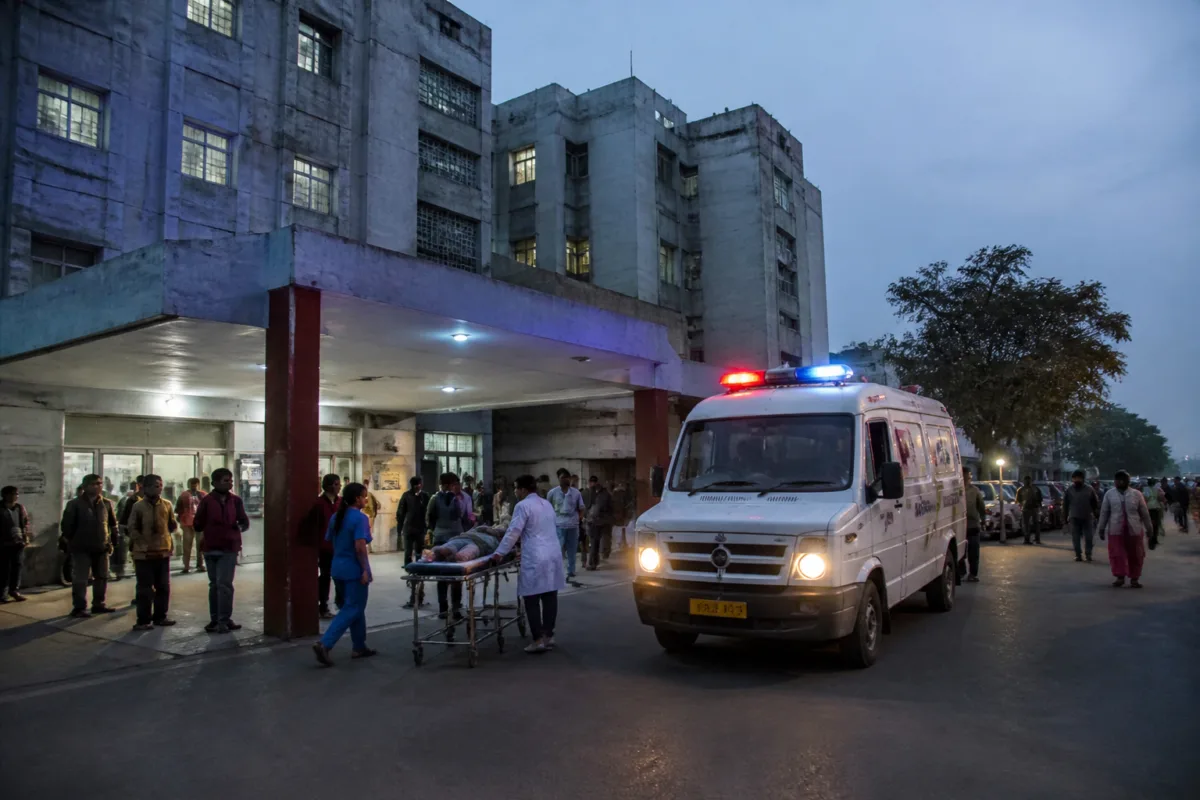
A six-month pregnant woman from Baran district died while undergoing treatment at Kota’s New Medical College Hospital after her condition worsened from severe fever, a fall in platelet levels and septic shock, according to a report by The Times of India. The case has highlighted the critical role of timely referral and continuity of care between district hospitals and tertiary medical centres.
The woman, identified as 31-year-old Phula Bai, had been receiving treatment for fever at Baran district hospital for nearly 15 days. She was referred to Kota’s New Medical College Hospital on Wednesday after her condition deteriorated, the report said. She died during treatment on Friday night.
Baran chief medical and health officer Sitaram said Bai had been admitted to the district hospital for severe fever and not for delivery. He said her platelet count fell as her condition worsened, prompting the referral to Kota. According to the CMHO, the high fever led to septic shock and the woman could not be saved.
The case illustrates how district hospitals function as the first point of treatment for patients who may later require specialist or intensive care at a larger medical facility. In such cases, the referral is not only a transfer between locations but also a time-sensitive handover involving diagnosis, medical records, transport, receiving-bed availability and continuity of treatment.
Sitaram said health authorities had been monitoring and tracking Bai from the first month of her pregnancy. His statement indicates that the health department had information about her pregnancy and medical status before the hospital admission. The report, however, does not provide further details about the nature of that monitoring, the transport arrangements used for the referral, the time taken to reach Kota or the treatment provided after her arrival.
The available account also does not establish whether the fever was caused by a specific infection or whether any other medical condition contributed to the deterioration. The cause of death described in the report is based on the CMHO’s statement that the woman developed septic shock following high fever. Officials at New Medical College Hospital did not respond to the newspaper’s queries, according to the report.
The incident places attention on the operational links between Baran’s district health system and Kota’s tertiary-care facilities. A referral can improve access to advanced treatment only when the receiving hospital is prepared to accept the patient, clinical information travels with the patient and emergency care begins without avoidable delay. The supplied report does not provide enough information to assess those aspects in Bai’s case.
The immediate official account is therefore limited to the referral, the deterioration in health, the reported fall in platelets, the development of septic shock and the woman’s death during treatment. Further details from the health department or New Medical College Hospital would be required to establish the full sequence of medical care and the circumstances surrounding the referral. The next step is expected to be clarification from the concerned medical authorities on the treatment and referral process.

