


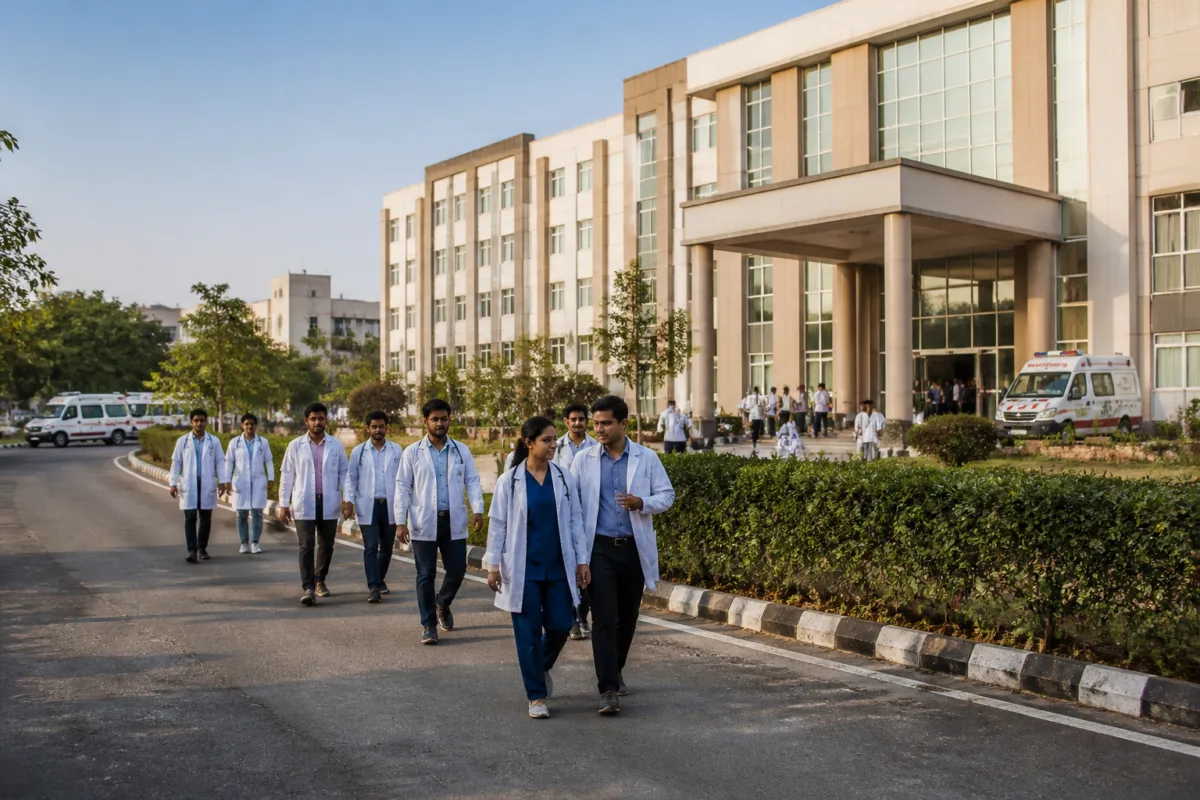
Tamil Nadu has added 424 postgraduate medical seats in government colleges after permission from the National Medical Commission, taking the state’s total government PG seats to 2,782 ahead of the second round of counselling scheduled to begin on November 17.
The additional seats have been approved across state-run medical colleges, including 11 new government medical colleges. They cover clinical specialities such as anaesthesia, orthopaedics, general medicine and surgery, according to the report.
The increase takes Tamil Nadu’s government postgraduate seat count from 2,358 in 2025 to 2,782 this year. The new seats are expected to give candidates more options during the second round of state counselling, subject to their inclusion in the final seat matrix.
Nearly half of the government postgraduate seats are allocated each year for admission through All India counselling conducted by the Medical Counselling Committee under the Directorate General of Health Services. Of the current total, 1,325 seats will be available through the central counselling process.
The remaining 1,457 seats will be filled through single-window online counselling conducted by the state selection committee under the Directorate of Medical Education. The committee will add the newly approved seats to the state seat matrix after Tamil Nadu Dr MGR Medical University grants affiliation to the relevant courses and colleges.
The affiliation is expected before the second round of state counselling begins and before the third round of central counselling, selection committee member Dr V Lokanayaki said. The timing of the affiliation process will determine when the additional seats become available to eligible candidates.
The expansion is also linked to the development of specialist services in newer government medical colleges. Dr Lokanayaki said the growth of postgraduate and super-speciality departments in district-level institutions would support a wider distribution of medical services, including high-end treatment, across Tamil Nadu.
The additional seats therefore serve two immediate purposes: widening access to postgraduate medical education and helping newer government colleges build specialist departments and teams. The next formal milestone is the completion of university affiliation and the publication of the revised seat matrix before the second counselling round.

