


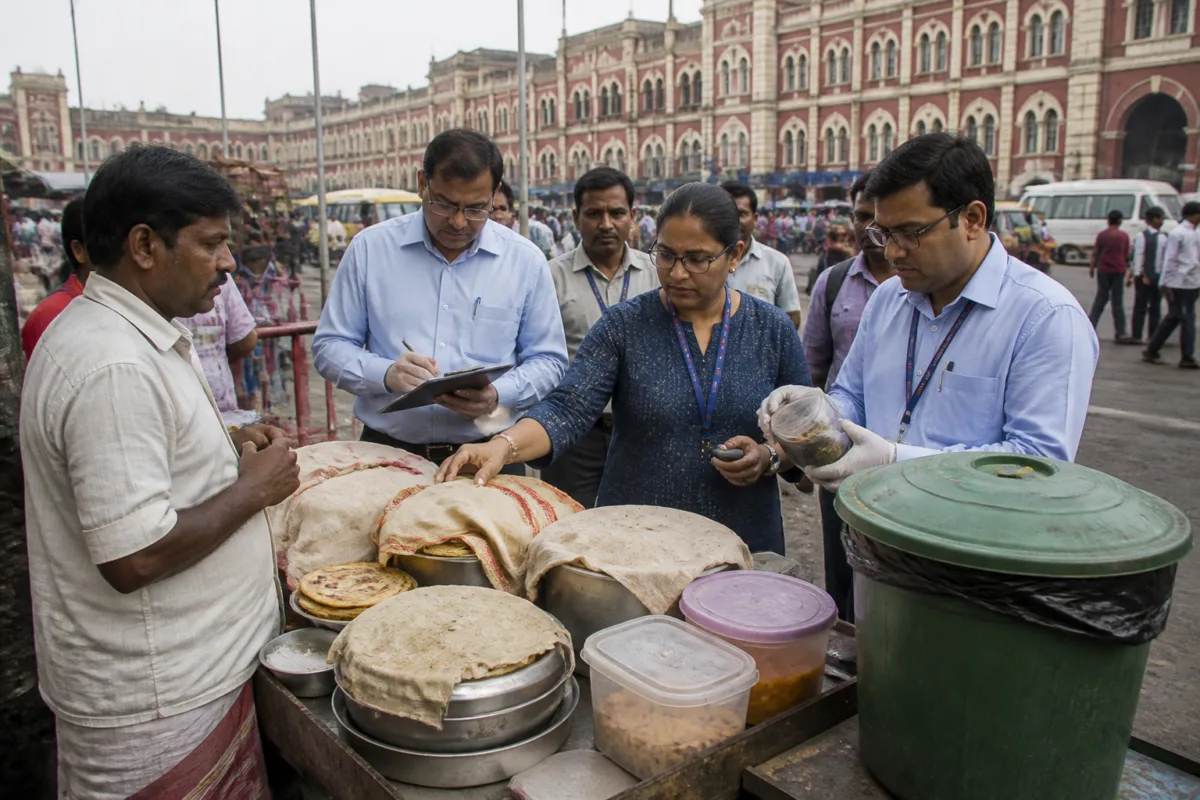
Kolkata Municipal Corporation inspected about 25 street-food stalls around Sealdah station on Saturday and found 19 of 40 food samples short of standard during spot checks, according to a KMC official. The food was destroyed, while additional surveillance samples have been sent for laboratory testing to determine whether they comply with Food Safety and Standards Authority of India guidelines.
The inspection included the social-media-famous ‘pocket paratha’ stall near Sealdah station. KMC officials told the stall operator that hygiene conditions around the outlet needed improvement and instructed the operator to wear a head cover, keep the waste container covered and properly cover the parathas.
According to the KMC official, the parathas had been stored in a container covered only with a piece of paper. The civic body’s comments focused on basic handling and hygiene practices at the stall rather than announcing any final laboratory finding against the operator.
KMC sources said Saturday’s drive covered street-food stalls and involved the collection of 40 samples for spot inspection. A spot inspection can indicate issues such as the presence of colours that are not permitted under food-safety standards. Based on the inspection results, the food identified as short of standard was thrown away.
The civic body has also collected surveillance samples for laboratory examination. Those tests are expected to establish whether the food meets FSSAI requirements. The laboratory process will classify non-conforming food based on the nature of the violation, including whether it is unsafe to eat, substandard or affected by labelling defects.
KMC officials described unsafe food as food that is highly injurious to health. Substandard food, by contrast, is not necessarily injurious but does not meet the required standard. Labelling-related violations apply to packaged food that lacks information such as a batch number, date of manufacture, expiry date or nutritional details.
The inspection brings a routine enforcement question into focus at one of Kolkata’s busiest transport areas: how food sold in high-footfall locations is monitored after preparation and before it reaches commuters. In this case, the municipal action combined immediate disposal of food found short of standard during spot checks with the collection of samples for a more conclusive laboratory assessment.
The KMC has not announced the laboratory results from the surveillance samples. Further action will depend on whether the samples are found to violate FSSAI requirements and which category of non-conformity is established.

