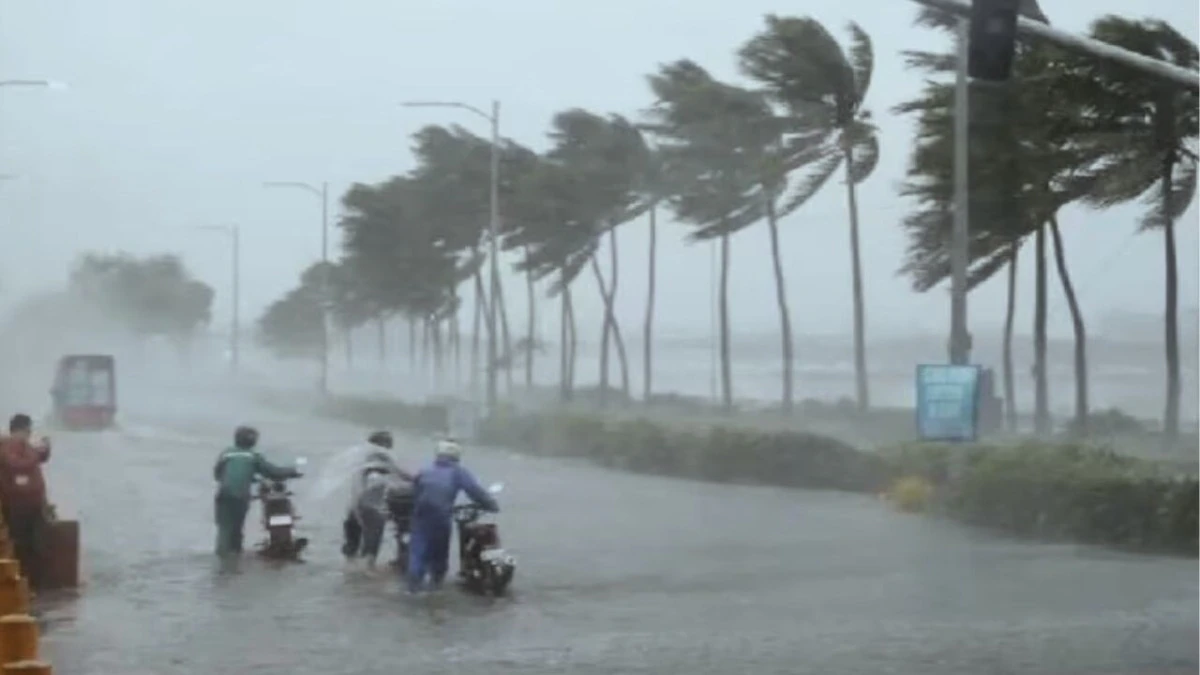
Heavy rain disrupted Kolkata on Tuesday, with waterlogging across low-lying areas slowing traffic and making routine journeys difficult during office hours. The downpour followed a well-marked low-pressure system over Gangetic West Bengal that remained nearly stationary, bringing substantial rainfall to the city and surrounding districts. Beyond the immediate disruption, the episode has again put Kolkata’s drainage capacity and preparedness for intense rainfall under scrutiny.
Kolkata recorded 23 mm of rainfall in the 24 hours to 8.30 am, while neighbouring Salt Lake received 40 mm, according to the India Meteorological Department. Kalaikunda in Paschim Medinipur recorded 51 mm, the highest among the locations reported during the period. Panagarh received 50 mm, while Barrackpore, Canning and Haldia recorded 43 mm, 44 mm and 30 mm respectively.The impact was most visible on the city’s roads. Water accumulated across several low-lying stretches as rainfall intensified, slowing vehicles and creating traffic bottlenecks on major routes. Schools, office-goers and other daily commuters were among those affected, underlining how quickly extreme weather can translate into lost working hours, delayed services and higher travel costs.For Kolkata, however, the immediate inconvenience is only one part of the problem. Repeated episodes of urban waterlogging raise questions about how effectively drainage networks can absorb short periods of intense rainfall.
Urban planners note that drainage performance depends not only on pumping capacity but also on maintaining channels, protecting natural water-retention areas and limiting excessive surface paving.That becomes increasingly relevant as cities face more uncertain rainfall patterns. A drainage network designed around historical rainfall conditions can struggle when rainfall arrives in concentrated bursts. For residents in low-lying neighbourhoods, the consequences extend beyond traffic: prolonged standing water can affect homes, shops, public transport access and local businesses.The weather system is expected to keep conditions unsettled in the near term. The IMD has forecast heavy rain over Gangetic West Bengal on September 1, with thunderstorm activity possible on September 2. The warning framework indicates that the immediate rainfall risk requires continued attention even as the system changes position.
The latest disruption therefore presents Kolkata with a familiar urban question: whether drainage and mobility systems can keep pace with changing rainfall intensity. Improving routine maintenance, preserving natural drainage pathways and designing streets and public infrastructure to manage excess water will be important if future downpours are to cause less disruption to everyday city life.