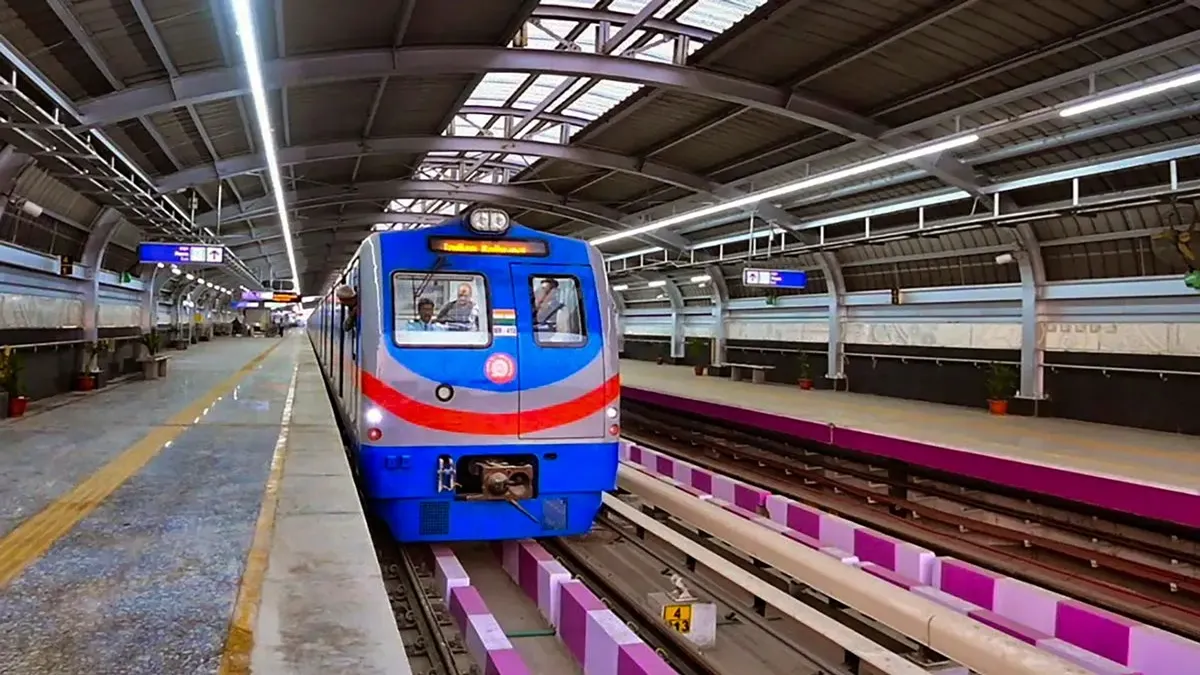
Kolkata is entering a new phase of railway capacity expansion, with Eastern Railway preparing an estimated ₹12,000 crore investment over the next four to five years while critical works around Howrah, Dankuni and other high-load corridors move ahead. The programme matters beyond rail operations: for a densely settled metropolitan region, additional capacity can influence commuter reliability, freight movement, logistics costs and the pressure placed on roads.
The emerging Kolkata railway infrastructure programme is centred on capacity rather than simply adding passenger services. Eastern Railway has identified multi-tracking, railway-yard modernisation and terminal development as key priorities. The objective is to remove operational constraints that can restrict the movement of both passenger and freight trains through one of eastern India’s busiest transport systems.The Howrah-Bally-Dankuni-Hooghly corridor illustrates the challenge. Howrah Yard is undergoing remodelling involving a new interlocking system, four platform extensions and a service building, with a sanctioned cost of ₹92.85 crore. Dankuni Yard is also being upgraded, while a detailed project report is being prepared for a coaching terminal at Dankuni. The corridor currently handles 113 regular train services and one special service, underscoring the intensity of existing demand.
For Kolkata’s wider economy, the significance is equally tied to freight. Dankuni and the surrounding industrial belt form an important interface between rail, manufacturing and regional distribution networks. Better yard management and additional capacity can reduce delays and make rail a more dependable option for moving goods, potentially easing some dependence on road-based logistics. Industry observers note that the benefits will depend on whether infrastructure expansion is matched by efficient terminals, last-mile connections and coordinated land-use planning.The investment also sits within a much larger West Bengal railway pipeline. As of April 2026, 63 sanctioned railway infrastructure projects covering 5,148 km were valued at ₹83,433 crore, including new lines, gauge conversion and doubling or multi-tracking works. Of that total, 1,721 km had been commissioned by March 2026.
For citizens, however, the test will not be the size of the investment alone. A stronger Kolkata railway infrastructure network needs to translate into shorter delays, safer stations, easier interchange and better connections between neighbourhoods and employment centres. Integrating rail investment with walking, buses, cycling and other public transport will be critical if Kolkata’s next infrastructure cycle is to deliver capacity without adding unnecessary pressure on the city’s land, roads and environment.