


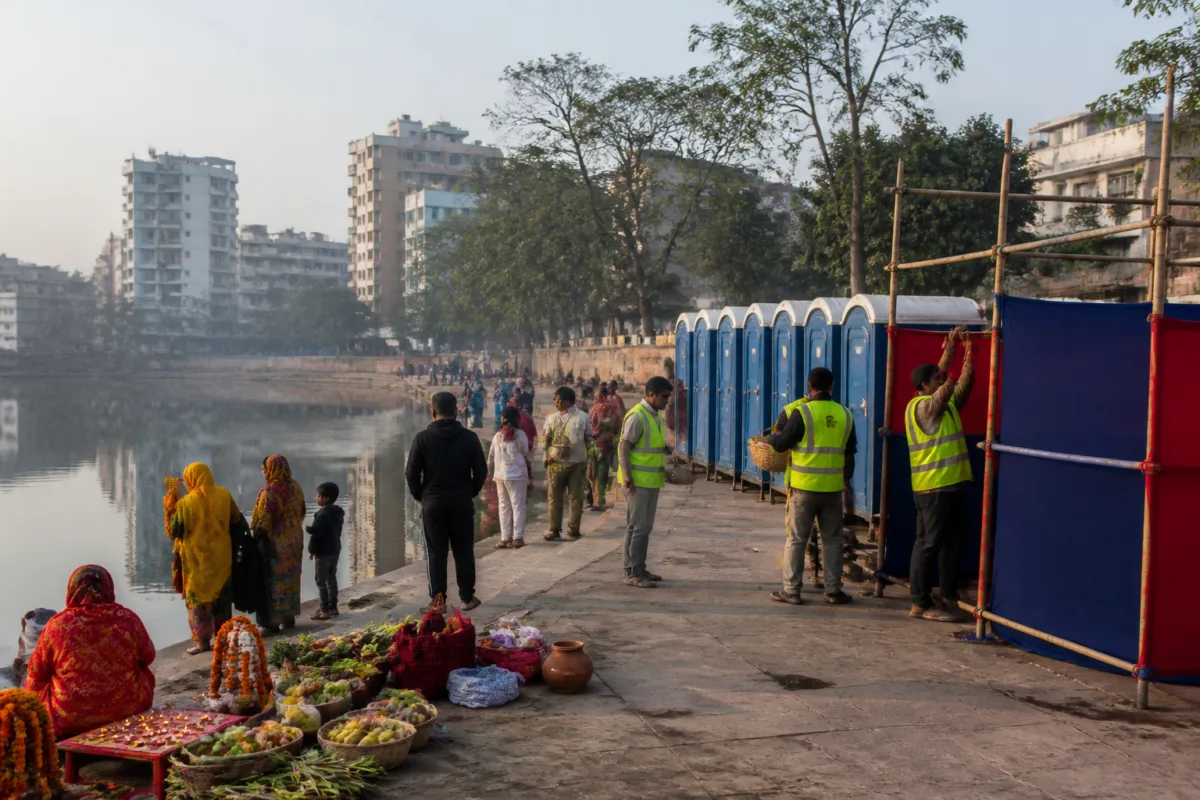
The West Bengal government is considering allowing Chhath Puja at Kolkata’s Rabindra Sarobar this year, but any return to the lake remains subject to legal clearance and safeguards to prevent pollution. The proposal comes seven years after the National Green Tribunal’s restriction was enforced at the lake and amid preparations for the festival on November 15 and 16.
Urban development minister Agnimitra Paul said on Wednesday that the government was examining whether rituals could be permitted at Rabindra Sarobar on the instruction of the chief minister. She said workers would be deployed at the site and that volunteers from devotees’ families would help clean the lake and remove ritual materials after the prayers.
The minister later clarified that the proposal had not yet been cleared. The government’s legal cell is examining the issue, and the state is expected to approach the NGT to seek a way forward. If permission is not granted, devotees will have to use designated alternative water bodies, as they have done since the restriction was implemented.
Rabindra Sarobar has remained cordoned off for three days during Chhath Puja since 2019, when the Kolkata Metropolitan Development Authority began enforcing the tribunal’s order. The restriction followed a legal challenge concerning pollution at the lake. The previous state government had initially moved the Supreme Court against the NGT’s 2017 order, but enforced the restriction after the apex court declined to stay it. The order was also upheld by the Calcutta High Court.
The ban is currently in force at Subhas Sarobar as well. The lakes are managed as important urban open spaces, and the restrictions have been intended to protect their ecological condition from ritual waste, oil, lamps, litter and other festival-related impacts. The government’s proposed safeguards have not yet been detailed in a formal permission order.
Subhas Datta, whose public interest litigation on pollution at Rabindra Sarobar led to the NGT order, said the matter had not been disposed of by the Supreme Court and that the state would need to seek the apex court’s permission before allowing Chhath Puja at the lake. His position places the proposal within an unresolved legal process rather than treating the minister’s announcement as an operational decision.
Environmental concerns have also emerged from people who use the lake and those monitoring its ecology. Environmentalist Somendra Mohan Ghosh said Rabindra Sarobar’s water was already polluted. Birders raised concerns about firecrackers being burst within the lake grounds during earlier celebrations, saying the noise disturbed birds and had been linked to bird deaths.
The state has said alternative arrangements are being prepared if the legal route does not permit rituals at the two lakes. Paul said around 50 ghats in south Kolkata would be ready for devotees, with changing rooms and bio-toilets. Kolkata Municipal Corporation and KMDA have arranged alternative water bodies in previous years, creating a parallel festival infrastructure while the restrictions at the lakes remain in force.
The immediate decision will depend on the legal review and any response from the NGT or the Supreme Court. Until such permission is obtained, the existing restriction at Rabindra Sarobar and Subhas Sarobar continues, with the alternative ghats serving as the confirmed arrangements for devotees.

