


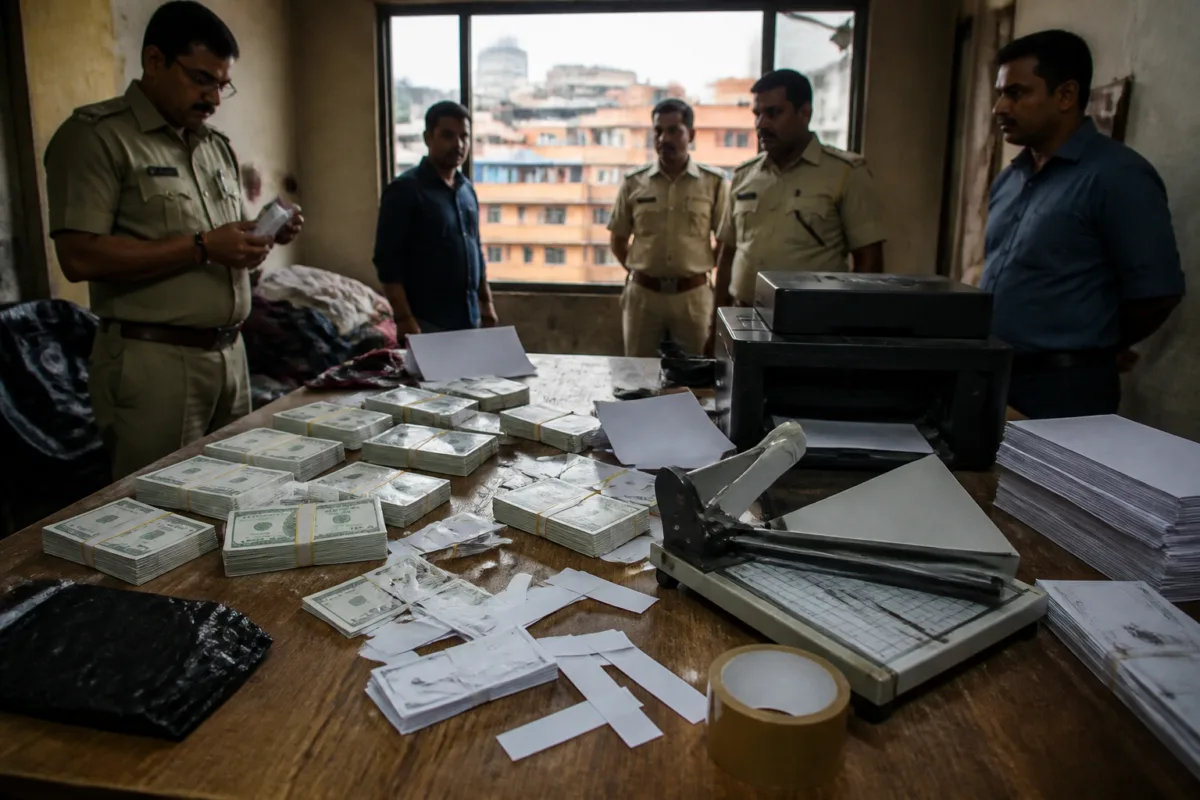
A Kolkata cash fraud network allegedly cheated traders by promising commissions of up to 40% and handing over bundles filled mostly with cut paper instead of genuine currency, police investigations have found. The interstate gang was operating from a rented room in Howrah and is suspected of defrauding victims of more than Rs 1 crore.
According to a report by Sanmarg – Kolkata, the gang targeted people connected with cash-transfer businesses in Barabazar, one of Kolkata’s largest commercial centres. Its members allegedly used the existing hawala and angadiya trading network to establish contact with business operators and parties in different cities.
Police traced the network to a rented room on Vijay Mukherjee Road in the Golabari police station area of Howrah. The operation had reportedly been running from the premises for around six months. Investigators said the room was used to plan the fraud and prepare bundles designed to resemble cash consignments.
The accused allegedly approached traders with offers of commissions as high as 40%. They then connected them with parties involved in cash transactions in cities including Delhi, Guwahati, Mumbai, Agartala and Bhubaneswar. After collecting genuine cash, the gang members allegedly handed over bundles containing paper rather than the agreed amount and escaped.
Police recovered a printer, paper cutter, white bond paper, a cellotape machine, scissors and ink cartridges from the Howrah premises, the report said. The materials were allegedly used to create bundles that looked like currency consignments. The top and bottom of some bundles contained genuine Rs 500 notes, while most of the middle section was filled with cut white paper. Fake labels carrying the names and logos of private banks were also allegedly attached to make the bundles appear genuine at first glance.
The arrested suspects are reported to be from Rajasthan’s Churu, Didwana and Nagaur areas. Police are investigating the identities of other alleged members and the network’s links across states. Investigators are also trying to establish how many traders were targeted and in which cities the alleged transactions took place.
The case highlights the enforcement challenge created when informal cash-transfer networks intersect with dense wholesale markets. Barabazar’s commercial ecosystem connects traders, financiers and transport-linked transactions across cities, but the report does not establish whether the alleged operation involved counterfeit currency or a paper-substitution fraud using genuine notes only at the outer layers of the bundles.
Police are continuing to examine the seized materials, trace the alleged interstate contacts and determine the full scale of the losses. Further action will depend on the findings of the ongoing investigation.

