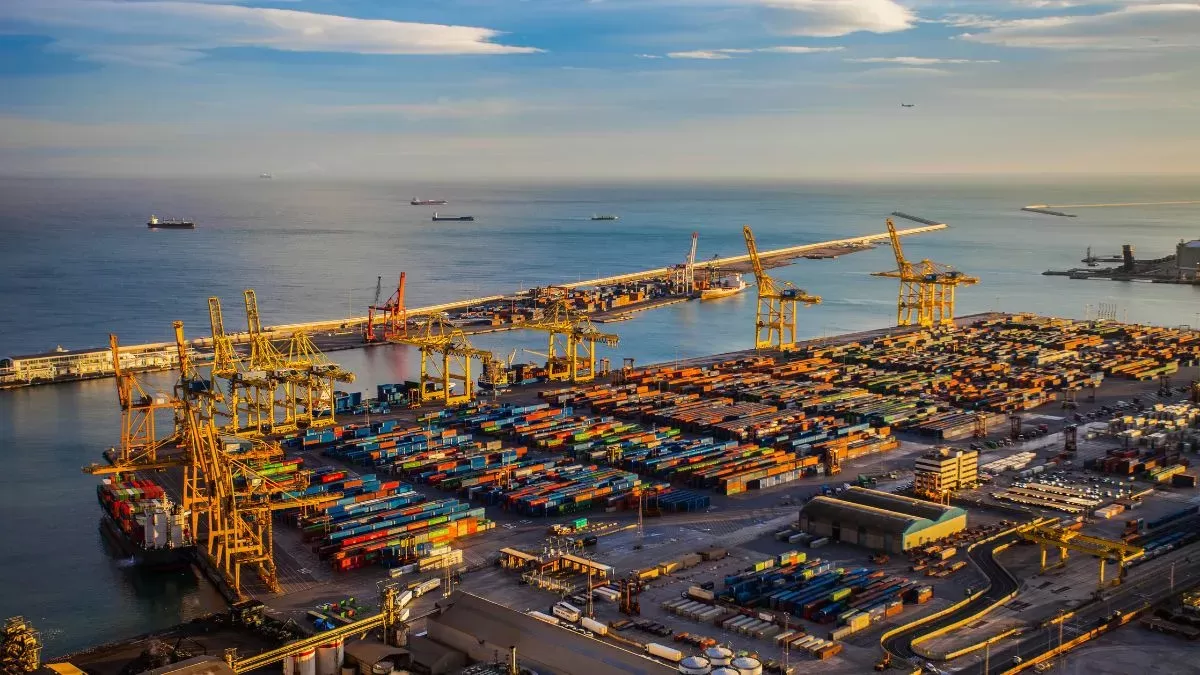
Kolkata Cargo Terminal Set To Reshape Port Logistics
A new 15-year operating concession at Kolkata’s Syama Prasad Mookerjee Port is set to expand general cargo handling at the city’s dock system, with around ₹13.68 crore initially earmarked for civil infrastructure. The project could strengthen Kolkata’s role in eastern India’s freight network while raising questions about how efficiently additional port capacity connects with rail, roads and surrounding urban infrastructure.
The terminal will operate from the GCD Yard of the Kolkata Dock System and handle containers along with other cargo. The facility is already operational, while further development is planned to increase handling capacity and improve the movement of goods through the port. The initial infrastructure estimate may change as implementation progresses.For Kolkata cargo terminal infrastructure, the larger significance lies beyond the yard itself. Port efficiency depends on the links between ships, storage areas, rail sidings, roads and distribution centres. If these connections remain congested, additional terminal capacity can shift bottlenecks rather than remove them.Kolkata is an important gateway for eastern and northeastern markets, giving improvements in freight infrastructure potential implications for manufacturers, traders and logistics-dependent businesses. More efficient cargo movement can reduce delays and improve supply-chain reliability, particularly for businesses that rely on predictable access to domestic and export-import markets.
The project also comes as freight patterns are changing. Recent industry data indicates stronger domestic container activity even as international trade continues to face disruptions and elevated logistics costs. That makes flexible infrastructure increasingly important for cities whose economies depend on both domestic consumption and cross-border trade.From an urban planning perspective, however, the success of the Kolkata cargo terminal will not be measured only by volumes handled inside the port. Increased freight activity can place additional pressure on approach roads, neighbourhoods and local air quality unless cargo is moved efficiently through rail and other lower-emission transport modes.The terminal forms part of a wider national push towards multimodal logistics, including initiatives linked to the National Logistics Policy and PM Gati Shakti. For Kolkata, the next challenge will be ensuring that new logistics capacity translates into faster and cleaner freight movement without adding disproportionate pressure to the city’s already constrained transport network.
The immediate focus will therefore be on execution: upgrading the terminal, improving intermodal connections and managing the interface between growing freight activity and the surrounding urban environment.