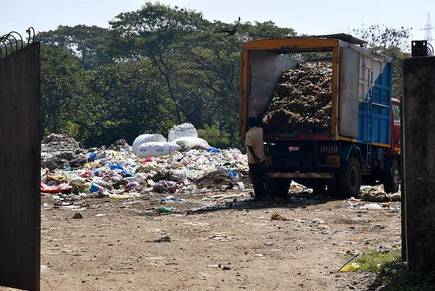
Kochi market waste management issues raise concerns over sanitation, drainage and urban planning in the city’s redeveloped retail complex.
A little over a year after the revamped Ernakulam market complex opened in central Kochi, operational failures linked to waste handling, drainage and ventilation are beginning to undermine business activity inside the public retail hub. Traders and civic representatives say the situation has already forced several vendors to relocate, raising concerns over whether the city’s large-scale investment in the project can deliver long-term urban and economic value.
The multi-storey market complex in Broadway was envisioned as a modern replacement for the ageing wholesale and retail trading zone that has served generations of residents and small businesses. However, inadequate segregation of wet waste activities and poor airflow management have created persistent hygiene concerns inside sections of the building, particularly around poultry and seafood vending areas. Market representatives said multiple traders operating from upper-floor units recently shifted out after foul odour and seepage issues began affecting neighbouring stalls and customer footfall. The problem, they noted, reflects deeper structural and planning gaps rather than isolated maintenance failures.
Urban infrastructure experts say the episode highlights a recurring challenge in Indian city redevelopment projects where capital-intensive public assets are constructed without fully integrating waste logistics, climate-sensitive ventilation systems and user behaviour into the design process. In dense commercial markets handling organic waste daily, ineffective drainage and disposal systems can rapidly create public health concerns while reducing commercial viability. The Ernakulam market complex was redeveloped at an estimated cost of ₹72 crore and opened in late 2024 as part of Kochi’s broader urban renewal push. While the facility introduced upgraded retail space and additional commercial floors, the redesign also reduced the number of ground-floor stalls available to traditional vendors. Several traders were subsequently shifted to upper levels, a move that triggered disagreements over allocation and accessibility. According to civic officials, technical inspections are now expected to examine leakage points, odour sources and ventilation deficiencies within the building. Discussions are also underway on improving waste management systems to prevent contamination and improve usability for both traders and visitors.
The sanitation issues have revived wider debates around inclusive urban planning in rapidly modernising Indian cities. Traditional public markets remain critical economic ecosystems supporting informal employment, affordable food access and local supply chains. Yet many redevelopment projects continue to prioritise structural modernisation without adequately accounting for operational sustainability and daily waste generation patterns. Urban planners argue that public markets require specialised environmental infrastructure, including decentralised waste treatment, efficient water drainage, natural ventilation corridors and clear zoning between food categories. Without these measures, newer facilities risk becoming financially underutilised despite significant public expenditure. For Kochi, the challenge now extends beyond resolving immediate complaints. Ensuring the Ernakulam market complex functions as a healthy, accessible and economically sustainable civic space may ultimately determine whether future urban redevelopment projects in the city gain the confidence of traders and residents alike.