


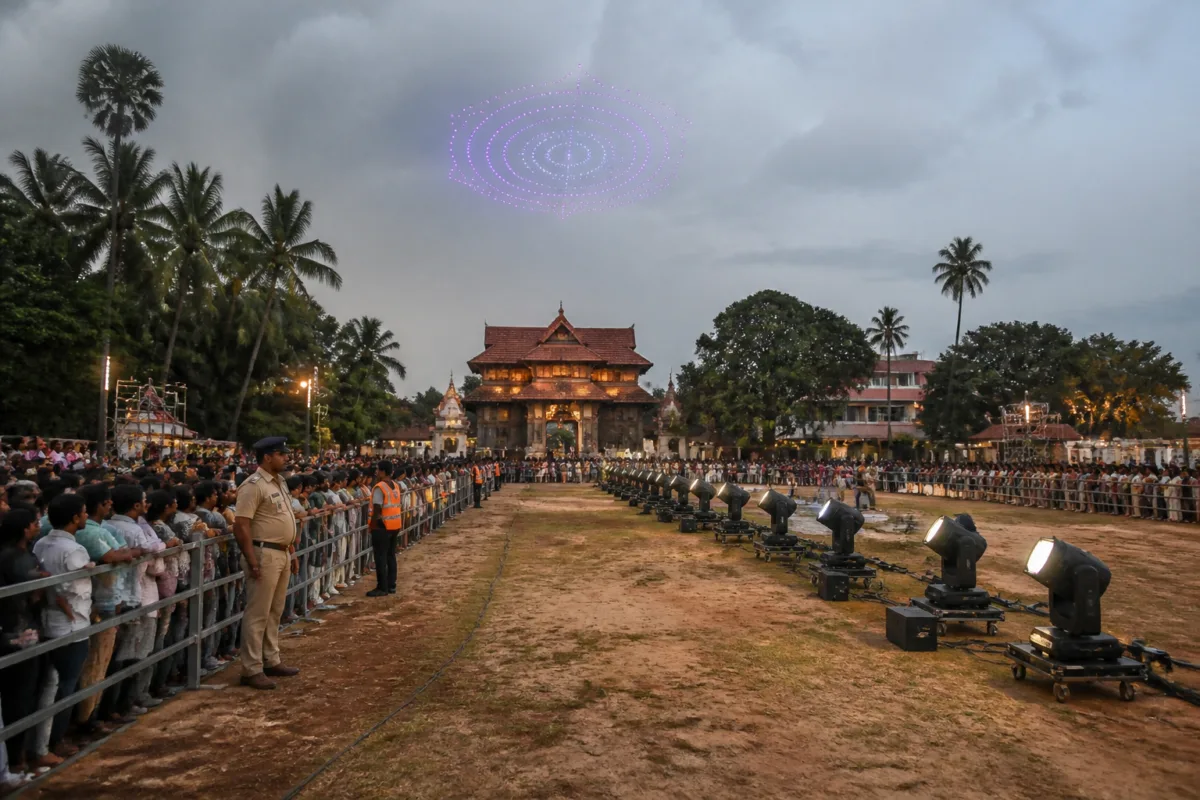
Kerala’s devaswom authorities have been urged to replace traditional fireworks displays with safer, technology-driven alternatives after an explosion at a fireworks manufacturing unit in Thrissur district and the findings of a commission that investigated the incident.
Former joint chief controller of the Petroleum and Explosives Safety Organisation (PESO), R Venugopal, made the suggestion at a seminar on fireworks safety organised by the Thrissur district scientific awareness committee of the Kerala Sastra Sahithya Parishad. The seminar was titled “Fireworks: Celebrations and Dangers”.
Venugopal said devaswom authorities should rethink the use of conventional fireworks and explore modern aerial visual spectacles similar to displays conducted in other countries. According to the report, he referred to advanced technologies including mechanisation and robotics as possible components of safer public celebrations.
The proposal is significant for Kerala’s temple festivals, where fireworks form a major part of public events and attract large crowds. Devaswoms, which administer temples and organise festival activities, would have to evaluate how alternative displays could be adopted while preserving the visual and ceremonial character of events such as Thrissur Pooram.
Venugopal has prior experience with the safety oversight of the Thrissur Pooram fireworks display, having been associated with it for several years in his official capacity. His comments come after the explosion at a fireworks manufacturing unit at Mundathikode in April, ahead of the latest edition of Thrissur Pooram.
The incident was examined by the Justice Ramachandran Nair Commission. The report does not provide details of the commission’s findings, but the Times of India report said Venugopal’s observations assume particular significance in their wake. The available account also does not specify whether the commission recommended technological alternatives or changes to fireworks practices.
The safety question extends beyond the fireworks site itself. Festival displays involve organisers, licensed manufacturers, officials, workers and spectators, making the management of explosive materials and crowd exposure a central operational concern. A shift towards aerial visual systems using mechanisation or robotics would therefore require decisions on technology, approvals, operating procedures and public-event management.
Venugopal’s intervention places the responsibility for considering such alternatives with devaswom authorities. No decision by a specific devaswom, or timeline for adopting technology-led displays, was cited in the report. The next steps will depend on how temple authorities and the agencies responsible for explosives safety respond to the commission’s findings and the proposal for safer festival spectacles.

