


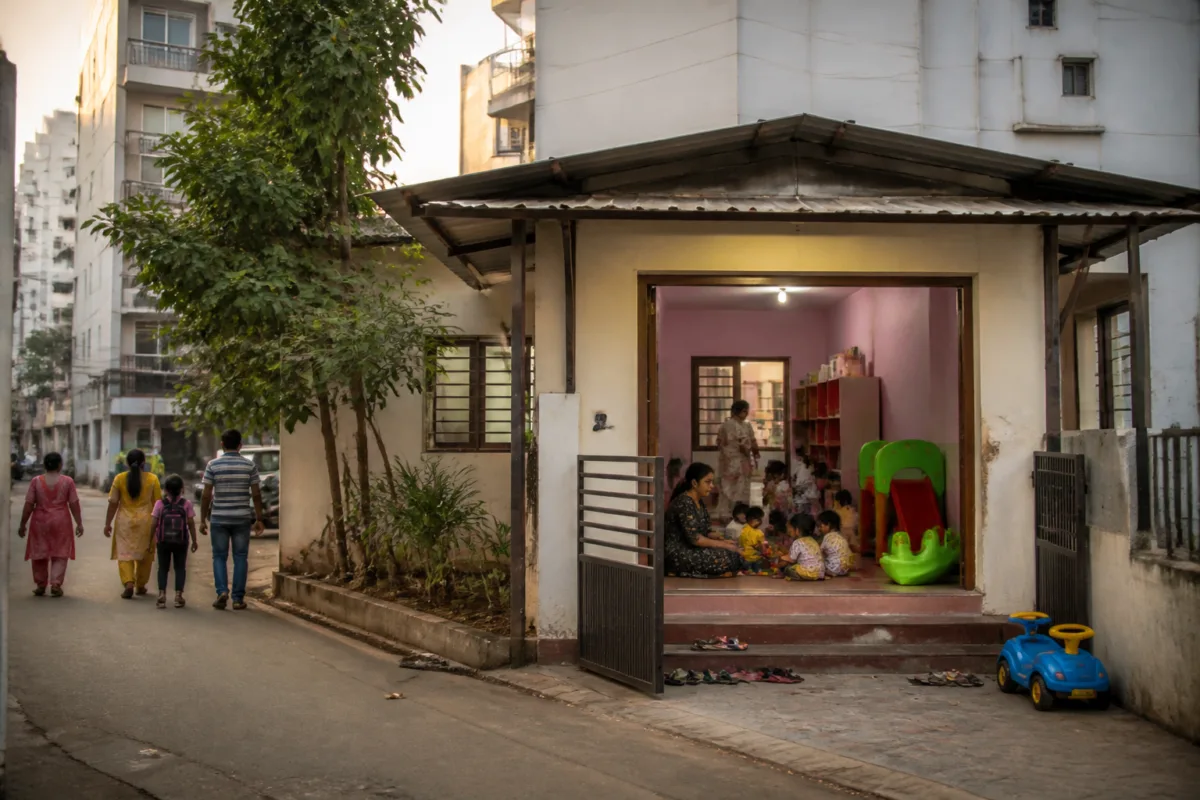
Karnataka’s preschool regulations could threaten the functioning of more than 25,000 standalone centres and affect the livelihoods of around 4.5 lakh women, the Karnataka Council of Pre-Schools (KCPS) said in an appeal to the state government on Wednesday. The council has sought an immediate review of building, lease, land-use and registration requirements that it says are difficult for small neighbourhood preschools to meet.
The requirements cited by KCPS include a 30-year registered lease for rented residential premises, classroom dimensions of 18 feet by 20 feet, conversion of land for educational purposes and a minimum area of 2,000 square feet. The council said these conditions were introduced through an administrative circular and detailed instructions issued in 2019.
According to KCPS, the norms are better suited to large educational institutions than to standalone early childhood care and education centres operating in residential neighbourhoods. Such centres commonly function in rented premises close to families, particularly in dense urban areas where access and distance are important considerations for parents of young children.
The council also raised concerns about the preschool registration portal. It alleged that the portal was not accessible to the general public and could be accessed only through the offices of Block Education Officers. KCPS has asked the government to restore public access to a functional and transparent online registration system.
The council said possible closures could affect teachers, caretakers and support staff, with women accounting for a substantial share of the workforce. It further warned that the loss of neighbourhood childcare facilities could affect working mothers who rely on affordable preschools near their homes. The council said some parents could be forced to reconsider employment if convenient childcare options became unavailable.
KCPS also claimed that reduced competition could increase preschool fees and make early childhood education less affordable for middle-class families. It estimated that fees could rise by as much as five times if standalone centres were forced to shut down. These figures and the projected closures were presented by the council in its appeal and were not independently quantified in the report.
The dispute places a regulatory question alongside a land-use issue. Small preschools operating from residential premises may not fit easily within rules designed for larger K-12 institutions, while formal requirements around building size, tenure and land conversion can determine whether neighbourhood childcare remains viable. The council has therefore asked the government to create a separate framework for standalone preschools instead of applying norms intended for schools covering kindergarten through Class 12.
KCPS has urged the education minister and the state government to constitute a high-level committee to review and simplify the regulations. It has also sought a stay on the existing building, lease and land-conversion requirements until a revised framework is prepared. The council said the government must decide between preserving accessible neighbourhood childcare and allowing the present requirements to continue. The next step sought by the council is a government decision on the proposed review committee, interim relief and the registration portal.

