


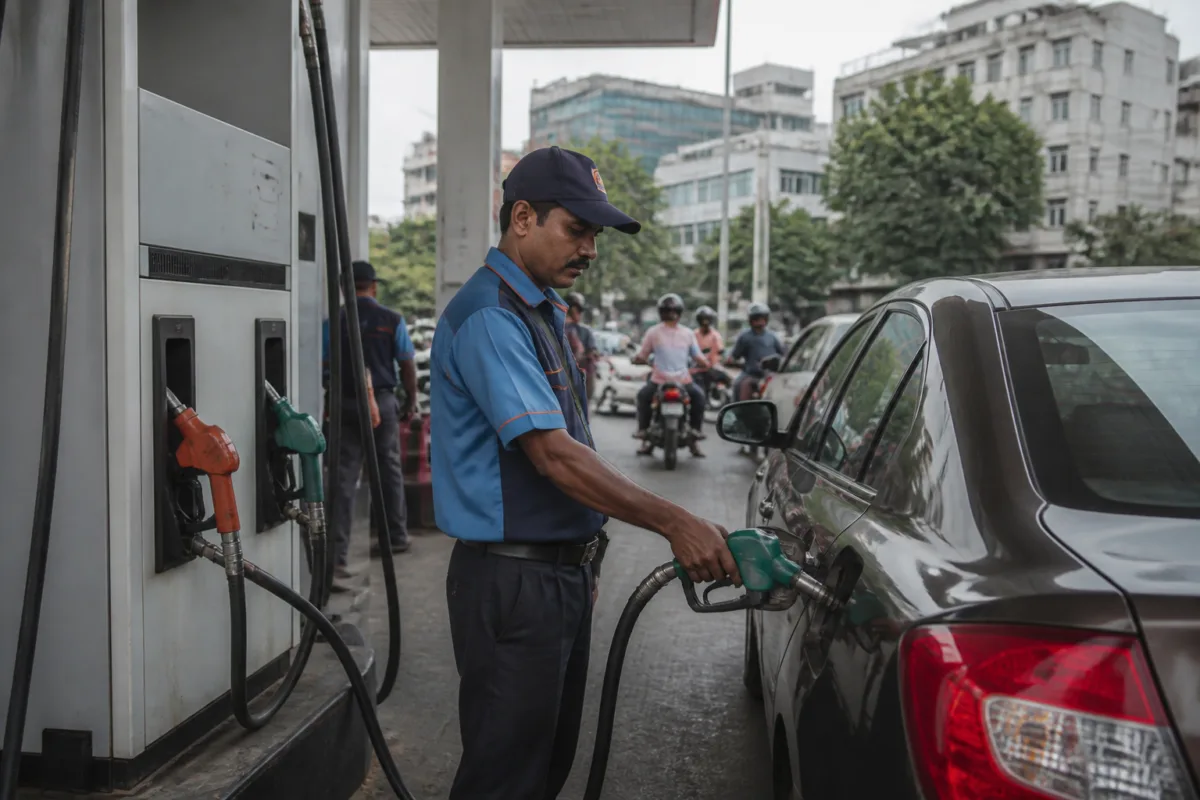
Karnataka’s ethanol dispute intensified on November 7 after Indian Oil Corporation Limited, Bharat Petroleum Corporation Limited and Hindustan Petroleum Corporation Limited rejected the state government’s claim that petrol sold at some retail outlets contained ethanol levels as high as 31.2 per cent.
The public-sector oil marketing companies said the findings cited by Karnataka were not based on testing conducted under the statutory and technical procedures prescribed for fuel sampling and quality verification. The state government had alleged that petrol supplied by major oil companies exceeded the prescribed 20 per cent ethanol limit and had sought action against them.
Food, Civil Supplies, Consumer Affairs and Legal Metrology Minister Rizwan Arshad said the state’s allegations were based on petrol samples collected from outlets in Bengaluru, Kolar, Chikkaballapura, Bengaluru Rural, Ramanagara, Mangaluru and Tumakuru. According to the state department’s release cited by the OMCs, the samples reportedly showed ethanol content ranging from 26 per cent to 31 per cent.
In a joint statement, the three companies said E20 petrol supplied across the country, including Karnataka, conformed to IS 17021, the Bureau of Indian Standards specification for ethanol-blended motor gasoline. They also raised concerns about the sampling procedure and methodology used during the October 2026 exercise.
The companies referred to the Motor Spirit and High Speed Diesel (Regulation of Supply, Distribution and Prevention of Malpractices) Order, 2005, issued under the Essential Commodities Act, 1955, and the Marketing Discipline Guidelines, 2024. These provisions prescribe how samples must be collected, retained, tested and communicated to dealers and oil companies.
Under the procedure described by the OMCs, six one-litre samples must be drawn from a retail outlet. Two samples are handed to the dealer against acknowledgement, two are retained by the oil company or the department, and two are sent to a laboratory specified under Schedule III of the Control Order or notified in the Official Gazette. The sample labels must be jointly signed, and the test results must be communicated to the dealer and the oil company within the prescribed period.
The OMCs said samples collected during a September 2026 exercise were routed through the State Level Coordinator to designated oil-company laboratories and tested for quality parameters required under the Marketing Discipline Guidelines. The October exercise, however, allegedly involved samples drawn without the participation of OMC representatives.
The companies said they had not received the corresponding retention samples, complete outlet-wise details or laboratory reports, despite seeking the material through the State Level Coordinator. They also questioned the use of certificates from a third-party laboratory, saying the documents did not contain the complete technical details needed to independently verify the reported ethanol levels.
According to the OMC statement, the absence of counterpart samples and prescribed documentation prevented the companies and dealers from seeking verification or retesting. The companies therefore disputed the evidentiary basis of the state’s claim rather than accepting that the reported ethanol levels established a violation.
The dispute now turns on whether the samples, laboratory methods and chain of documentation used in the October exercise meet the requirements laid down in the Control Order and the 2024 guidelines. The supplied statement does not indicate any final regulatory finding resolving the competing claims. The next step will depend on the state authorities’ response to the OMC objections and the availability of the sampling records, retention samples and laboratory reports.

