


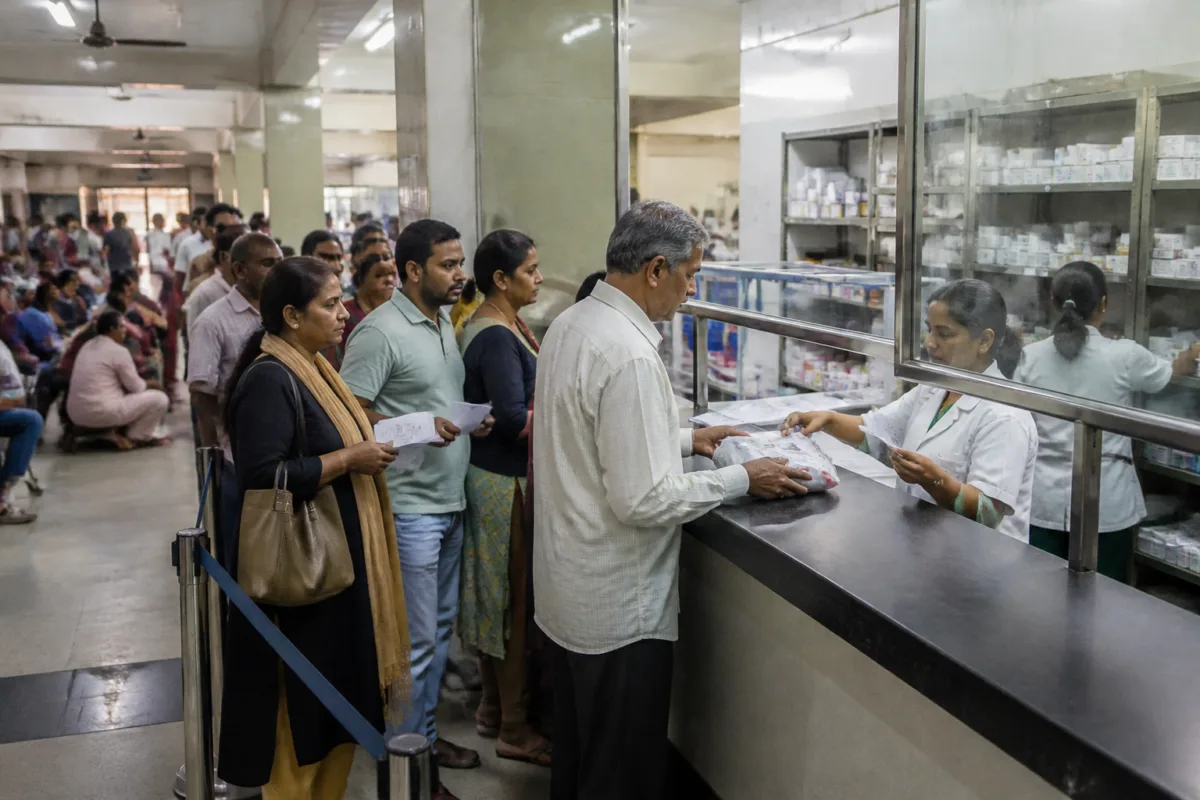
Karnataka Health Minister UT Khader has directed government hospitals to immediately stop doctors from issuing prescriptions on plain paper and sending patients to private medical stores, warning that violators will face action and pharmacies accepting unauthorised prescriptions could lose their licences.
The direction follows a reality check published by Vijaya Karnataka on November 6, which reported that doctors at government hospitals were issuing prescriptions on plain paper, commonly called “white slips”, and directing patients to purchase medicines outside. The practice affected patients who approached public hospitals expecting to receive medicines free of cost.
Khader said poor patients visiting government hospitals must receive free and quality medicines within the hospital system. “Writing prescriptions on plain paper and allowing sale of medicines through outside medical stores without authorisation will not be permitted,” he said, according to the report.
The minister has instructed officials to act against doctors and other personnel found violating the rules. Private pharmacies that accept such prescriptions also face the risk of having their licences cancelled, making the order relevant beyond hospital administration and extending it to the retail medicine network serving government-hospital patients.
Government hospitals are expected to issue medicines through authorised internal processes. When patients are instead given handwritten or plain-paper prescriptions for purchases outside, the arrangement can shift the cost of treatment from the public health system to households, particularly those who sought government care because they could not afford private treatment. The reported practice also makes it harder for patients to distinguish between medicines formally prescribed and supplied through the hospital and those obtained through an unauthorised channel.
The minister’s intervention places responsibility on hospital officials to ensure that eligible patients receive medicines at the facility itself. It also signals that the administration will treat the use of plain-paper prescriptions as a compliance issue rather than an informal arrangement between doctors and pharmacies.
The reported directions do not specify the number of hospitals or patients affected, the duration of the practice, or the number of pharmacies that may face action. They also do not detail the monitoring mechanism or deadline for officials to submit compliance reports. Further action will depend on inspections and enforcement by the health department against hospitals, doctors, officials and pharmacies found breaching the instructions.

