


Karnataka drought relief has become the centre of a political dispute, but the figures cited by Deputy Chief Minister G. Parameshwara point to a larger administrative problem: how a state converts crop losses, water shortages and rural distress into assistance under a rule-bound disaster-financing system. His criticism of Opposition Leader R. Ashoka is political, yet the underlying question is institutional. When drought affects millions of hectares and creates demands running into thousands of crores, which part of the response should come from the state, which part from the Centre, and how quickly can the system deliver help?
Parameshwara said Karnataka had sought central assistance because drought relief was a legitimate entitlement rather than charity. He referred to the National Disaster Response Fund and the State Disaster Response Fund as mechanisms established under the Disaster Management Act, 2005 and the recommendations of Finance Commissions. In his account, the dispute is not simply about the language used by one political leader. It is about whether assistance from these funds is treated as discretionary support from the Centre or as part of an institutional arrangement for responding to natural disasters.
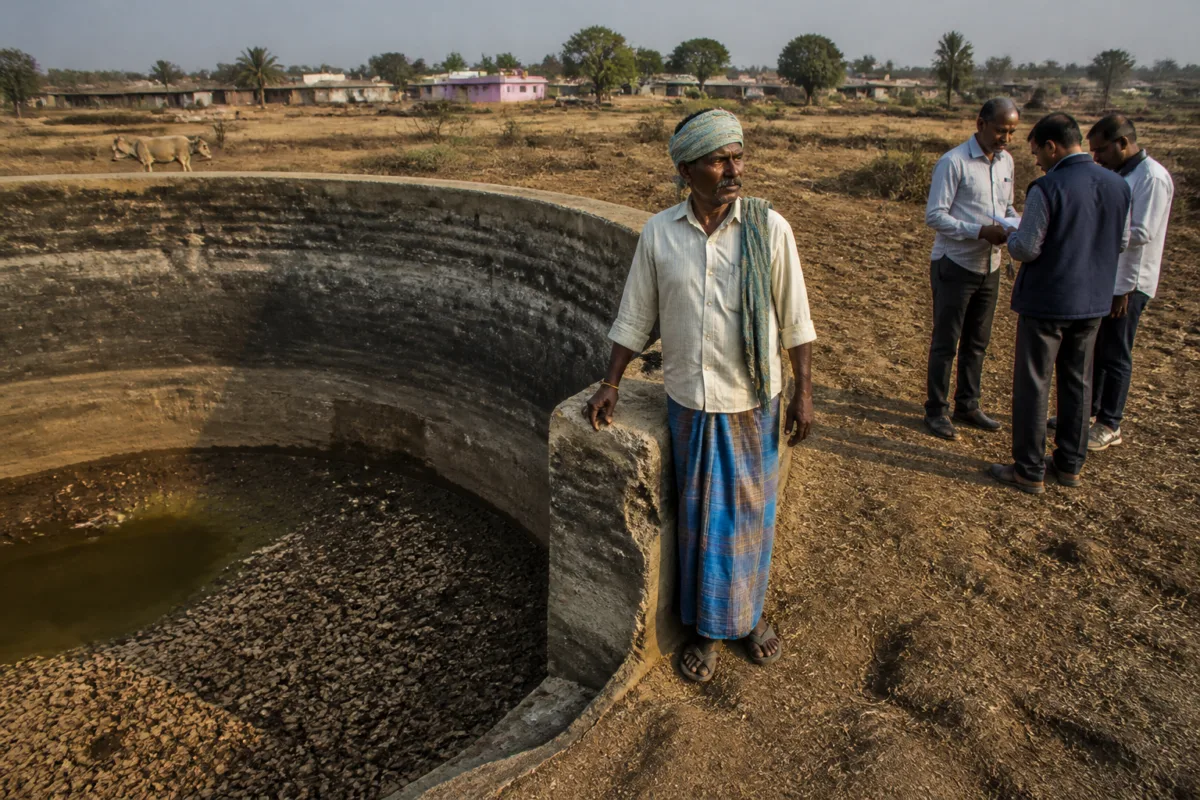
The distinction matters because drought is not a single, easily measured event. It can involve a failed monsoon, reduced water availability, crop damage, livestock stress, falling rural employment and migration for work. The source statement describes all of these pressures in Karnataka, including the suspension of agricultural activity in some areas, shortages of drinking water and fodder, and rural residents leaving their villages in search of wage employment. These conditions connect drought administration to wider questions of water management, livelihood security and climate resilience.
According to Parameshwara, 226 taluks in Karnataka were classified as drought-affected. He said crop damage covered 57.93 lakh hectares and that the estimated economic loss was ₹62,481.88 crore. Under revised SDRF and NDRF norms dated October 26, the state’s estimated requirement for input subsidy had risen to ₹7,943.55 crore, while the total cumulative relief requirement was assessed at ₹22,400.58 crore. These figures were presented by the Deputy Chief Minister and have not been independently examined in the supplied material.
The numbers illustrate the distance between immediate relief and full compensation. The state government announced an interim package of ₹1,250 crore and initiated assistance of ₹2,500 for each eligible farmer, according to Parameshwara. It also spent ₹306 crore on drinking water, made ₹329 crore available to district commissioners for emergency measures and allocated ₹25 crore for fodder management. The Deputy Chief Minister acknowledged that ₹2,500 could not compensate farmers for their entire crop loss. That admission is central to understanding the limits of interim assistance: a payment can address urgent consumption needs without matching the economic damage suffered by a farm household.
The administrative challenge is therefore twofold. The first is speed. Drinking water, fodder and emergency support cannot always wait for a lengthy assessment and approval cycle. The second is adequacy. Even when a payment reaches eligible farmers, the amount may be determined by prescribed norms rather than the actual cost of cultivation, household debt or the wider loss of income caused by a failed season. The source material does not establish how many farmers have received the state’s interim payment or how the eligibility process is being implemented.
Parameshwara said the Centre provides 75% of SDRF funding for states such as Karnataka, while the state contributes the remaining 25%. He also cited the recommendations of the 16th Finance Commission for 2026–31, which he said included ₹2,04,401 crore for state disaster-management and disaster-mitigation funds and ₹79,406 crore for national disaster-response funds. These figures place drought relief within a broader fiscal framework rather than presenting it as an exceptional political request. They also raise a practical question: whether the financing structure and the norms used for releasing assistance are keeping pace with the scale and cost of repeated climate-related shocks.
The politics of that question are visible in the dispute between the state government and the Opposition. Parameshwara alleged that Ashoka had sought a larger relief recommendation from a central drought-study team on October 7, but later described the state government’s demand for relief as equivalent to begging. The Deputy Chief Minister used this contrast to argue that the political position had changed while the farmers’ distress had not. Ashoka’s full response is not included in the supplied material, so the allegation remains a claim made by Parameshwara rather than an independently established account of the Opposition leader’s position.
The disagreement also reflects the divided responsibilities built into India’s disaster-response system. State governments are usually the first administrative responders because they manage district machinery, local water supply, relief distribution and field-level assessments. The Centre influences the framework through funding shares, assessment norms and decisions on additional assistance. This arrangement can create a gap between the urgency experienced in districts and the time required for formal assessment, intergovernmental correspondence and fund release.
Karnataka’s recent experience, as described by Parameshwara, has made that gap a political issue. He said the state had sought approximately ₹18,174 crore during the 2023–24 drought and that ₹3,454.22 crore was released after the state approached the Supreme Court. The source does not provide the court order or the Centre’s account of the matter, but the episode is being cited by the Deputy Chief Minister as evidence that repeated letters and political pressure are necessary to secure assistance.
For citizens, the institutional argument is visible through basic services. A drought declaration does not itself provide drinking water to a village, protect livestock from fodder shortages or restore income lost after crop failure. Those outcomes depend on district-level execution, the availability of funds and the identification of eligible households. The state’s references to drinking-water expenditure, district emergency funds and fodder allocations show the multiple expenditure channels involved. They also demonstrate why drought relief cannot be reduced to a single compensation figure.
Parameshwara has called for changes in relief norms to reflect rising agricultural costs. He also identified scientific water management, climate-resilient farming practices, effective crop insurance and stronger use of the FRUITS farmer-data system for targeted assistance. These proposals were made in the political statement and are not accompanied by implementation details in the supplied material. Their significance lies in the direction of policy they suggest: moving from one-time compensation towards a system that combines risk reduction, reliable farmer records and faster delivery.
The reference to FRUITS is particularly relevant to the delivery question. A data-based system can help identify farmers and route assistance, but the source does not establish the system’s current coverage, accuracy or performance during this drought. Nor does it show whether tenant farmers, agricultural labourers or households without formal land records are covered by the same mechanisms. Those omissions matter because drought affects more than landowners. The supplied statement mentions rural migration for work, but it does not quantify the number of affected workers or explain how relief reaches them.
The debate over Karnataka drought relief ultimately exposes a mismatch between the scale of disruption and the narrowness of standardised assistance. State and central funds provide a formal route for support, but the adequacy of that support depends on assessment norms, funding timelines, administrative capacity and the definition of who qualifies. The ₹1,250-crore interim package and the state’s ₹22,400.58-crore estimated cumulative requirement represent very different stages of response; neither figure, by itself, describes the final level of recovery support.
What the available evidence confirms is that Karnataka is seeking central assistance against a drought it says has affected 226 taluks and 57.93 lakh hectares, while also funding emergency measures from its own resources. What remains unclear is the status of the central request, the independent validation of the damage estimates, the number of beneficiaries who have received interim support and the eventual amount released under applicable norms. Those are the next developments that will determine whether the dispute produces faster relief or remains primarily a political contest over responsibility.

