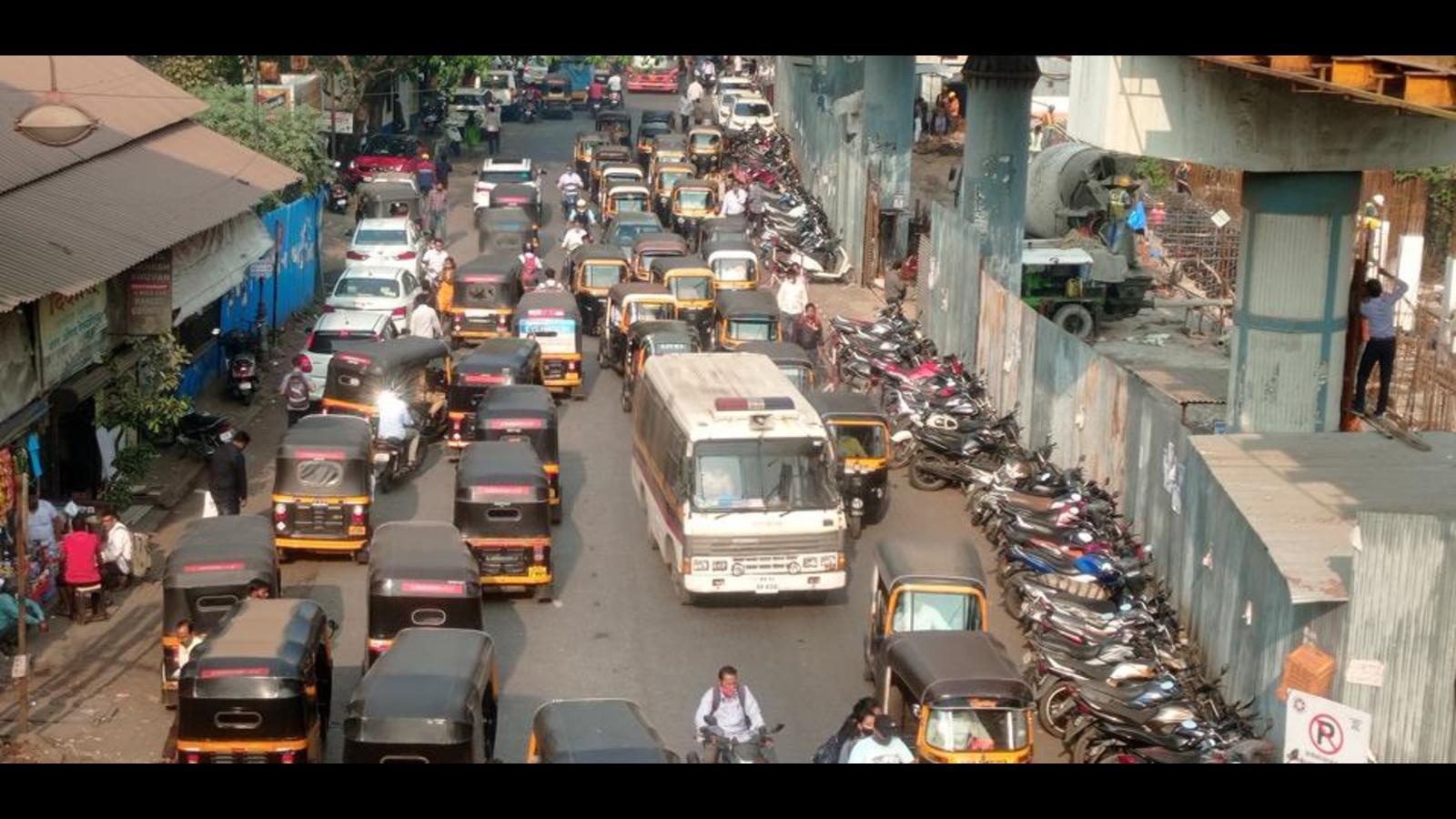
A series of large-scale transport interventions planned across the Kalyan-Dombivli belt in the Mumbai Metropolitan Region is being positioned as a long-term response to chronic congestion, with metro corridors, ring roads and multi-level road systems expected to reshape daily mobility in one of the region’s fastest-growing urban clusters. The eastern suburbs beyond Thane have witnessed rapid population growth over the past decade, driven by comparatively affordable housing and expanding real estate activity. However, infrastructure capacity has struggled to keep pace, resulting in prolonged commute times, pressure on arterial roads and rising dependence on private vehicles. The latest push for integrated transit aims to rebalance this equation by strengthening public transport and redistributing traffic flows.
Officials familiar with the planning process indicate that metro connectivity is central to this shift. A key corridor linking Thane and Bhiwandi is nearing completion, with further expansion towards Kalyan expected to move into the tendering phase soon. Urban planners note that such extensions are critical, as they can reduce reliance on overcrowded suburban rail networks while offering predictable, time-efficient alternatives for daily commuters. Alongside metro development, ring road proposals are being prioritised to divert non-local traffic away from dense residential zones. These circumferential routes are designed to ease bottlenecks by allowing vehicles to bypass city cores, a strategy increasingly adopted in high-growth urban regions. Experts suggest that if executed with proper land-use coordination, ring roads can also unlock new development corridors without intensifying congestion in already saturated areas.
The introduction of double-decker road systems further reflects a shift towards vertical infrastructure in land-constrained environments. While such projects can increase road capacity, mobility specialists caution that they must be integrated with public transport networks to avoid reinforcing car dependency. Without this balance, expanded road infrastructure risks offering only temporary relief. The broader significance of these interventions lies in their potential to influence urban form. Improved transit connectivity often leads to transit-oriented development, where housing, employment and services cluster around transport hubs. This can reduce travel distances, lower emissions and create more walkable neighbourhoods—key elements of climate-resilient urban planning. At the same time, the region’s rapid real estate expansion raises concerns around affordability and equitable access. Industry observers argue that infrastructure gains must be matched by policies ensuring inclusive housing and balanced growth, preventing displacement and uneven development patterns.
For residents of Kalyan-Dombivli, the success of these projects will ultimately be measured not by announcements but by tangible improvements in commute times, air quality and access to opportunities. As construction timelines advance, sustained coordination between transport planning, land use regulation and environmental considerations will be essential to ensure that mobility gains translate into broader urban resilience.