


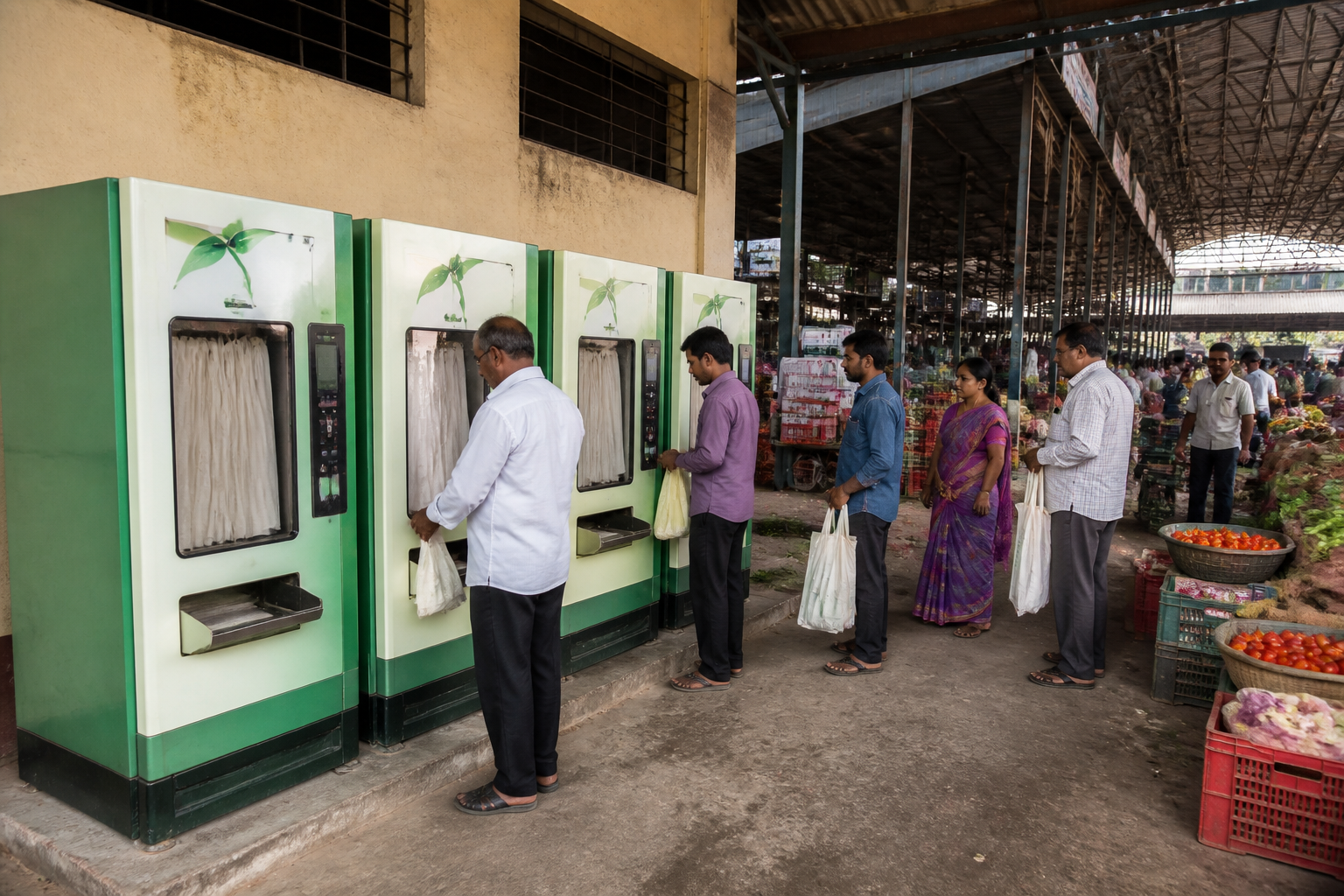
The Kalyan Agricultural Produce Market Committee has installed four cloth-bag vending machines on its premises as part of an initiative to make the market area free of plastic bags. The machines will provide reusable cloth bags to traders and customers at a price of ₹10 each.
The vending machines were inaugurated at the market committee premises in the presence of Murbad BJP MLA Kisan Kathore, Kalyan East MLA Sulabha Gaikwad, Kalyan Rural MLA Rajesh More, former market committee chairman Pramod Hindurao and current chairman Ravindra Ghodvinde.
The market committee said the machines have been installed after considering the convenience of the thousands of traders and customers who visit the market. The initiative is intended to provide an immediate alternative to prohibited plastic bags while supporting the committee’s stated objective of reducing plastic use within the market complex.
Chairman Ravindra Ghodvinde said the number of machines could be increased in the future depending on the response to the initiative. The first phase includes four machines, which are expected to make cloth bags available within the market premises when traders and customers need them.
The move follows repeated action by the municipal solid-waste department against the use of prohibited plastic bags in the market area. According to the report, municipal teams conducted raids in the premises over the past two to three years and seized prohibited plastic bags during these operations.
The enforcement action also brought criticism to the market committee, according to the report. The vending-machine initiative is therefore being introduced alongside the committee’s broader effort to address plastic use within the market rather than relying only on seizures and penalties after plastic bags enter circulation.
Agricultural markets generate a regular demand for carrying bags because customers purchase vegetables, fruits and other produce in varying quantities. In this setting, access to an alternative at the point of purchase is central to whether a plastic-reduction measure can work. The four machines will now serve as the committee’s first organised system for making cloth bags available to market users.
The committee has not announced a broader timeline for expanding the system or provided details about the number of bags that the four machines can hold. Its next decision is expected to depend on usage and public response, with the chairman stating that additional machines may be considered if the initiative receives adequate support.
