


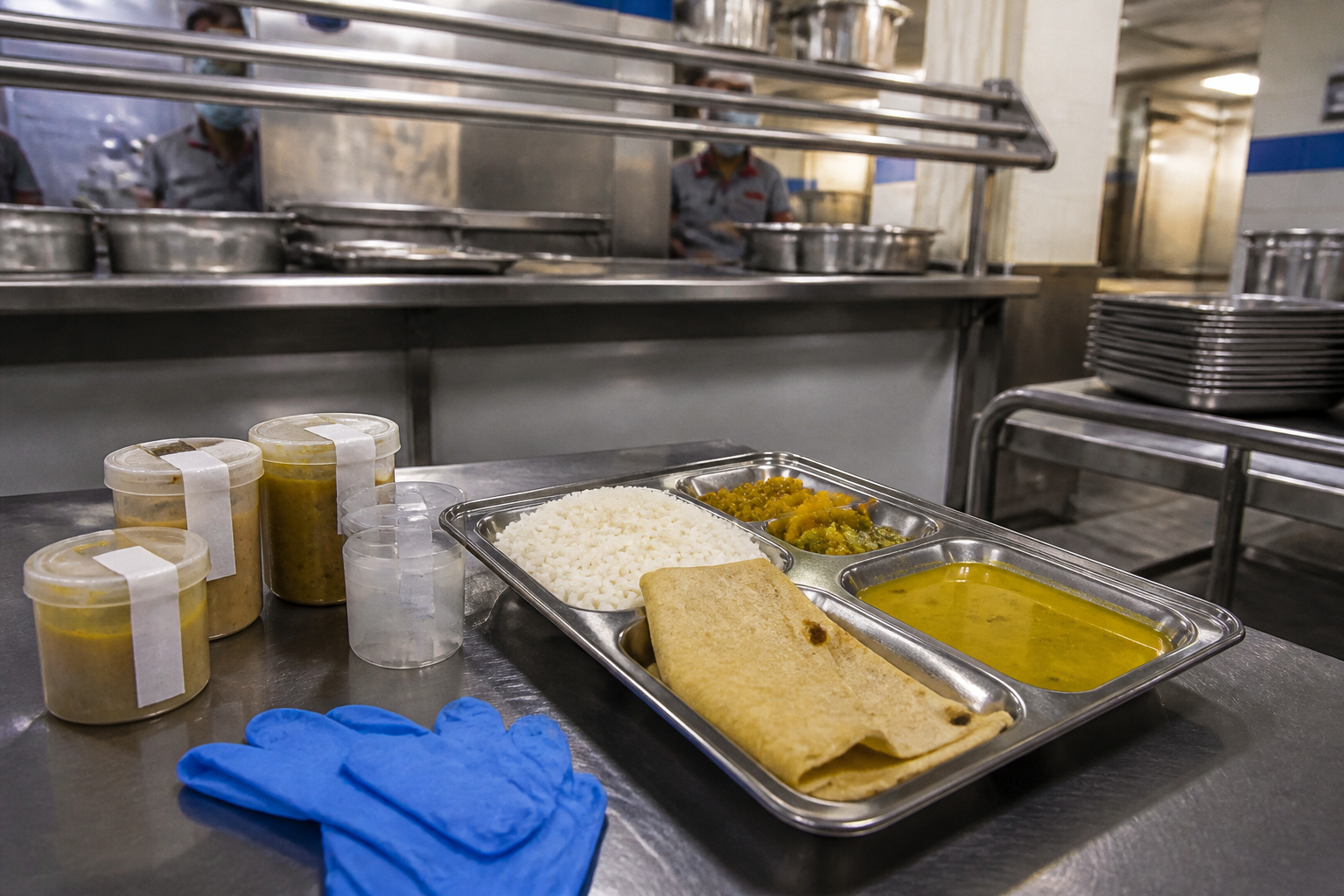
A cockroach reportedly found in dal served to a patient at the BMC-run Chhatrapati Shivaji Maharaj Hospital in Kalwa led to the temporary closure of the hospital canteen, an inspection by Maharashtra’s Food and Drug Administration and the collection of food samples. The immediate operational response was to arrange meals from another location. The larger issue is how public hospitals monitor food contractors, respond to complaints and protect patients when a basic care service fails.
The incident was reported after August 28, when the insect was allegedly found in a patient’s food. The canteen, operated by Ram Caterers, was subsequently inspected by the FDA. According to the report, the department found violations of food safety norms, collected samples and suspended the canteen’s operations. The report does not provide the specific violations recorded by inspectors or the results of the laboratory examination.
That distinction matters. The reported discovery triggered regulatory action, but the final basis for any further penalty remains subject to the FDA’s findings. At the time of the report, the hospital canteen was expected to remain closed for two to three days, with reopening dependent on the FDA report and the department’s clearance. The available account therefore establishes an inspection and temporary suspension, but not the final outcome of the regulatory process.
The hospital administration’s first response focused on continuity of meals. Hospital dean Dr Swapnali Kadam said temporary arrangements had been made so that patients would continue receiving food while the canteen remained shut. The administration said meals were being arranged from another location and that patients would receive them on time. This is an important operational detail because the closure of a food facility inside a hospital does not remove the need for patients to eat; it transfers the responsibility to another arrangement while the original contractor is investigated.
The case also shows how a complaint can move through several layers of urban service delivery. The food was supplied within a civic hospital, the canteen was operated by a contractor, the hospital administration managed the immediate response and the FDA conducted the inspection. An NGO, the Konkan Environment and Public Welfare Society, raised the issue and held a sit-in at the dean’s chamber demanding action. Each institution had a different role, but the patient experienced the system as one service: food delivered through a public hospital.
That structure can make accountability difficult to read from the outside. The hospital is responsible for ensuring that patient services continue. The contractor operates the canteen. The FDA examines compliance with food safety requirements. The municipal system is also relevant because the contractor’s future eligibility for civic work became part of the public demand after the incident. The report does not establish which contractual clauses apply, whether earlier complaints had been recorded or whether any decision has been taken on the contractor’s eligibility for future work.
## The accountability question behind a temporary closure
Temporary closure is the clearest immediate action available when a food facility is under scrutiny. It removes the kitchen from operation while samples and inspection findings are examined. But closure alone does not answer the larger questions raised by the incident: what allowed the reported failure to occur, how frequently the facility was inspected before the complaint and what evidence will determine whether the contractor can resume operations.
Activist Swapnil Mahindrakar argued that shutting the canteen would not be sufficient and called for the contractor to be blacklisted from future work by the Thane Municipal Corporation. That is an advocacy position, not an announced administrative decision. It nevertheless identifies the central accountability issue in outsourced civic services: whether a contractor’s performance in one facility affects its ability to obtain or retain other public work.
The supplied report does not say whether the contractor has previously faced action, whether the canteen had passed earlier inspections or whether the hospital had received prior complaints. Without those details, it would be premature to describe the incident as proof of a wider pattern. It is more precise to treat it as a documented test of the oversight chain: the FDA has acted, the canteen has been closed temporarily and the evidence needed for the next decision is still pending.
The hospital’s response also illustrates the difference between service continuity and service quality. Arranging food from another location may prevent an immediate disruption to meals, but it does not by itself establish whether the substitute arrangement meets the same hygiene and nutritional requirements expected of the regular canteen. The report says the hospital made temporary arrangements to ensure hygienic meals, but it does not provide details about the alternate supplier, inspection process, menu or monitoring mechanism.
## What the available evidence confirms—and leaves open
The evidence in the report supports four immediate conclusions. First, a complaint followed the reported discovery of a cockroach in food served to a patient. Second, the FDA inspected the kitchen and collected samples. Third, the canteen’s operations were suspended. Fourth, the hospital arranged meals from another location while the facility remained closed.
Several important facts remain unresolved. The report does not include the FDA’s laboratory results, a copy of the inspection record or the precise food safety violations allegedly identified. It also does not state whether the patient suffered any illness, whether other meals were examined or whether the contractor was issued a separate notice. These gaps do not negate the reported action, but they limit what can responsibly be concluded about the scale and cause of the failure.
The timing of the next decision is therefore significant. The canteen’s reopening was linked to the FDA’s report and the department’s clearance. That process is the next formal milestone identified in the account. It should clarify whether the facility can resume operations, whether additional corrective measures are required and whether any action will be taken against the contractor. None of those outcomes had been announced in the supplied material.
The incident also places pressure on the hospital’s communication responsibilities. Patients and relatives need to know where meals are coming from during the closure, how hygiene is being checked and when the regular service may resume. The administration has said that temporary meals are being provided on time, but the report does not describe a public notice, complaint channel or inspection disclosure for patients. Those details would help establish whether the response is being managed as a temporary substitution or as a broader service review.
## A public hospital service, not just a canteen
Food inside a hospital is part of the care environment. In this case, the canteen was not an isolated commercial outlet; it operated within a BMC-run hospital serving patients who depend on the facility during treatment. That makes food safety an administrative and public-health responsibility alongside a contractor-management issue.
The available evidence does not establish whether the reported incident reflects an isolated lapse or a recurring weakness. It does show why the distinction matters. If the FDA’s findings identify a specific failure that can be corrected, the hospital and contractor may focus on compliance before reopening. If the findings point to broader deficiencies, the response may need to extend beyond the kitchen’s temporary closure. The supplied report does not resolve that question.
For urban governance, the case is a reminder that outsourced services remain visible to citizens as government services when they operate inside public institutions. The contractor may prepare the food, but patients judge the hospital by the meal they receive. The effectiveness of the system will therefore depend not only on the inspection that followed the complaint, but also on the transparency of the findings, the conditions for reopening and the decision on future contractor accountability.
For now, the confirmed sequence ends with the canteen closed, samples collected and temporary meal arrangements in place. The FDA’s report and clearance will determine the next formal step. Until those findings are made available, the evidence supports scrutiny of the oversight process—but not a final verdict on the contractor or the hospital’s wider food-supply system.
