


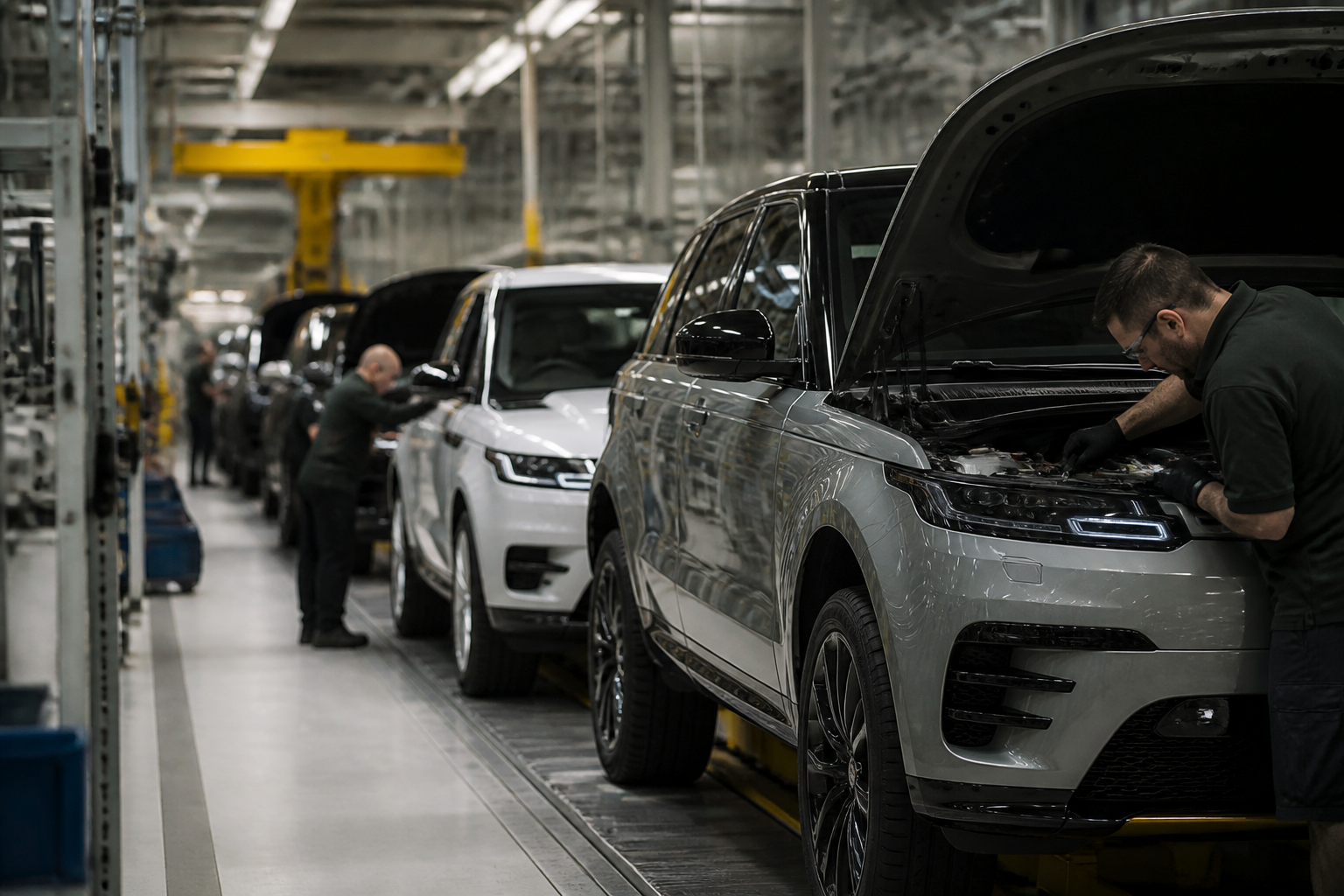
JLR job cuts will affect around 4,000 positions globally over the next two years as the Jaguar Land Rover unit of Tata Motors responds to weaker demand, tariff pressures and intensifying competition in major markets. The company is targeting £1.7 billion in savings and plans to reduce the annual sales volume needed to cover its costs.
JLR Chief Executive PB Balaji said the restructuring would reduce organisational complexity and lower the company’s break-even point to about 300,000 vehicles from approximately 350,000. That represents a reduction of nearly 14% in the annual volume required to cover its cost base.
The job reductions will focus largely on salaried and management roles through voluntary programmes, while direct manufacturing positions are expected to be protected, according to the information reported by The Hindu BusinessLine. The company has not indicated in the supplied material how the reductions will be distributed across countries, offices or business functions.
The restructuring is significant for Tata Motors because JLR remains the group’s largest contributor to profits and cash generation. A lower fixed-cost base could provide greater protection for earnings and cash flows if vehicle volumes remain under pressure, analysts cited in the report said.
“The reduction in the break-even point is more significant from an investor perspective than the headline job cuts,” Kranthi Bathini, Director-Equity Strategy at WealthMills Securities, said. She added that the lower threshold would give JLR more flexibility to protect margins and cash flows if demand remained subdued across major markets.
Brokerages also welcomed the proposed cost reduction. Motilal Oswal said the lower break-even threshold could provide downside protection to Tata Motors’ earnings. Nuvama Institutional Equities said the savings programme could help preserve free cash flow while JLR continues investing in its product pipeline and electrification strategy.
The announcement follows a deterioration in JLR’s operating performance after a stronger financial year. In FY25, the luxury carmaker generated about £29 billion in revenue, reported an underlying EBIT margin of around 8% and recorded profit after tax of £1.8 billion.
Conditions have since become more difficult. A cyberattack disrupted production and order-processing systems, while a 10% US import tariff added pressure to profitability in North America. In China, weaker demand and competition from domestic luxury electric-vehicle manufacturers have contributed to higher discounting and marketing costs.
JLR’s first-quarter performance reflected the pressure. Revenue fell by about 9% to £6.6 billion, while the EBIT margin declined to around 4% from 8.9% a year earlier. Free cash flow moved to an outflow of £758 million during the quarter.
The company is pairing the cost-saving programme with investment in future products, including the Range Rover electric vehicle and the relaunch of the Jaguar brand. The outcome of the restructuring will therefore depend on whether those products attract sufficient demand while the company manages its current cost and cash-flow pressures.
“The automotive industry faces significant challenges, with technological change amidst intense competition and ongoing geo-political uncertainty,” Balaji said. He acknowledged that the job reductions would be difficult news for affected employees and said JLR was committed to supporting colleagues with care, fairness and respect. The savings programme is scheduled to be implemented over the next two years.
