


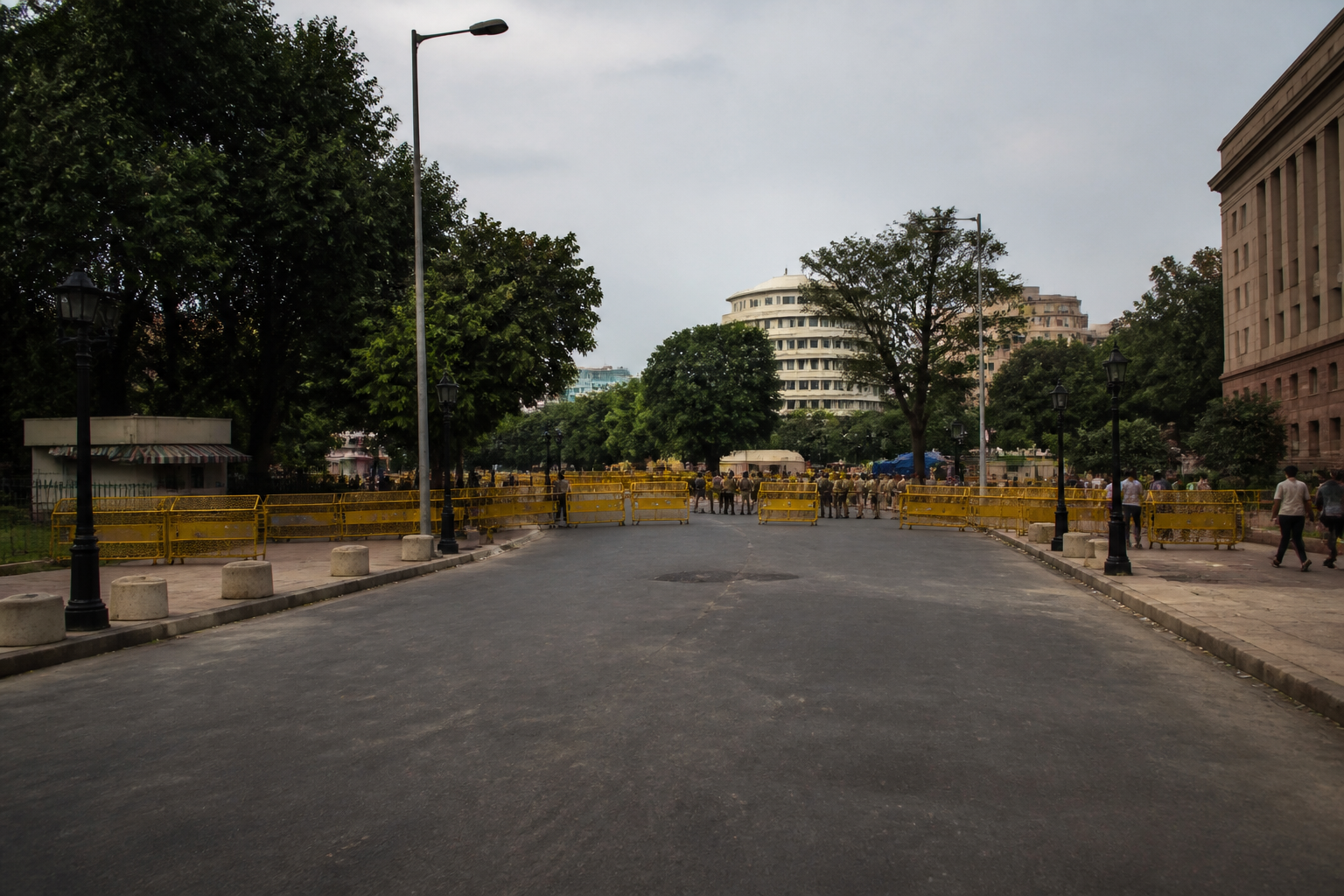
Delhi Police has denied permission for the All India Muslim Personal Law Board’s proposed protest at Jantar Mantar, prompting the organisation to shift the launch of its nationwide campaign to a press conference at the Press Club of India, according to a report by Jagran.
The board had planned to begin a “Constitution Save–Sharia Save” campaign in the national capital. Following the refusal, senior board office-bearers and Muslim representatives are scheduled to outline the campaign at the Press Club of India instead of holding a public demonstration at Jantar Mantar.
The decision places the proposed mobilisation within the wider administrative challenge of regulating protests in central Delhi. Jantar Mantar is the capital’s designated protest venue, but permissions depend on police assessments relating to crowd control, public order, access, and the management of competing public activities. Jagran reported that Delhi Police adopted a cautious position after recent demonstrations in the city.
The board’s campaign is linked to its opposition to the proposed implementation of a Uniform Civil Code, changes to the Waqf law and the reported decision to make all six stanzas of “Vande Mataram” compulsory in educational institutions. The organisation has alleged that these measures could affect religious rights and personal laws. These are the board’s stated positions, and the report does not include an independent assessment of those claims.
Jagran reported that the board changed its immediate strategy after permission for the Jantar Mantar protest was not granted. Instead of cancelling the campaign, it plans to use public meetings in different parts of the country and submit memoranda to the President through governors and district administrations.
The organisation is also preparing, according to the report, to consult legal experts and consider challenging the relevant bills and government orders before the Supreme Court. The report further said that the Vishwa Hindu Parishad has taken a contrary position, claiming that most Muslims support a Uniform Civil Code and that it would advance equality for women.
The immediate public-facing step in Delhi is the press conference at the Press Club of India, where the board is expected to explain the scope and schedule of its nationwide campaign. The shift from a street protest to a media briefing means the first phase of the campaign will proceed through an institutional venue rather than a permitted gathering at Jantar Mantar.
The episode also highlights the practical role of police permission in Delhi’s protest infrastructure. While the report establishes that permission was denied, it does not provide the text of the police order or specify the formal grounds cited by the authorities. Further details on the campaign’s schedule and any future applications for public demonstrations are expected from the board and the Delhi authorities.
