


A reported irregularity involving 49 e-Khata registrations in Jakkur has raised questions about the integrity of Bengaluru’s property records, the monitoring of revenue offices and the accountability of officials responsible for approving land-related entries.
Vijay Karnataka reported that the 49 properties fall within Survey No. 110/3 in Jakkur village, where a layout had allegedly been formed on 2.05 acres without authorisation. The properties were reportedly entered and issued A-Khatas in March 2024 without the approvals of the deputy commissioner and joint commissioner. The report said the entries were made through the assistant revenue officer’s login and that development-related charges were not collected.
The report attributed the findings to an inspection by the deputy commissioner. It said Assistant Revenue Officer C. Rekha was suspended on April 22 after the inspection found that 49 A-Khatas had been registered in violation of procedure. The report did not specify the year of the suspension order.
A subsequent review by the additional commissioner (revenue) reportedly led to an order dated June 1 cancelling the 49 A-Khatas. The entries were also removed from the e-Aasthi property-record system, according to the report. The review reportedly recorded that no role had been found for the joint commissioner.
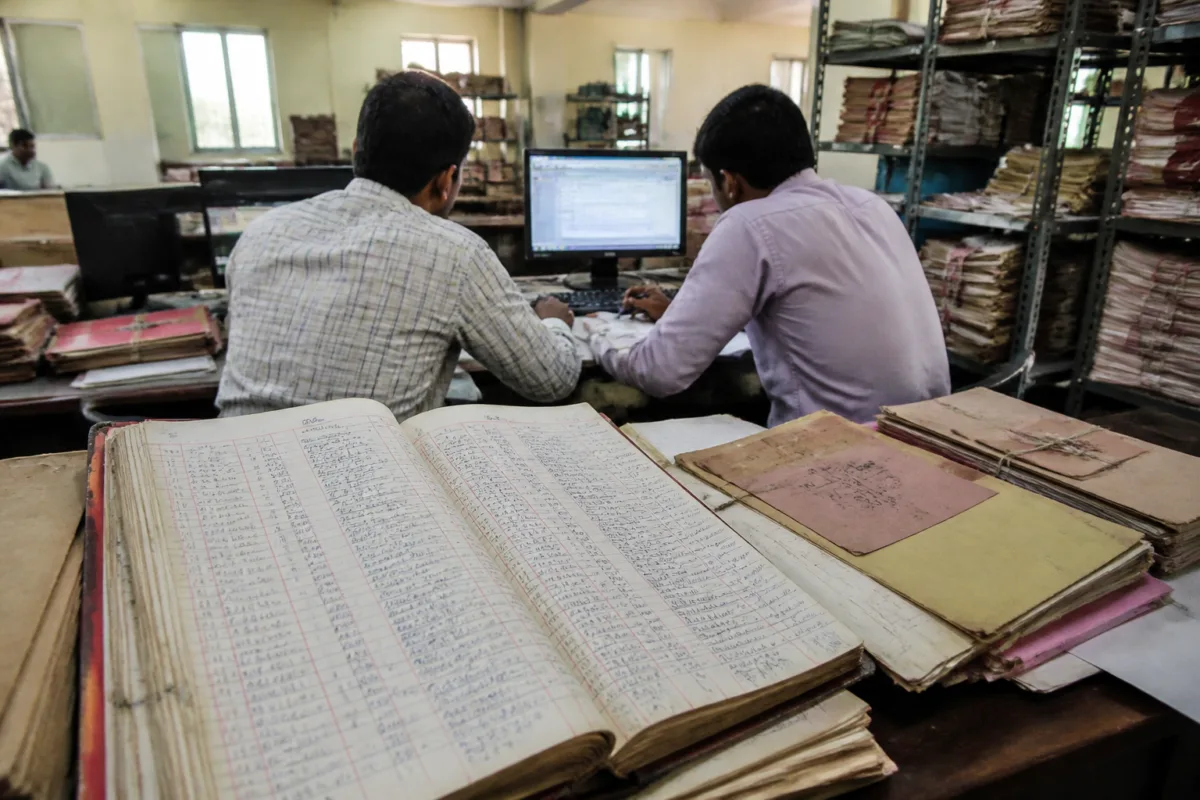
The central concern is the alleged creation and digitisation of a counterfeit A-70 revenue register. A-70 is described in the report as a property account book. The report said pages 12 to 24 contained entries for 49 properties dated March 25 and 26, 2024, but did not include file numbers for the approvals. It also quoted record-handling staff as stating that the handwriting and signatures in those pages were not theirs and that they had not handled the files connected to the properties.
The report further said that the original revenue book was missing, while a scanned version uploaded to the e-Aasthi system was allegedly not genuine except for specified pages. Staff members reportedly told the assistant revenue officer in writing that the scanned copy could not be verified without the original A-70 register.
The alleged financial impact extends beyond the 49 property entries. Under the rules described in the report, conversion of a B-Khata property to an A-Khata requires payment of a fee equivalent to 5% of the guidance value, along with land-conversion, improvement and other applicable charges. The report alleged that these amounts were not collected for the 49 properties, potentially depriving the civic authority of crores of rupees in revenue.
The case also points to weaknesses in the transition from paper registers to digital property records. The report said that 74 A-registers and 92 B-registers, comprising 166 handwritten registers, had been sealed at the joint commissioner’s zonal office on January 1, 2025, for scanning. A revenue department order reportedly required a single property-account register to be maintained in the sub-division. According to the report, the alleged counterfeit A-70 register was created after this process began.
A further review reportedly found more than 70 allegedly irregular A-Khata entries in one register, and a later examination identified 79 suspected fake accounts. Vijay Karnataka said that the official investigation into these additional entries had not yet been completed.
The handling of the inquiry has itself become part of the dispute. The report said the deputy commissioner directed an official allegedly connected with the irregularity to investigate and submit a report. It also quoted written statements from record-handling staff alleging that employees whose signatures were allegedly forged were being made scapegoats. These remain allegations reported by the publication and have not been independently established in the supplied material.
The Greater Bengaluru Authority’s chief commissioner, Maheshwar Rao, reportedly directed the deputy commissioner on April 23 to prepare draft charge sheets against Assistant Revenue Officers C. Rekha, Kruthika and Guruprasanna. After the charge sheets were not received, the chief commissioner reportedly wrote again to the Bengaluru North City Corporation commissioner on November 4, warning that responsible staff and officers could be held directly accountable for further delay.
For property owners and prospective buyers, the episode underlines the importance of checking the underlying approval file, payment records and original register entries rather than relying only on a digital Khata entry. For the administration, it highlights the need to preserve original registers, maintain audit trails for scans and uploads, restrict user access and complete departmental inquiries within a defined timeframe. The status of the wider investigation and responsibility for the alleged forged records remains unresolved in the supplied report.

