


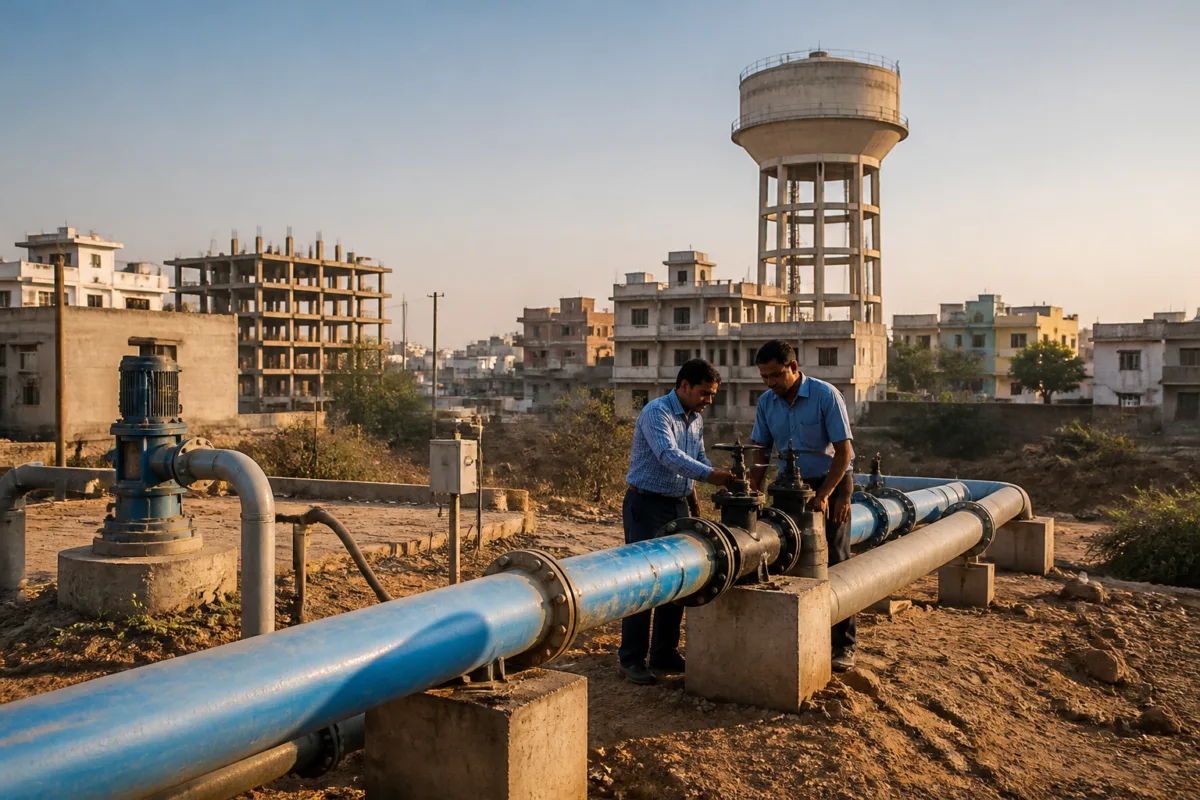
Jaipur’s Public Health Engineering Department has begun preparing a summer water contingency plan nearly five months before the peak demand season, citing concerns over drinking water supply pressure across Rajasthan. The early exercise is a departure from the department’s usual schedule, with division-wise inputs being sought before Diwali instead of beginning the process around February.
PHED officials said the department normally prepares plans for the March-to-June peak season closer to summer. This year, however, scarcity concerns have prompted it to start work well in advance. The department has asked engineers at every division to identify local requirements, vulnerabilities and possible solutions based on conditions on the ground.
The planning format has also been changed. Instead of preparing broad, district-level contingency plans, PHED will develop separate plans for individual divisions. Each district is divided into circles, which are further divided into divisions whose engineers manage day-to-day household water supply.
An official said the proposals received from the divisions would be analysed before contingency plans are prepared and work orders issued. The approach is intended to identify local supply risks more precisely, including vulnerabilities in areas where demand, infrastructure and available sources differ.
In Jaipur, engineers are considering a larger role for groundwater to supplement water supplied from Bisalpur Dam. The proposals include increasing tubewell capacity and connecting additional groundwater sources to existing pipelines. PHED officials said groundwater quality would be monitored by chemists around the clock before the water is introduced into the distribution system.
The department’s interest in groundwater follows what officials described as a substantial rise in Jaipur’s groundwater level over the past two years, citing reports from the groundwater department. The report did not provide the measured increase or identify the specific groundwater sources being considered for integration with the existing network.
Officials maintained that storage at Bisalpur Dam is not currently at an alarming level. The immediate concern is the pressure that could build during summer after PHED expanded Bisalpur supply to several new localities, particularly in the Prithviraj Nagar division.
The expansion has increased the number of areas dependent on the network even as summer demand is expected to rise. Engineers fear that the existing distribution system may face difficulty managing the additional pressure unless augmentation and contingency measures are completed ahead of the peak season.
The division-wise exercise will determine the local requirements, proposed interventions and work orders for the coming summer. PHED is expected to finalise the contingency plans after receiving and reviewing submissions from engineers across its divisions.

