


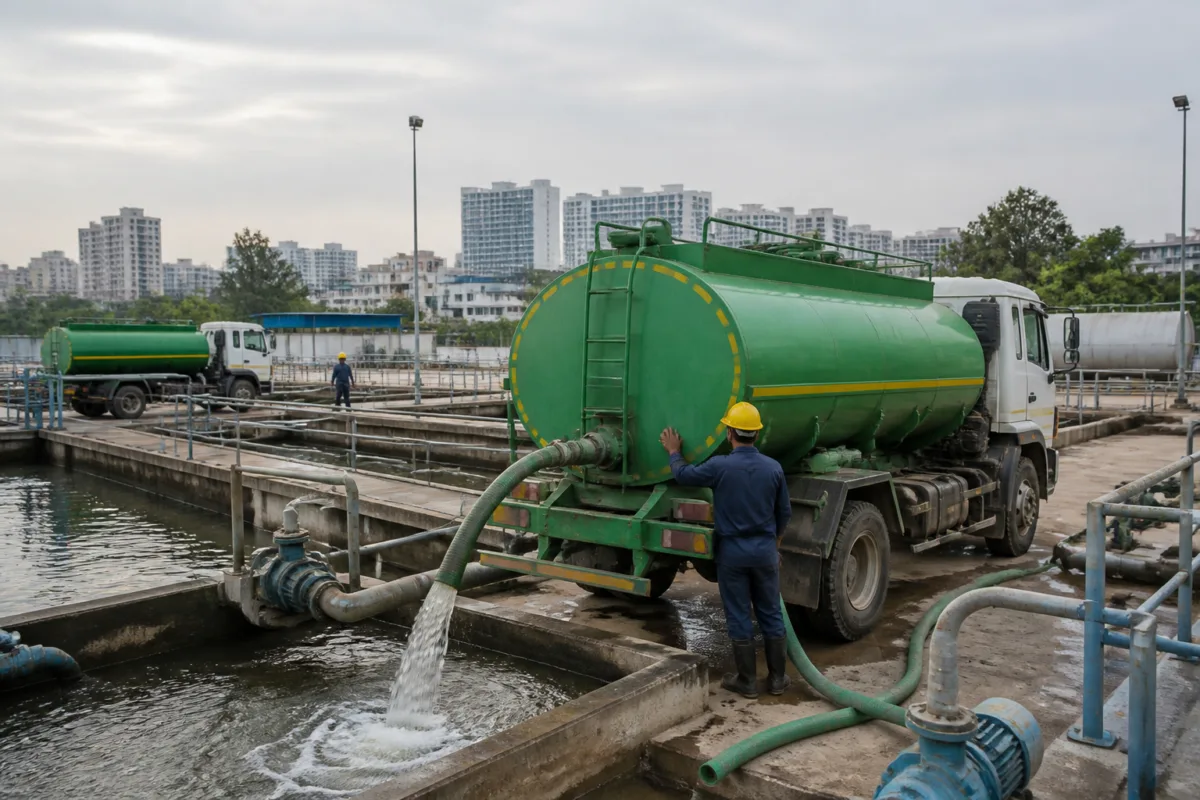
Hyderabad’s HMWS&SB plans to launch Green Water Tanker services from November 1, supplying treated wastewater to construction sites, industries, parks and other non-drinking users through GPS-equipped tankers and online bookings. The initiative is intended to reduce the use of groundwater and potable water for activities such as plantation, road cleaning and dust control.
HMWS&SB managing director K. Ashok Reddy reviewed preparations on Friday, with officials instructed to assess demand among construction sites, commercial complexes, government establishments and gated communities. The review followed directions from Chief Minister A. Revanth Reddy and came amid concerns linked to El Nino conditions.
Under the proposed system, the water board will identify government and private sewage treatment plants that can serve as nearby filling stations. Officials have been directed to arrange filling platforms, pumps and flow meters at these locations. The infrastructure is intended to record the quantity supplied and create a controlled distribution system for treated wastewater.
Every tanker operating under the service will require special branding and GPS tracking. Electronic point-of-sale machines at filling stations will record the volume of water supplied. The board also plans to introduce a mobile application through which customers can register, book tankers, allocate vehicles, make digital payments and confirm deliveries.
Customers who already own tankers may use the service under rules to be prescribed by HMWS&SB. Those without vehicles will be able to book tankers registered with the water board. The arrangement will therefore combine treated-water supply from designated plants with a monitored transportation network rather than relying on informal tanker procurement.
The board has also directed officials to continuously test water quality and conduct awareness campaigns among builders, industries and the public. The water will be designated for non-potable purposes and is not intended for drinking or other uses requiring potable supply.
The proposed service addresses a recurring urban water-management challenge: demand for water in construction, landscaping and road maintenance can compete with household supply and increase pressure on groundwater sources. By directing treated wastewater towards these uses, the board is seeking to separate non-drinking demand from the city’s potable-water network.
The success of the system will depend on the availability and location of sewage treatment plants, the capacity of filling stations, the reliability of tanker tracking and the board’s ability to maintain consistent quality testing. The initial demand assessment will help HMWS&SB determine which users and areas should be prioritised when the service begins.
The board’s next steps are to complete the filling-station arrangements, register participating tankers, establish the digital booking process and assess demand before the planned November 1 launch.

