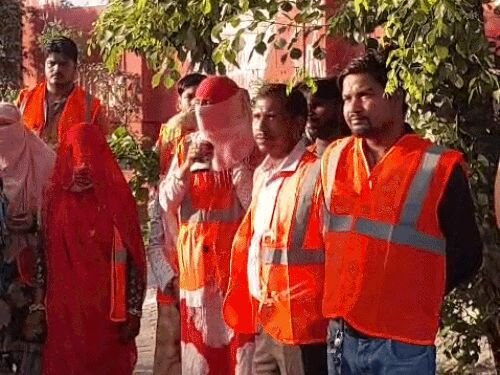
Jaipur has launched a large-scale sanitation campaign under the Safai Seva Marathon 2026, deploying thousands of workers across the city in a coordinated effort to improve cleanliness and strengthen civic infrastructure. The initiative, spanning all wards and zones, reflects a growing emphasis on visible, time-bound urban service delivery in Indian cities facing rising population and waste pressures.
The citywide drive brought together nearly 9,000 sanitation workers and officials, covering 150 wards across 13 zones in a synchronised operation. From early morning through extended working hours, teams were mobilised to clean roads, drains, public spaces, and waste-prone areas, with a particular focus on locations that typically remain underserved by routine municipal services. The Safai Seva Marathon 2026 also saw active on-ground monitoring by civic authorities, indicating a shift towards performance-based governance. Officials conducted inspections at key waste transfer stations and water bodies, reviewing mechanised waste handling systems and identifying operational gaps. Such direct oversight is increasingly being used to improve accountability in urban service delivery, particularly in sanitation—an area often affected by fragmented execution. Urban planners view the Safai Seva Marathon 2026 as more than a one-day clean-up exercise. Large-scale campaigns like these serve as diagnostic tools, helping municipalities identify inefficiencies in waste collection, segregation, and disposal systems. Reports from the drive indicated that waste inflow at transfer stations surged significantly, highlighting both the scale of the challenge and the need for continuous infrastructure upgrades.
The initiative also places strong emphasis on citizen participation. Authorities have urged residents and businesses to adopt responsible waste practices, recognising that sustainable sanitation systems depend as much on behavioural change as on municipal capacity. Experts note that without consistent public engagement, such drives risk delivering only temporary improvements. From a sustainability perspective, the campaign underscores the urgency of rethinking waste management in rapidly growing cities. Jaipur, like many urban centres, faces increasing pressure from rising consumption, tourism activity, and expanding urban boundaries. While periodic drives can improve immediate conditions, long-term solutions require decentralised waste processing, segregation at source, and integration of circular economy principles. There is also a labour dimension to the initiative. The scale of deployment highlights the continued reliance on manual sanitation work, raising questions around worker safety, mechanisation, and working conditions. During inspections, officials flagged the need for better protective equipment and adherence to safety protocols, pointing to systemic gaps that need addressing.
The Safai Seva Marathon 2026 further aligns with broader national efforts to improve urban cleanliness rankings and public health outcomes. However, experts caution that sustained progress depends on institutionalising such efforts rather than relying on episodic campaigns. As Jaipur continues to expand as a tourism and economic hub, maintaining urban hygiene will be critical to both liveability and competitiveness. The success of the Safai Seva Marathon 2026 will ultimately be measured not by the scale of the drive, but by how effectively it translates into consistent, long-term improvements in the city’s sanitation ecosystem.