


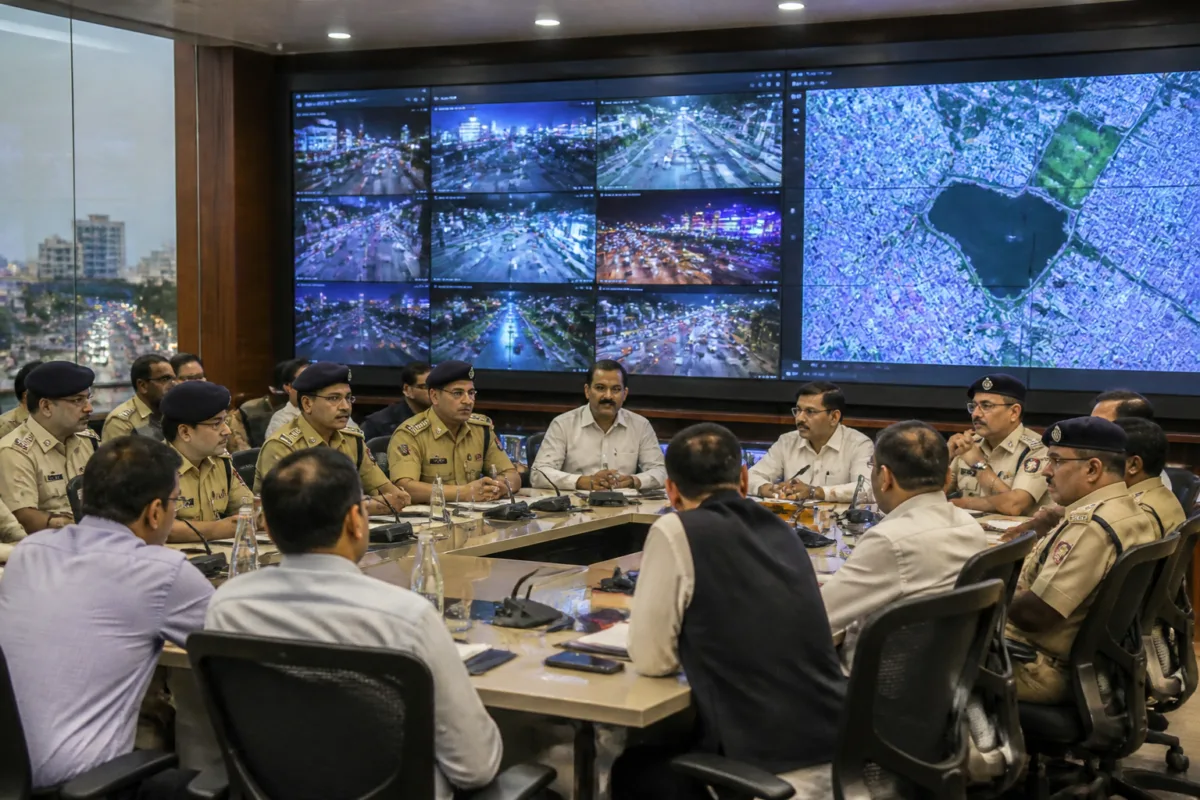
Telangana Chief Minister A Revanth Reddy has called for stronger inter-state police coordination, offering the state’s technology infrastructure and Integrated Command Control Centre framework to neighbouring Southern States to address cybercrime, narcotics, traffic violations and other cross-border offences.
Reddy made the appeal while inaugurating the Southern Regional Police Coordination Committee Meeting at the ICCC in Hyderabad on Friday. He said changing crime patterns required continuous police reforms, wider use of technology and closer coordination between state police departments.
The Chief Minister said no state could become free of crime through its own efforts alone. He urged police headquarters across the region to develop mechanisms for cross-border coordination and prepare an action plan during the conference. Reddy said the objective should be to build a safer South India and reduce crime through sustained cooperation.
Telangana offered to share its technological infrastructure and ICCC framework with neighbouring states. The proposal places command centres, information-sharing systems, specialised police units and training at the centre of the regional cooperation effort. The meeting was expected to deliberate on issues affecting coordination between the police wings of the Southern States.
Reddy highlighted several initiatives of the Telangana government, including HYDRAA, EAGLE and T-SAFE, which he said focus on different categories of public safety and enforcement. He identified cybercrime, narcotics and traffic management as priority areas where specialised divisions and technology-led training could improve results.
According to the Chief Minister, Telangana police had received national and international recognition for work against narcotics and cybercrime and for ending naxal violence in the state. He said Telangana had ranked first in India in cybercrime performance during the Prime Minister’s PRAGATI review. He also referred to Union Home Minister Amit Shah’s appreciation of Telangana officers for making the state naxal-free.
Reddy said the state’s EAGLE unit had secured more than 80 per cent marks from the Central government in combating narcotics, while the Cyber Security Bureau had established new standards in recovering money for victims. He also described TG-SAFE as an initiative modelled on the United States Food and Drug Administration’s approach to combining efforts against food adulteration and drug-related risks.
The Chief Minister also presented Hyderabad’s administrative and policing changes as part of the state’s urban safety strategy. These included the division of the city’s core urban policing region into the Hyderabad, Cyberabad and Malkajgiri commissionerates, along with a decision to recruit transgender people as traffic assistants in Hyderabad police. He said HYDRAA was working to protect and restore lakes and water bodies and safeguard public assets.
Reddy said the state had introduced welfare measures for police personnel and their families, including the Young India Police School for children of police employees, enhanced ex-gratia payments ranging from a minimum of Rs 1 crore to Rs 2 crore based on rank and service, housing plots for bereaved police families and jobs for eligible family members on compassionate grounds.
The meeting’s next step is the preparation of an action plan on coordination among police departments in the Southern States. The plan is expected to focus on information-sharing, technology use, specialised training and cooperation against offences that cross state boundaries.

