


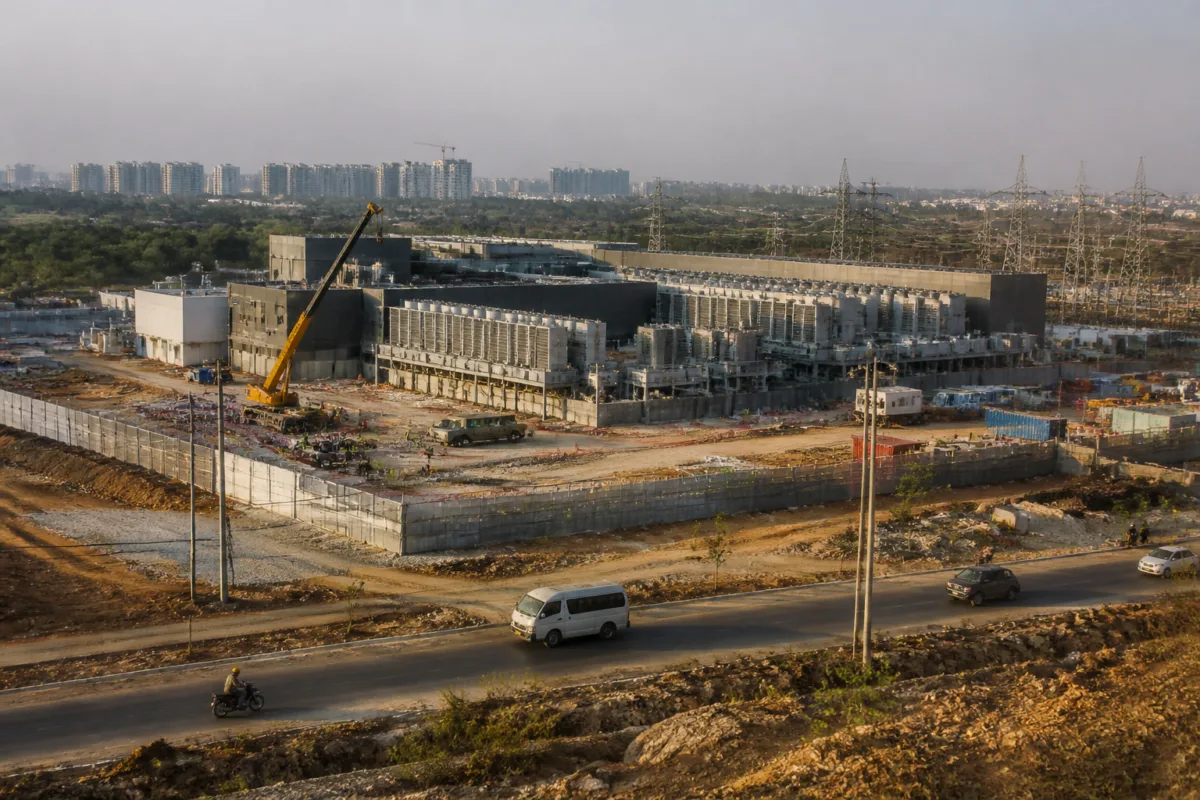
India’s planned data-centre capacity is shifting towards larger facilities, with projects above 50 MW accounting for 55% of the development pipeline in the third quarter of 2026, according to an analysis by Knight Frank India.
The share has increased from 44.3% in 2025. The consultant’s analysis covers 80 proposed data-centre facilities across seven markets: Mumbai, Pune, Hyderabad, Bengaluru, Delhi-NCR, Chennai and Kolkata.
Facilities above 100 MW recorded the sharpest increase. Their number rose from 15 in 2025 to 27 in the third quarter of 2026, an 80% increase. Their share of the total pipeline rose from 21.4% to 33.8%, making the category the largest by facility size.
Projects in the 50-100 MW range increased more modestly, from 16 to 17. Their share of the pipeline remained broadly stable, declining from 22.9% to 21.3%.
Together, facilities above 50 MW increased from 31 in 2025 to 44 in the third quarter of 2026. Their combined share of the pipeline rose by 10.7 percentage points to 55%.
The expansion is concentrated in a small number of major urban markets. Mumbai accounted for 34 of the 80 planned facilities, or 42.5% of the total, retaining its position as the leading market. Its pipeline increased from 31 facilities in 2025 to 34 in the third quarter of 2026, a 9.7% rise.
Of Mumbai’s planned facilities, 18 have capacities above 50 MW. The city also recorded 15 facilities above 100 MW, up from 10 in 2025, and had the highest number of projects in the 10-50 MW segment, with 16 facilities.
Hyderabad was the second-largest contributor to the pipeline. Its total number of planned facilities increased from 11 in 2025 to 15 in the third quarter of 2026, a 36.4% rise. The number of facilities above 100 MW doubled from four to eight, while six facilities were in the 50-100 MW category.
As a result, 14 of Hyderabad’s 15 planned facilities, or 93.3%, were in categories above 50 MW. This was the highest concentration of larger-format developments among the markets covered in the analysis.
The growth of larger facilities changes the infrastructure requirements associated with the sector. Knight Frank India said the next phase of development would need to be aligned with infrastructure readiness, particularly power availability, connectivity and land requirements. These requirements are significant for urban authorities and infrastructure providers because data centres depend on suitable sites and reliable high-capacity electricity and telecommunications connections.
The shift is occurring alongside a decline in smaller facilities. The number of projects in the 10-50 MW category fell from 26 in 2025 to 25 in the third quarter of 2026, reducing its share of the pipeline from 37.1% to 31.3%. Facilities below 10 MW declined from 13 to 11, while their share fell from 18.6% to 13.8%.
In total, facilities below 50 MW fell from 39 in 2025 to 36. Knight Frank said smaller facilities remain an important part of the pipeline, but incremental growth is increasingly concentrated in higher-capacity projects.
Joseph Thilak, executive director, occupier strategy and solutions, and head of data centre business (India) at Knight Frank India, said the landscape was evolving in the scale of infrastructure being planned, with Mumbai continuing to anchor the market and Hyderabad strengthening its position in the large-facility segment.
The figures indicate a more concentrated development pattern across the seven markets, but the report does not identify project-specific approvals, construction schedules or the precise additional power and land requirements for individual facilities. Those details will be important for assessing how the proposed pipeline can be integrated with local electricity networks, telecommunications infrastructure and urban land-use planning.

