


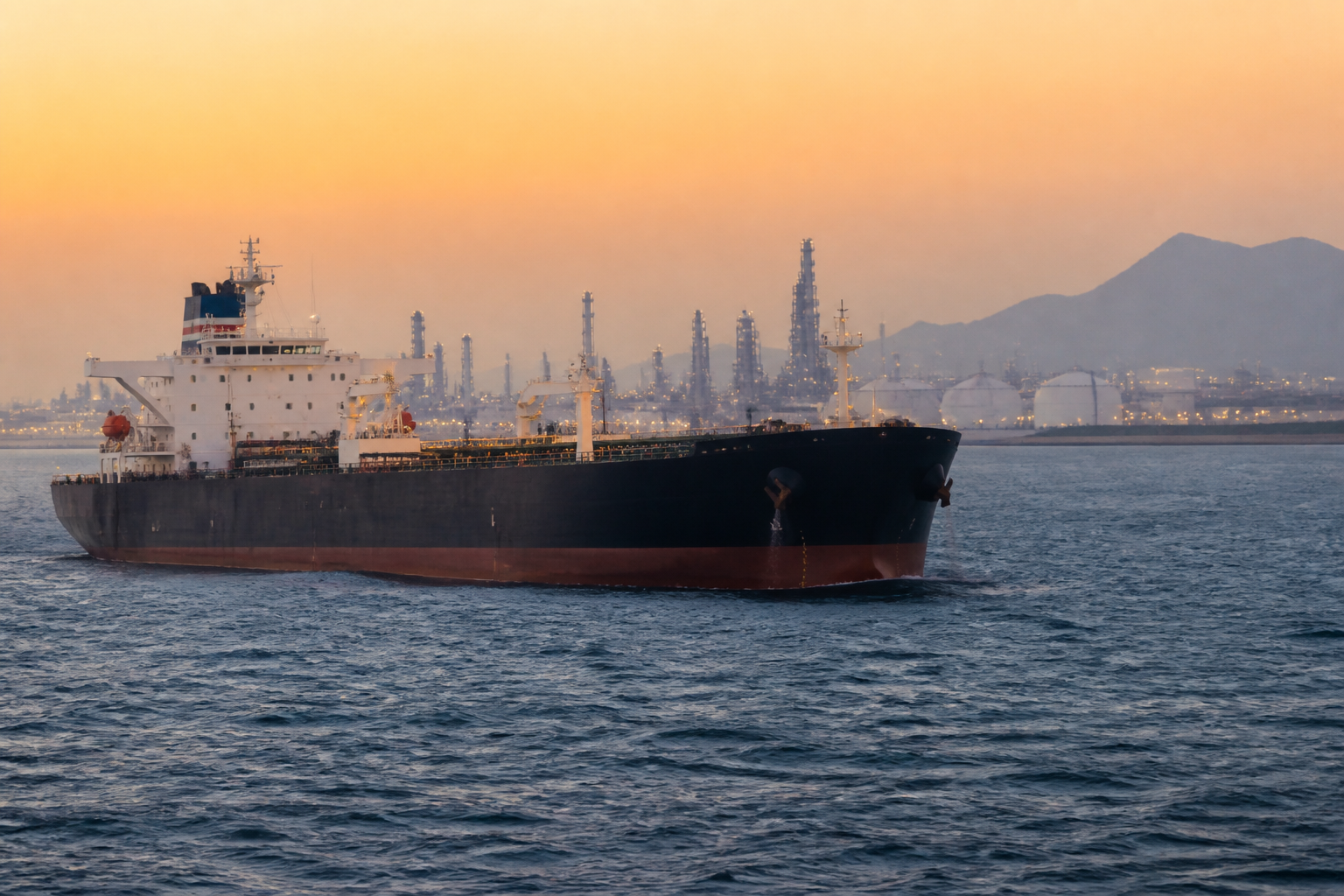
The reported suspension of Saudi crude supplies to Indian refiners has exposed a vulnerability in India’s energy system: diversification can keep refineries supplied, but it cannot automatically protect them from higher prices, freight costs and geopolitical risk. According to a Times of India report citing people familiar with the matter, Saudi Aramco has halted term supplies to Indian refiners until further notice after a pipeline in Saudi Arabia was reportedly attacked by drones.
The immediate disruption is not expected to stop Indian refineries from operating. Refiners are reportedly confident that they can source replacement barrels from other suppliers. The larger concern is the price of that substitution. Brent futures were trading at around $108 a barrel earlier in the week, while tanker rates were already close to record levels, according to the report. For a country that imports most of the crude required by its refining system, the disruption links an overseas security incident directly to procurement costs, transport expenses and potentially domestic economic pressure.
The episode also demonstrates how a breakdown at one point in the energy chain can quickly affect several others. Saudi crude has been reaching India through maritime routes linked to both the Red Sea and the Strait of Hormuz. Supplies through Hormuz had already fallen to very low levels before the reported pipeline attack. With Saudi Arabia now said to have halted supplies through both routes, Indian refiners face a narrower and more expensive path to replacing contractual volumes.
The pipeline’s significance is linked to the geography of oil transport. The East-West pipeline had become Saudi Arabia’s principal alternative route after disruption at the Strait of Hormuz, a critical maritime chokepoint. Its reported closure therefore removes not only Saudi production from part of the market but also an alternative transport corridor. The result is a supply problem shaped by infrastructure resilience: when both a maritime route and an overland route are exposed to conflict, the availability of crude becomes inseparable from the security of the networks that move it.
## What the India crude oil imports disruption reveals
Saudi Aramco has accounted for about 9% of India’s crude imports since the start of the war, the Times of India report said. That share is significant enough to affect procurement planning, even if it is not large enough by itself to make replacement impossible. Indian refiners can look to other suppliers, but the replacement barrels may not carry the same commercial terms, quality mix or transport economics as Saudi crude supplied through annual contracts.
Aramco generally supplies India and other buyers through term contracts based on official selling prices rather than through the spot market. The report said Indian refiners were not receiving the term volumes they were contractually due from Saudi Arabia. That distinction matters. A refinery may be able to buy crude in the market, but a spot purchase made during a disruption is not equivalent to a predictable term allocation. It can be more expensive, less certain and more exposed to sudden changes in freight and benchmark prices.
Saudi Arabia has nevertheless sold some spot cargoes to traders, according to the report. These traders are expected to deliver limited quantities to Indian refiners through the Strait of Hormuz. The reported trading route involves buying Iraqi crude at a steep discount, moving it through the strait to the Gulf of Oman, transferring cargo between ships and then transporting it to Indian and other buyers.
This workaround shows the operational complexity of maintaining supply during a crisis. Oil does not simply move from a producer to a refinery in a single uninterrupted journey. It depends on shipping availability, insurance, route security, vessel transfers, port access and the ability of traders to manage price differences across markets. Each additional transfer can increase logistical complexity and exposure to delay. The system may remain functional, but its costs and risks rise.
The pressure is amplified by the reported disappearance of discounts on Russian crude. Russian oil became available to India at deep discounts after European countries imposed sanctions following the Russia-Ukraine war, and Russia’s share of India’s crude imports subsequently rose steadily. The report identifies Russia as India’s largest source of crude oil. That dependence now intersects with a new layer of sanctions risk after US President Donald Trump signed the Lindsey O. Graham Sanctioning Russia and Iran Act of 2026, legislation that empowers him to impose tariffs of up to 100% on countries buying energy from Moscow.
The law, as described in the report, does not automatically impose those tariffs. The decision on whether to use the authority, and at what level, remains with the US President. But the possibility changes the risk calculation for Indian refiners and policymakers. A source that offers price advantages may also expose buyers to diplomatic and trade consequences. Energy security is therefore not only a question of securing physical barrels; it is also a question of whether those barrels can be purchased, shipped, insured and settled without creating a new vulnerability.
## Why freight has become as important as crude prices
The reported rise in tanker rates highlights a structural feature of India’s import dependence. Even when replacement crude is available, the final cost depends on the expense of carrying it to Indian ports. During a supply disruption, freight can rise because more buyers compete for fewer vessels, because ships must take longer or riskier routes, or because operators price in security and insurance concerns.
The Times of India report said tanker rates were already close to record levels and that falling global inventories were adding further pressure to oil prices. These conditions reduce the ability of refiners to absorb a temporary supply shock at minimal cost. Spot-market prices can move faster than futures prices during disruptions, meaning that a refinery seeking immediate replacement cargoes may face a sharper increase than the headline benchmark suggests.
For Indian cities, the implications are transmitted through systems rather than through a single visible event. Refineries supply transport fuels and industrial users, while freight costs influence the delivered price of imported crude. The source material does not establish how the reported disruption will affect retail fuel prices, inflation or household budgets. It does, however, establish the chain through which those risks can emerge: interrupted supply, costlier replacement barrels and higher shipping expenses.
The urban economy is particularly exposed because mobility, logistics, construction and goods distribution depend on reliable fuel supplies. A rise in crude procurement costs does not remain confined to oil companies. It can affect the cost structure of trucking, public and private transport operations, construction material movement and the distribution of food and manufactured goods. The scale and timing of any pass-through remain uncertain, but the dependence of these sectors on energy makes the risk broader than the refinery balance sheet.
## Diversification under pressure
India’s stated response has been to maintain energy security through diversified sourcing. The Ministry of External Affairs said India remained firmly committed to ensuring energy security for its 1.4 billion people and would continue to do so through diversified sourcing and evolving market dynamics. The ministry also said the issue had been discussed at high levels with US interlocutors, including its implications for the bilateral relationship and international energy markets.
Diversification is an important buffer, but the current disruption shows its limits. Having several suppliers can reduce dependence on any one country. It does not eliminate shared exposure to the same shipping corridors, tanker market or global benchmark. If Saudi supplies are interrupted while Russian purchases face possible sanctions pressure and freight rates remain elevated, the number of suppliers alone does not capture the full risk.
The institutional challenge is to coordinate procurement, diplomacy, shipping and refinery operations at the same time. Oil companies must secure suitable grades and delivery schedules. The government must manage relations with major producers and consuming countries. Traders must find routes that remain commercially viable and operationally safe. Refiners must balance term contracts with spot-market purchases. These responsibilities sit across different institutions, but the disruption affects them as one system.
The reported Saudi pipeline attack also raises a question about the resilience of energy infrastructure beyond India’s borders. Saudi Arabia accounts for about a tenth of worldwide production capacity and retains the ability to alter output in response to market conditions, according to the report. If Saudi crude remains unavailable to global markets for a prolonged period while inventories are low, the effect could extend beyond Indian procurement and add uncertainty to the wider oil market.
The evidence currently confirms a supply interruption, a reported halt in Saudi term volumes to Indian refiners, the availability of some alternative barrels and a sharp increase in cost and route risk. It does not establish how long the disruption will last, whether Saudi supplies will resume soon, or whether US authorities will impose tariffs on countries buying Russian energy. Those are the developments that will determine whether the current episode remains a costly procurement shock or becomes a deeper energy-security challenge.
For India’s cities and economy, the central lesson is clear: energy security depends not only on the volume of crude available but also on the resilience of pipelines, maritime chokepoints, tanker markets, contracts and diplomatic relationships. The reported disruption has not removed replacement supply from the market. It has made the route to that supply more expensive and more politically exposed.
