


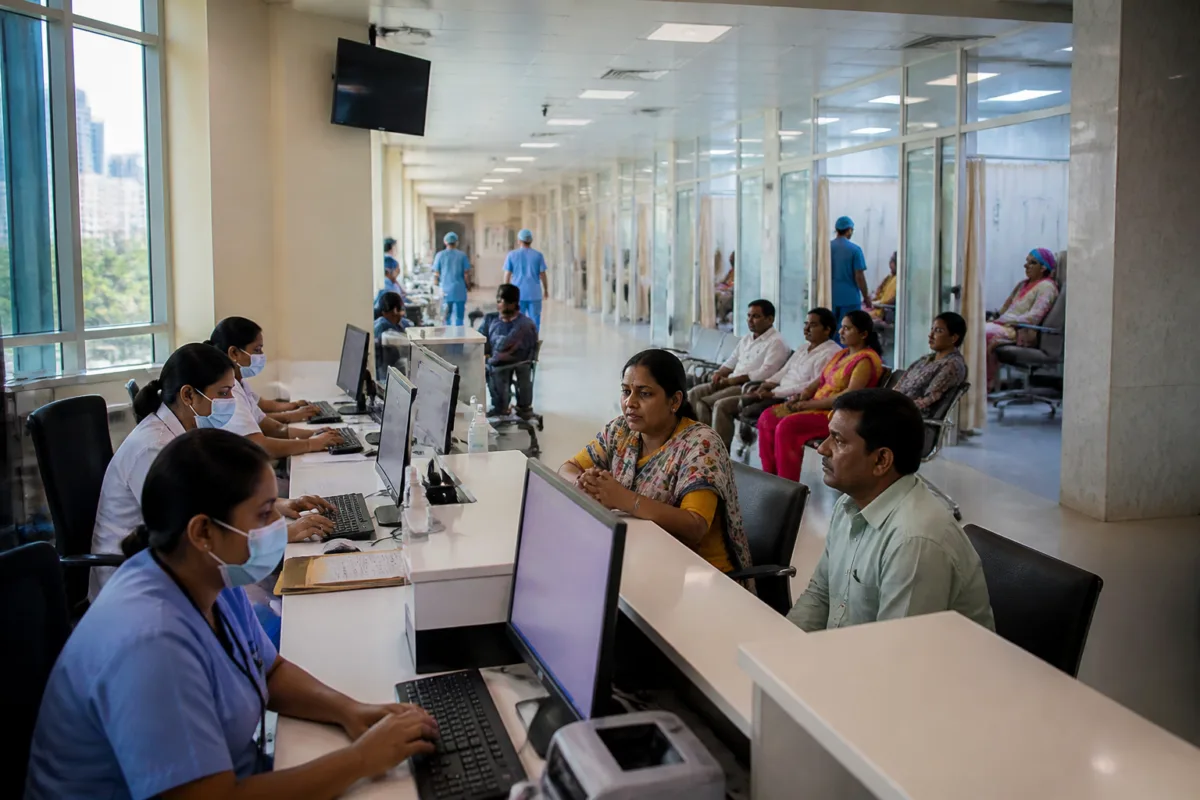
The reported Supreme Court direction to 19 states and union territories to notify cancer as a disease requiring mandatory registration places a basic weakness in India’s health system at the centre of public policy: healthcare cannot be planned well when the scale and location of need are not reliably known. The intervention, as described in the supplied account, is not only about counting diagnoses. It could determine how governments plan hospitals, cancer treatment facilities, medical staffing, diagnostic capacity and the movement of patients through the health system.
The argument for a stronger cancer registration system begins with a practical problem. Cancer affects families, hospitals and public health budgets, but the burden is not distributed evenly or always recorded consistently. Without dependable information on where diagnoses are being made, which age groups and population groups are affected, and which areas carry the highest patient load, authorities have to plan services with an incomplete picture. That weakens decisions on where facilities should be located and how many doctors, nurses, technicians and specialised treatment centres are required.
The article states that the Supreme Court has directed 19 states and union territories that have not declared cancer a notifiable disease to issue the relevant notification. It also says the court observed that the Union government should issue uniform guidelines. The supplied material does not provide the case number, date of the order or the text of the directions, so the operational details of the proposed framework are not established here. But the policy question raised by the reported intervention is clear: whether cancer information can move from scattered institutional records into a system that supports coordinated health planning.
Making cancer registration mandatory would be only the first administrative step. The more difficult task would be to decide what information must be collected, how it should be defined, who must report it and how quickly it must reach the authorities. If each state applies different definitions, reporting standards and timelines, the resulting data will be difficult to compare nationally. A rise in registrations could reflect better reporting rather than a sudden rise in the underlying disease burden, while a low number could indicate weak reporting rather than lower incidence.
This distinction matters for the way public authorities read health data. The article warns that registered cases may increase in the early phase of a wider notification system because patients previously left outside formal records would begin to appear in the system. That increase should not automatically be interpreted as a sudden change in cancer prevalence. Consistent data collected over time would be needed to identify disease patterns, evaluate government interventions and understand whether patients are reaching diagnosis and treatment without avoidable delays.
The proposed system would need to connect mandatory reporting with cancer registries already operating in the country. These two functions serve different but complementary purposes. A notification mechanism can require institutions to submit information within a defined period. Cancer registries can help organise and analyse that information, allowing authorities to study geographic patterns, higher-risk population groups, age-related changes, treatment disparities and the gap between diagnosis and treatment.
That connection would shift registration from a compliance exercise to a planning instrument. A district health authority could use the information to assess whether existing hospitals are sufficient, whether diagnostic facilities are concentrated in particular areas and whether specialised services are available close to the populations that need them. It could also help identify the requirement for doctors, nurses and technical personnel. The supplied article specifically argues that planning should be based on actual patient load and local population needs rather than broad estimates.
The implications are particularly important for smaller hospitals and diagnostic centres. If reporting is limited to large cancer hospitals, the system may miss the point at which many patients first enter the healthcare network. The article therefore calls for information to be collected from health institutions at all levels, including smaller hospitals and diagnostic centres. Such coverage would make the data more useful for understanding referral pathways and the distribution of diagnostic activity.
However, the administrative burden could become a major obstacle. Hospitals, laboratories and cancer registration institutions would need clear procedures, trained staff and technical support. A national digital platform could simplify information exchange, but only if the system is practical for institutions with different levels of digital capacity. The article refers to the parliamentary standing committee’s recommendation for a national digital platform for cancer registration and points to CoWIN as an example of the country’s capacity to create a large-scale digital public health system.
The comparison with CoWIN must be treated carefully. Cancer registration involves long-term records, repeated interactions with the healthcare system, clinical information and complex privacy requirements. It is not simply a one-time registration or service-delivery transaction. A cancer information system would need to preserve data over an extended period, allow analysis across institutions and protect information that is deeply personal. The article itself acknowledges that a separate arrangement would be needed for long-term storage, analysis and privacy protection.
Privacy is therefore not a secondary technical concern. Medical information can reveal a person’s diagnosis, treatment, family circumstances and location. A national registration system would need rules governing the handling of identifiable and de-identified information, including who can access it and for what purpose. The supplied account calls for safeguards against unauthorised use, as well as strong arrangements for confidentiality and cybersecurity. Without those controls, a system designed to improve public health planning could expose patients to avoidable risks.
The governance structure would also determine whether better data leads to better services. The Union health ministry would need to establish minimum standards, common definitions and reporting timelines, while states and union territories would be responsible for implementing the notification and ensuring that institutions comply. Hospitals, laboratories, registries and district health authorities would have to exchange information without creating parallel systems that do not communicate with one another.
This makes institutional coordination as important as the digital platform itself. A central database cannot compensate for unclear responsibility at the local level. If a hospital records a diagnosis but the information does not reach district planning authorities, the value of registration remains limited. Conversely, if the data reaches administrators but is not translated into decisions about facilities, staffing or treatment access, the system becomes an archive rather than a planning tool.
The potential economic and service-planning effects extend beyond government hospitals. The article says reliable information could help healthcare institutions and the pharmaceutical industry estimate future demand for cancer medicines, diagnostic tests, radiotherapy and newer treatment methods. It could also show where facilities are inadequate and where resources are being used inefficiently. These benefits, however, depend on the accuracy, completeness and comparability of the information collected. The article does not provide figures on existing registration coverage, the number of cancer registries or the scale of current reporting gaps, so the extent of the problem cannot be quantified from the supplied material alone.
That limitation is important. The case for mandatory registration is strong as a matter of health-system design, but the success of the policy will not be measurable merely by the size of the database. Authorities will need to determine whether reporting becomes more complete, whether district-level planning changes, whether treatment capacity is aligned with identified need and whether the time between diagnosis and treatment can be studied more reliably. Those questions require a consistent series of data rather than a single national count.
The reported Supreme Court intervention therefore points to a larger challenge in public administration: the distance between collecting information and using it to allocate public resources. Cancer registration can provide evidence about where the system is under pressure, but it cannot by itself build hospitals, train specialists or make treatment affordable and accessible. Those decisions will still require funding, staffing, procurement and coordination across levels of government.
The immediate policy task, as set out in the supplied account, is for states to act on the reported direction and for the Centre to develop common standards, technical assistance, digital infrastructure and data-protection safeguards. The larger test will be whether a small hospital’s record can inform district planning, whether areas with higher needs receive appropriate services and whether the information remains trustworthy over time. India’s cancer registration effort will be meaningful only when accurate records become a basis for decisions, not merely a count of cases.

