


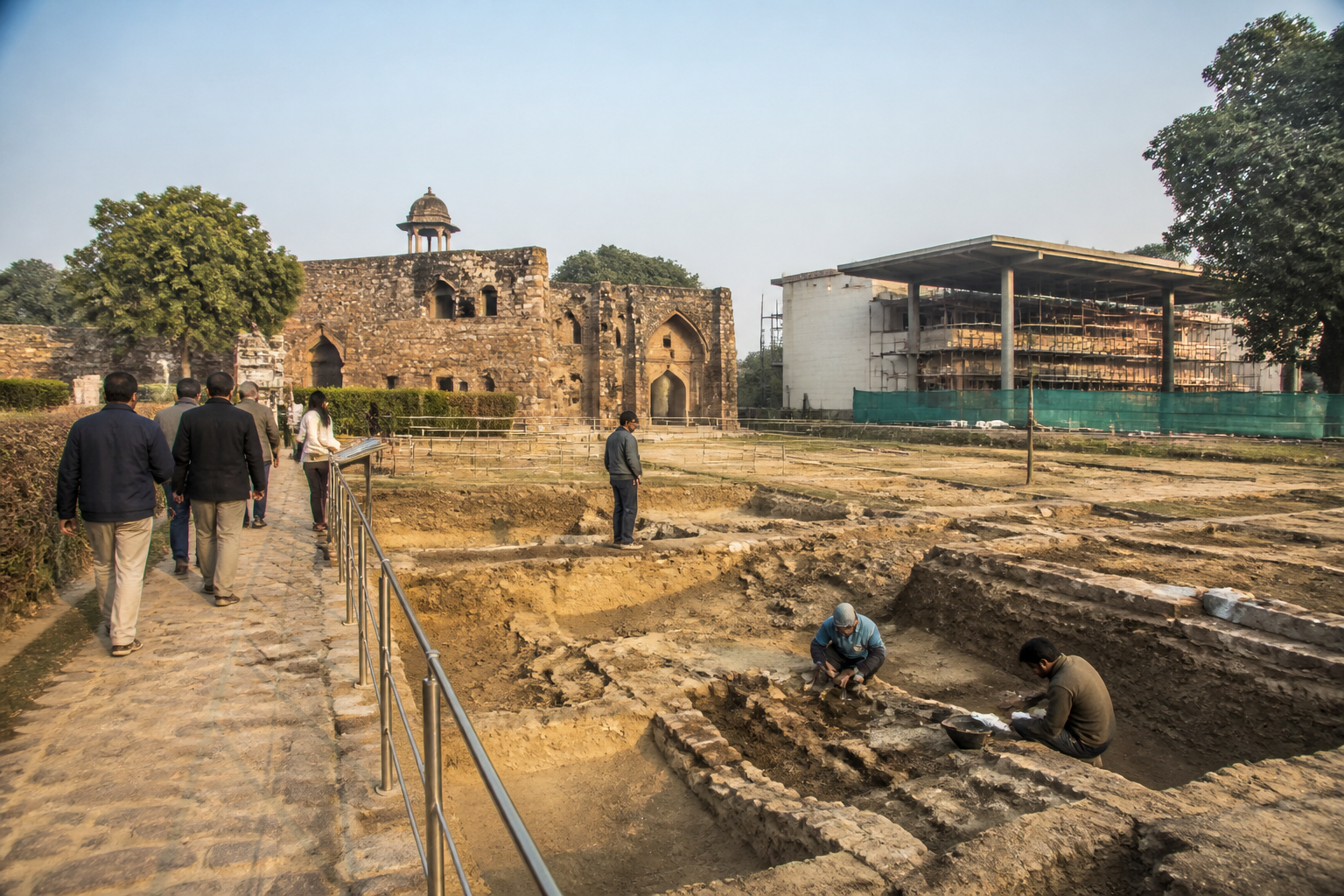
The Archaeological Survey of India (ASI) plans to develop museums at 15 archaeological excavation sites across India, including Delhi’s Purana Qila, in a project estimated to cost around Rs 1,400 crore and targeted for completion within three years.
The proposed archaeological museums will display artefacts, remains and information uncovered during excavations, allowing visitors to understand the history of each site alongside the structures and ruins they see. The initiative is also intended to create knowledge and research centres for students, historians and scholars.
According to the report, the ASI has completed the tender process for the proposed museum designs and assigned companies to prepare the designs. Separate consultants have been appointed for each site so that the museums can reflect their individual historical characteristics and archaeological importance.
The project will include Delhi’s Purana Qila, where excavations have been carried out at different times to investigate evidence linked to ancient Indraprastha, described in historical traditions as the capital of the Pandavas. These excavations have produced remains associated with different historical periods, according to the report.
The proposed museum at Purana Qila is expected to organise and present information about these discoveries and their historical context. For visitors, this could add an interpretive layer to a site that is currently experienced primarily through its fortifications, buildings and open areas. The ASI’s stated objective is to help people understand the evidence and historical background associated with the site rather than limiting the visit to viewing physical remains.
The planned museums are also intended to bring excavation findings and information about ancient civilisations together at the locations where the discoveries were made. This would provide students and researchers with access to material related to the historical background of each site, the evidence found during excavation and the development of the civilisations associated with it.
The proposal places museums within archaeological sites rather than treating them only as separate cultural institutions. In practical terms, the design approach will need to connect displayed artefacts and research material with the landscapes, structures and excavation areas around them. The appointment of separate consultants for each location indicates that the ASI is planning site-specific designs rather than a single standard museum model.
The project’s estimated cost of Rs 1,400 crore covers the development of museums at all 15 sites, although the report does not provide a site-wise allocation or details of the proposed facilities. It also does not specify the individual locations of the other 14 sites or the expected visitor capacity of the museums.
The ASI has set a three-year target for completing the museums. The next stages will involve the preparation of designs by the appointed companies and the development of facilities suited to the archaeological and historical significance of each excavation site.

