


India’s retail inflation rose to 6.09% in October from 5.54% in September, breaching the Reserve Bank of India’s upper tolerance ceiling as higher food prices increased household costs across rural and urban areas. The data was released by the Ministry of Statistics and Programme Implementation and reported by Economic Times on November 12.
Food inflation accelerated to 8.94% in October from 7.74% in September, making food the principal contributor to the increase in consumer prices. Food and beverages account for nearly 40% of India’s consumer price index, giving changes in essential commodities a direct effect on household budgets and the cost of living in cities.
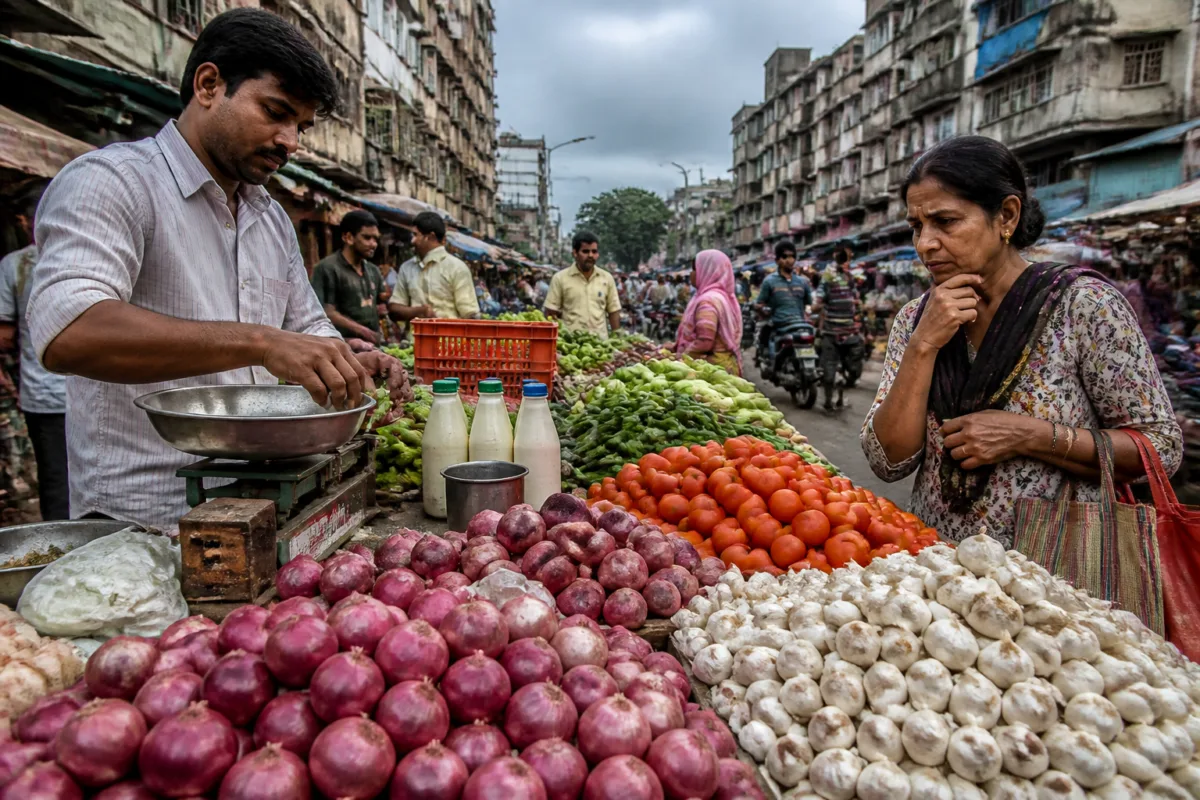
On an item-wise basis, onion inflation rose to 116.22% in October from 108.13% in September. Garlic inflation increased to 60.74% from 54.62% over the same period. Meat, milk and eggs also became more expensive, while imported edible oils and other commodities faced additional pressure from higher global prices.
The inflation increase was broad-based across several categories. Inflation in food and beverages stood at 8.51% at the national level. Personal care, social protection and miscellaneous goods and services recorded inflation of 10.14%, while restaurants and accommodation services saw prices rise 10.06%.
The impact was sharper in rural areas, where inflation increased to 6.63% in October from 6.08% in September. Urban inflation rose to 5.41% from 4.88%. For city households, the increase affects not only retail purchases of vegetables and proteins but also food services and other everyday services, according to the category-level data cited in the report.
The report linked the food-price pressure to supply disruptions following an uneven and deficient monsoon. It also cited concerns over weak reservoir levels and their possible effect on the rabi crop. These factors have increased attention on the relationship between agricultural supply, wholesale costs and prices paid by consumers in urban markets.
The October reading is above the RBI’s 2-6% tolerance range. Retail inflation has also remained above the central bank’s medium-term target of 4% for four consecutive months, according to the report. The RBI expects inflation to average 5.2% in the current financial year, revising its earlier projection of 5%.
Economists surveyed before the data release had expected headline inflation at 5.93%, with estimates ranging from 5.50% to 6.60%. The report quoted Vikram Chhabra, senior economist at 360 ONE Asset, as saying that energy and raw-material costs were passing through to core inflation, while food-price pressures were increasing. He also cited further risks from weak reservoir levels.
The RBI began its rate-hike cycle in October and was widely expected, according to the previous Reuters poll cited by Economic Times, to raise the repo rate by another 25 basis points to 5.75% at its December policy meeting. The inflation data will therefore enter the central bank’s assessment of household costs, food-price persistence and broader price pressures ahead of that meeting.

