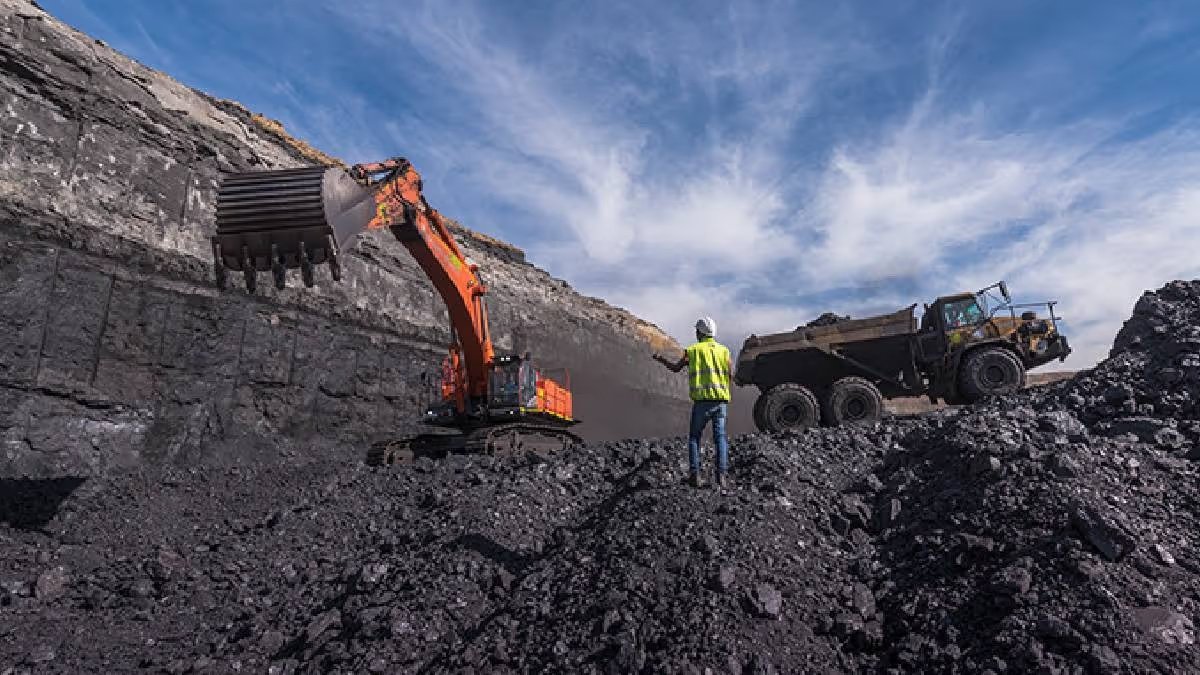
India Coal Output Strengthens Power Supply Stability
India’s coal sector has crossed a key production milestone in FY26, with captive and commercial mines collectively exceeding 200 million tonnes of output—an achievement that is reinforcing power supply stability amid rising electricity demand. The development signals a broader push to strengthen domestic energy systems as urban growth and infrastructure expansion accelerate.
According to official data, coal output from these mines surpassed 200 million tonnes by March 2026, marking a year-on-year increase of over 10%. The sector also achieved this level earlier than the previous financial year, reflecting improved operational efficiency and faster scaling of production capacity. The milestone is part of a wider trend of sustained output growth. India has also crossed the one billion tonne coal production mark for the second consecutive year, underlining the central role of domestic mining in meeting energy demand and reducing reliance on imports. For the power sector, the implications are immediate. Higher coal availability has helped thermal plants maintain comfortable stock levels, enabling stable electricity generation even during peak demand periods. This reliability is critical for urban infrastructure systems—from metro rail networks and data centres to housing and industrial clusters—that depend on uninterrupted power supply.Industry experts note that captive and commercial mining has emerged as a significant contributor to incremental output, complementing traditional public sector production. Increased participation from private and state-linked operators has improved supply responsiveness, particularly in meeting the needs of power producers and core industries.
At the same time, coal dispatch has kept pace with production, rising by nearly 8% year-on-year. This indicates stronger logistics coordination and improved last-mile connectivity between mines and consuming sectors, which is essential for maintaining steady energy flows across regions. From an urban development perspective, the expansion of domestic coal supply plays a stabilising role in construction and infrastructure delivery. Energy costs are a key input across sectors such as cement, steel, and manufacturing—all of which underpin city-building. Reliable coal supply can help moderate price volatility and support long-term project planning.However, the production surge also brings renewed attention to environmental and sustainability considerations. Coal remains a carbon-intensive fuel, and its continued dominance raises questions about how India will balance energy security with climate commitments. Experts suggest that integrating cleaner technologies, improving mining efficiency, and accelerating renewable energy deployment will be critical to managing this transition.Policy direction appears to be moving towards a dual approach—strengthening domestic coal output to ensure near-term energy security, while gradually expanding cleaner energy capacity to meet long-term sustainability goals.
As India’s urbanisation deepens and electricity demand continues to rise, the ability to maintain stable, affordable, and increasingly sustainable energy supply will be central to economic growth. The latest production milestone highlights the importance of domestic resource management in supporting that trajectory, even as the country navigates a complex energy transition.