


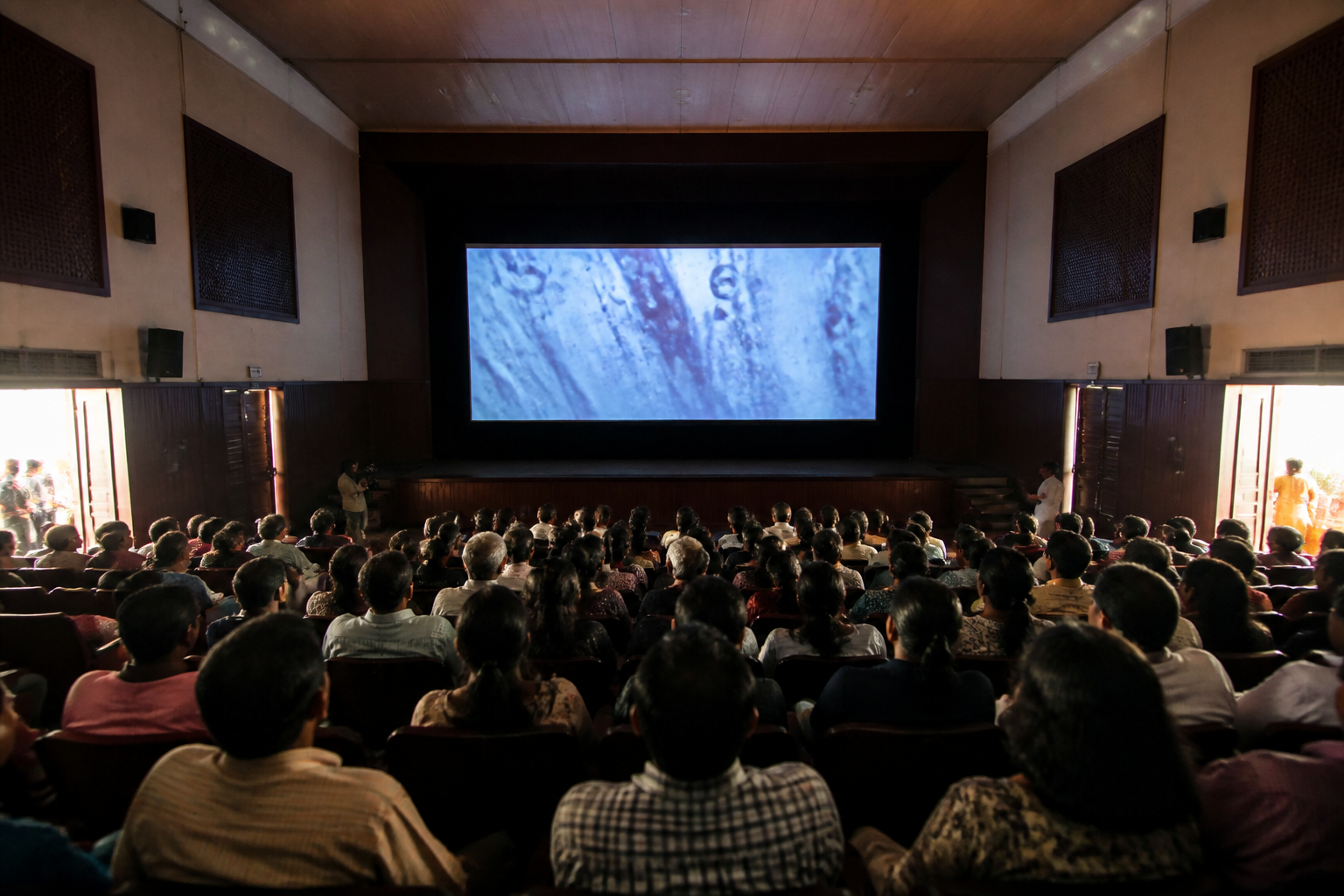
The dispute over screening permission for seven films at the 18th International Documentary and Short Film Festival of Kerala has widened into a question about how public cultural infrastructure is governed. At the festival’s concluding ceremony, Kerala chief minister V D Satheesan described the denial of permission as an attack on the freedom to select films, while the state government announced permanent venues for documentaries and short films in Thiruvananthapuram and Kozhikode.
The episode is significant because it connects three decisions that are often treated separately: the approval of individual films, the availability of theatres and the state’s responsibility to create platforms for cultural work. The government has approached the Kerala High Court over the screening dispute, but the court did not grant an interim order and listed the matter for hearing next month. Until that process moves forward, the seven films remain at the centre of a conflict involving festival administration, central government permission and artistic freedom.
The immediate controversy began when permission was denied for the films to be screened at IDSFFK, according to the Times of India report. Satheesan said the government would take steps to screen them if permission was granted. Tourism and culture minister P C Vishnunadh said the state had immediately appealed to the Union ministry of information and broadcasting after permission was denied.
That sequence reveals the layered approval structure behind a film festival. A festival may curate a programme, but the ability to show that programme can depend on decisions made outside the festival’s own organising structure. The dispute therefore concerns more than the fate of seven films. It raises the question of whether a publicly supported festival can exercise meaningful curatorial independence when permission for selected works is controlled through another administrative channel.
The court’s refusal to grant interim relief has also created a clear institutional boundary. The government has sought judicial intervention, but the High Court has not suspended the denial at this stage. The next hearing, scheduled for the following month, becomes the immediate formal milestone in a dispute that the state government has framed as a question of freedom and festival selection.
The response announced by the Kerala government extends beyond litigation. Satheesan said permanent venues for short films and documentaries would be established in Thiruvananthapuram and Kozhikode. The proposal matters because the availability of a suitable venue is not simply a logistical issue. It determines how long a film can remain accessible, which audiences can see it and whether screenings are dependent on temporary festival arrangements.
The report does not provide the proposed locations, budgets, ownership model or completion timeline for these permanent venues. Those details will determine whether the announcement becomes a functioning cultural infrastructure programme or remains a policy intention. At present, the available information establishes the direction of the proposal but not its implementation framework.
The choice of Thiruvananthapuram and Kozhikode is also notable within the state’s cultural geography. The two cities are being identified as places where documentary and short-film exhibition can receive a permanent base. The announcement does not say whether the venues will be new constructions, adaptations of existing public buildings or partnerships with other institutions. That distinction will affect costs, timelines and operational control.
The government has also announced a separate measure involving 17 state-owned theatres. From the upcoming edition of the International Film Festival of Kerala, scheduled for December 11 to 18, award-winning Malayalam films screened at IFFK are to be shown in these theatres. The decision followed representations from award-winning directors who said they were finding it difficult to secure theatres for their films.
This measure addresses a different part of the same access problem. The IDSFFK dispute concerns permission to screen selected films at a festival. The IFFK decision concerns what happens after recognition: whether award-winning films can reach audiences beyond the festival circuit. In both cases, the availability and control of public venues become central to the life of a film after it has been selected or honoured.
The state-owned theatre plan therefore shifts the discussion from festival programming to distribution. A festival can create visibility for a film, but that visibility may be short-lived if the film cannot find screens afterwards. The directors’ representations, as reported, indicate that recognition at a festival does not automatically translate into access to theatres. The proposed use of 17 state-owned theatres is intended to create a route between festival appreciation and wider public exhibition.
The policy challenge is that venues alone cannot resolve every barrier. The report does not establish how films will be selected for the state-owned theatres, how screening schedules will be determined, whether the venues will be available throughout the year or how operating and maintenance costs will be met. It also does not specify whether the documentary and short-film venues in Thiruvananthapuram and Kozhikode will be managed by the culture department, festival bodies or another public institution.
These unanswered questions are important because cultural infrastructure is effective only when responsibility is clear. A building can provide a screen, but a durable exhibition network also requires programming authority, booking systems, technical standards and an operating budget. None of those arrangements has been detailed in the supplied announcement. The next stage will therefore involve converting a political response to the controversy into an administrative structure that audiences and filmmakers can use.
The festival itself continued to provide evidence of the kind of work the state is seeking to support. Friends of Jilipibala, directed by Debalina Majumder, won the Best Short Documentary award. Close Up, Up Close – The Making of Political UBU, directed by Kamal K M, won the Best Long Documentary award, while Bhintila Paath, directed by Shekhar Bapu Rankhambe, won the Best Short Fiction Film award.
Those awards show that the festival is not only a screening event but also an institutional mechanism for recognition. Yet recognition has limited public value if awarded films disappear once a festival ends. The proposed theatre network is an attempt to address that gap, although the report does not yet establish how many screenings each winning film will receive or how audiences outside the festival cities will access them.
Filmmaker Ruchir Joshi called for new legal and constitutional approaches to counter what he described as attempts at censorship by the Union government. His remarks reflect the wider concern voiced at the event, but they remain a participant’s assessment rather than an independently established finding in the supplied material. The central verified development is that the state government has challenged the permission decision and that the court has not granted interim relief.
The institutional picture is therefore divided. The Kerala government is seeking permission and judicial relief, the Union ministry of information and broadcasting has been approached, the High Court has scheduled the case for a later hearing, and filmmakers are pressing for stronger safeguards and more reliable exhibition opportunities. No single announcement resolves all four issues.
The larger urban question is whether cities can support cultural freedom without dependable public spaces in which culture can be shown. Thiruvananthapuram and Kozhikode are being positioned as future centres for documentary and short-film exhibition, while 17 state-owned theatres are being considered as a distribution channel for award-winning Malayalam films. These commitments could strengthen the cultural role of public infrastructure, but their success will depend on the rules governing access, programming and continuity.
For now, the evidence confirms a conflict over permission, a pending court process and a state response centred on public venues. It does not yet confirm the final status of the seven films, the design of the proposed permanent venues or the operating plan for the 17 theatres. Those details, along with the High Court’s next hearing and the December IFFK edition, will determine whether Kerala’s response becomes a lasting cultural infrastructure policy or remains a reaction to one festival dispute.
