


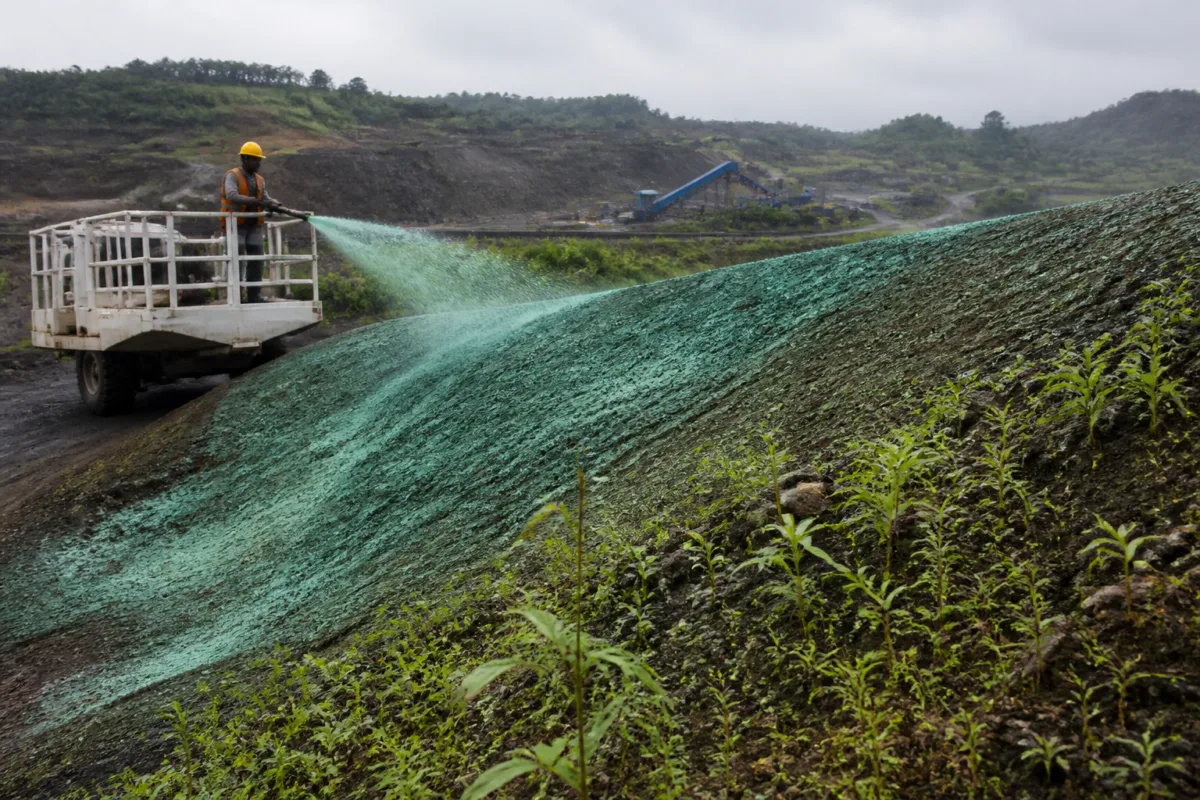
Tata Steel’s West Bokaro division has introduced hydroseeding across its mining areas in Ramgarh district, using a mechanised method to stabilise dump slopes, control soil erosion and accelerate green restoration across more than 50 acres.
The initiative covers mines, a nursery and mine dumps, according to a report by the Times of India. Hydroseeding involves spraying a mixture of seeds, mulch, water, fertiliser and soil conditioners over the surface being restored. The method is designed for large or uneven areas where conventional plantation can be difficult and time-consuming.
At West Bokaro, the technology is being used on mine overburden dumps and rugged terrain. The sprayed mixture is intended to help retain soil moisture during germination and establish vegetation across exposed slopes. The approach also reduces the amount of manual work required in undulating areas and allows larger stretches to be treated more quickly.
The equipment used for the work can spray material up to 50 metres and cover dump slopes up to 80 metres, the report said. This reach is relevant to mine-restoration work because overburden dumps can contain steep or difficult-to-access surfaces where planting by hand is slower and more labour-intensive.
The company said the initiative is aimed at strengthening slopes, reducing erosion and supporting faster natural greenery. Stabilising exposed dump surfaces is also expected to reduce landslide risks, while vegetation can help protect soil from being displaced by rain and surface water. The method therefore links restoration work with the physical safety and management of mining landscapes.
The reported coverage of more than 50 acres marks the initial visible scale of the intervention at the West Bokaro division. The project’s progress will depend on the establishment and persistence of vegetation across the treated areas, but the company has reported encouraging greenery from the work completed so far.

