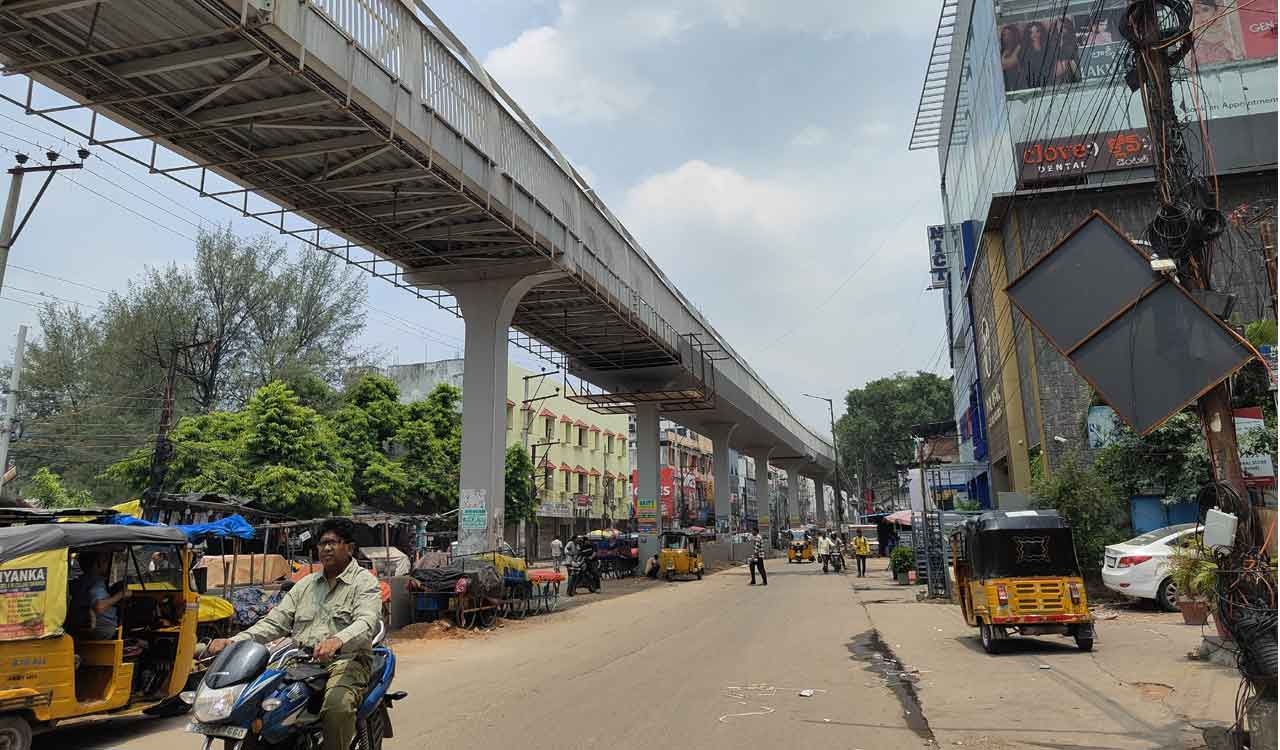
Hyderabad: The Hyderabad Metropolitan Development Authority (HMDA) is planning three additional pedestrian skywalks across the city as part of efforts to improve road safety, strengthen public transport integration and reduce congestion at some of Hyderabad’s busiest junctions. The proposed infrastructure is aimed at making daily commuting safer while encouraging greater use of public transport.
The new Hyderabad skywalk proposals cover LB Nagar, Dilsukhnagar and the IKEA junction near Raidurg in the city’s western IT corridor. These locations witness heavy pedestrian movement alongside dense vehicular traffic, creating challenges for commuters accessing Metro stations, bus terminals and nearby residential neighbourhoods. According to the proposal, the LB Nagar skywalk will improve connectivity between the Metro station, bus stop and surrounding residential areas. The junction serves as an important gateway connecting Hyderabad with the Vijayawada–Nalgonda National Highway and experiences high traffic volumes throughout the day. A similar facility is planned at Dilsukhnagar, one of Hyderabad’s busiest commercial and educational districts. The area attracts thousands of students, shoppers and office commuters daily, making safe pedestrian crossings an important urban mobility requirement. The proposed structure will directly connect Metro and bus transport facilities, reducing the need for commuters to cross busy roads at street level.
In the western IT corridor, another skywalk is proposed near IKEA to improve connectivity between Raidurg Metro station and nearby bus transit points. Urban mobility experts note that seamless transfers between different modes of public transport can encourage greater public transport use while reducing dependency on private vehicles. The latest proposals build on earlier pedestrian infrastructure initiatives across Hyderabad. Authorities have already completed a skywalk at Uppal Junction and are preparing to open another at Mehdipatnam. Additional skywalks near Secunderabad Railway Station and JNTU in Kukatpally are also under planning, reflecting a broader strategy to improve pedestrian accessibility across key transport corridors. Urban planners believe well-designed pedestrian infrastructure contributes to safer, more inclusive cities by reducing conflicts between vehicles and pedestrians. When integrated with Metro stations, bus services and accessible footpaths, skywalks can improve last-mile connectivity while supporting sustainable urban mobility.
Experts, however, emphasise that elevated pedestrian facilities should remain accessible for all users through lifts, escalators and universal design standards, ensuring older adults, children and persons with disabilities can benefit equally from the infrastructure. Detailed project reports for the proposed Hyderabad skywalk locations are currently being prepared, after which authorities are expected to invite tenders. If implemented effectively, the projects could strengthen multimodal connectivity while creating a safer and more pedestrian-friendly urban environment.