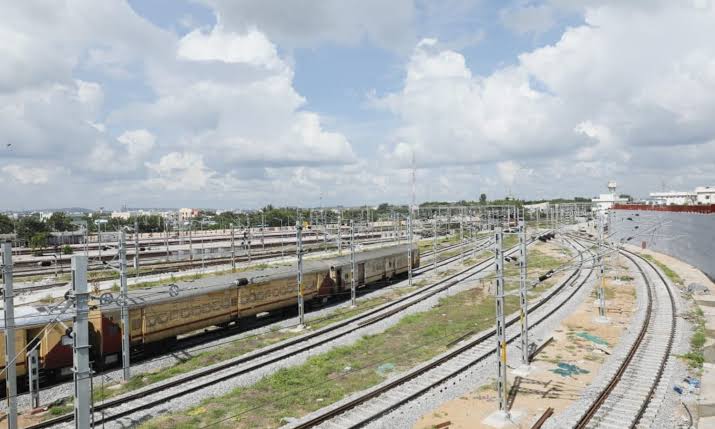
HYDERABAD: Hyderabad is moving towards a major expansion of its railway network with three proposed terminals planned on the western, southern and northern edges of the metropolitan region. The proposed Hyderabad railway terminals are intended to handle growing passenger demand and reduce pressure on Secunderabad, Hyderabad and Kachiguda stations.
South Central Railway is preparing for final location surveys at Nagulapalli near Kollur, Jukal near Shamshabad and Dabirpura near Medchal. The surveys are expected to provide greater clarity on land requirements, terminal layouts and project costs before detailed project reports are prepared. Nagulapalli is proposed as the largest of the three. The western terminal could occupy between 325 and 600 acres and is planned with 30 platforms, 14 reception and departure lines and 24 stabling lines. Its location near the Outer Ring Road could improve access for residents and workers in Hyderabad’s western growth corridor. The terminal is expected to handle trains towards Mumbai, Pune and parts of Karnataka. Its position away from the core city could also reduce the need for passengers from the western side to travel across central Hyderabad before boarding long-distance trains. The proposed Jukal terminal near Shamshabad would serve southern railway routes. Planned over around 300 acres, it is expected to handle trains towards Bengaluru, Tirupati and Chennai. The proposal also includes railway infrastructure and 30 stabling lines.
A southern terminal close to the airport could create a useful interchange between air and rail travel. Its effectiveness, however, would depend heavily on road connectivity and integration with public transport. Dabirpura, proposed beyond Medchal near Manoharabad railway junction, would form the northern part of the planned network. The terminal is expected to handle long-distance services arriving from Nizamabad, Nanded, Sirsi and Delhi. Integrated coaching-depot maintenance facilities have also been proposed, with an estimated cost of ₹2,887 crore. Such facilities could support train operations without requiring every service to enter the more congested central railway areas. The three Hyderabad railway terminals could require between 1,450 and 1,550 acres under the current proposal. The railway has asked the state government to make arrangements for acquiring 1,125 acres, while the final requirement could rise to about 1,900 acres after the location survey.
Land acquisition will therefore be one of the project’s biggest implementation challenges. Large railway terminals also require supporting roads, drainage, utilities, pedestrian facilities and public transport links. Planning these elements together will be important to avoid creating new traffic bottlenecks around the stations. The Railway Board’s approval is being sought for the final location survey. The survey is expected to support preparation of the DPR, which will establish more precise project costs and land requirements. The preliminary estimate for all three terminals is around ₹1,500 crore, although this figure could change after detailed planning. The proposal is based on a wider ring-terminal concept connecting Hyderabad’s major railway routes. Instead of directing every long-distance train towards the existing central stations, services could be distributed across terminals located around the city’s expanding urban edges. This could create opportunities to increase train capacity while reducing pressure on land-constrained stations. For passengers, the benefits will depend on reliable connections between the new terminals and the existing urban transport system. Integration with MMTS, Metro and road networks will therefore be essential. A terminal may reduce pressure on central stations, but poor last-mile connectivity could simply shift congestion from railway platforms to surrounding roads. The Hyderabad railway terminals proposal represents a long-term shift in how the city’s rail network could serve its expanding population. The upcoming surveys and DPR will determine whether the proposed locations, land requirements and costs can support a practical ring–terminal system.